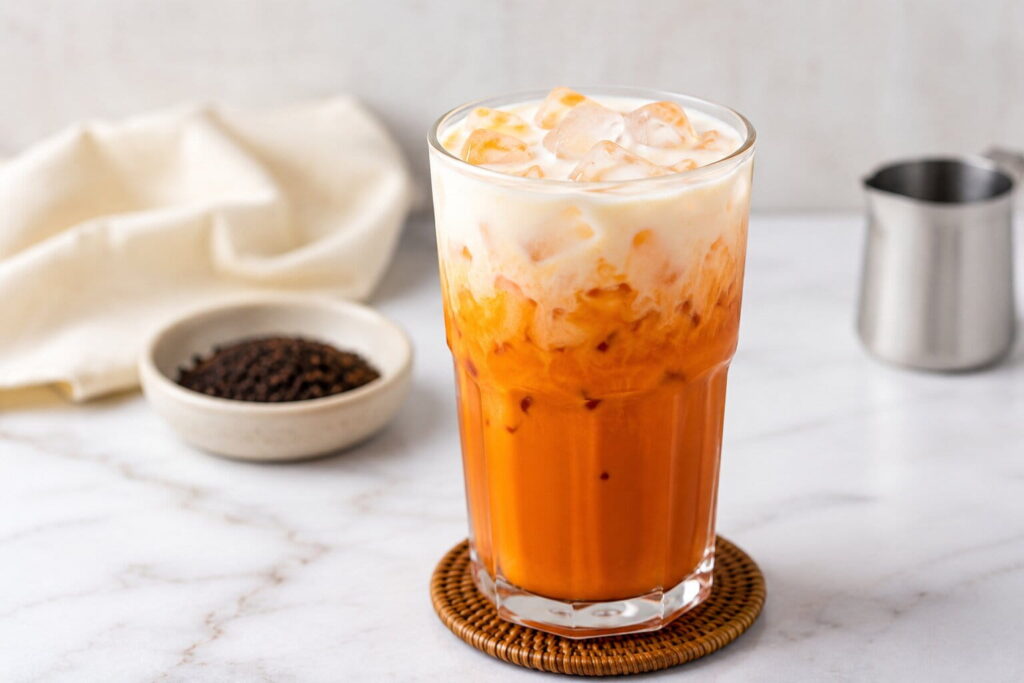
That first sip of Thai iced tea—creamy, spiced, electric orange—is unforgettable. The problem is that most homemade versions end up tasting like sweet, watery tea with none of the magic. The good news? You're only a few technique tweaks away from the real thing.
After testing this recipe across multiple batches with different steep times, three brands of Thai tea mix, and more sweetened condensed milk than I care to admit, I've landed on a method that consistently delivers the same bold, aromatic, unmistakably creamy result you get from your favourite Thai restaurant. This guide covers every step, explains why each one matters, and shows you how to fix the most common mistakes. You can also read our guide on overnight oats recipe.
What Is Thai Tea, Exactly?
Thai tea is a strongly brewed black tea infused with warm spices, sweetened with sugar and milk, and served over ice. In Thailand it's called cha yen (cold tea). The signature orange hue traditionally comes from the spice blend itself—star anise, tamarind seed, and sometimes annatto—though many commercial mixes now add food colouring for a consistent look.
Two styles dominate:
- Thai iced tea (cha yen) – served cold over ice, topped with a layer of condensed or evaporated milk
- Thai hot tea (cha ron) – the same spiced tea base served warm, often with breakfast
This recipe focuses on the iced version, since that's what most people searching for "Thai tea recipe" are after.
Why This Recipe Works
Mediocre Thai tea usually fails for one of four reasons. This recipe corrects all of them:
- Real Thai tea mix, not black tea – the mix contains the specific spice blend that makes the flavour recognisable
- Long, strong steeping – the tea must be robust enough to hold its own against milk and ice without turning watery
- Layered milk instead of stirred – this creates the iconic two-tone look and lets you control the sweetness with each sip
- Two types of milk – condensed milk adds sweetness and body; evaporated milk mellows it so it's not cloying
Skip any one of these and the result tastes "off" in a way that's hard to fix later.
Ingredients You'll Need
For 2 servings:
| Ingredient | Amount | Notes |
|---|---|---|
| Water | 2 cups | Freshly boiled for best extraction |
| Thai tea mix | 4 tablespoons | Brands like ChaTraMue or Pantai |
| Sweetened condensed milk | 3–4 tablespoons | Adjust to your sweetness preference |
| Evaporated milk or half-and-half | 2–3 tablespoons | Creates the signature top layer |
| Ice | Plenty | Large cubes melt slower |
A note on Thai tea mix: this is the single most important ingredient. Regular black tea gives you colour and caffeine, but not the vanilla-and-spice notes that make Thai tea distinctive. The mix is inexpensive and widely available at Asian grocery stores or online. If you enjoy trying different flavour profiles, you might also appreciate the variety in other recipes on our site. For further reading, see fda.gov.
Step-by-Step Thai Tea Recipe
1. Boil the Water
Bring 2 cups of water to a rolling boil in a small saucepan. Freshly boiled water extracts more flavour than reheated or lukewarm water.
2. Steep Long and Strong
Add the Thai tea mix directly to the boiling water. Reduce the heat slightly and simmer for 5 minutes, then remove from heat and steep for another 10–15 minutes. This extended steep is intentional—a weak steep is the number one reason homemade Thai tea tastes watery after ice and milk are added.
3. Strain Thoroughly
Pour through a fine-mesh sieve or cheesecloth into a heatproof pitcher. You want a clean, deep reddish-orange liquid with no tea particles. Some mixes are dusty; a second strain through a coffee filter removes any remaining sediment.
4. Sweeten While Hot
Stir in the sweetened condensed milk while the tea is still hot so it dissolves completely. Start with 3 tablespoons and taste—you can always add more, but you cannot remove sweetness once it's in.
5. Chill Fully
Let the sweetened tea cool to room temperature, then refrigerate for at least 30 minutes. Pouring hot tea over ice melts it too quickly and dilutes the flavour. For speed, set the pitcher in an ice bath.
6. Assemble Over Ice
Fill a tall glass generously with ice. Pour the chilled, sweetened tea over the ice, filling the glass about three-quarters full.
7. Add the Signature Layer
Slowly pour the evaporated milk (or half-and-half) over the back of a spoon held just above the tea's surface. This creates the two-tone effect you see in restaurants. Stir before drinking, or let it swirl naturally as you sip.

The classic pour-over-spoon technique keeps the milk floating on top for that iconic ombré look.
Pro Tips From Real Testing
These are the small adjustments that make a tangible difference:
Batch-brew the concentrate – Make a double or triple batch of the sweetened tea base and store it in the fridge for up to 5–7 days. This turns Thai tea into a 2-minute drink on busy weekday afternoons. Pouring fresh tea over ice on demand is also a great way to impress guests without last-minute work.
Freeze tea into ice cubes – Pour leftover sweetened tea into an ice cube tray. Use these cubes instead of regular ice, and your drink stays strong from first sip to last.
Adjust the milk ratio per serving – More condensed milk makes it richer and sweeter. More evaporated milk makes it lighter and more balanced. You can also keep the tea base unsweetened and let each person sweeten their own glass.
Don't over-simmer – Simmering longer than 5 minutes pulls out bitterness rather than more flavour. The steep after removing from heat is where the magic happens.
Avoid hot-milk curdling – Always cool the tea before adding the milk layer. Adding cold milk to very hot tea can cause curdling, especially with evaporated milk.
Making It Dairy-Free
Thai tea adapts surprisingly well to dairy-free versions:
- Replace sweetened condensed milk with sweetened condensed coconut milk (available at most grocery stores)
- Use coconut creamer or oat milk instead of evaporated milk
- Taste and adjust—coconut-based substitutes actually complement the spiced flavour especially well
The layering technique works the same way with these alternatives, though the colour contrast may be slightly different.
Thai Tea vs. Thai Iced Coffee
These two drinks get confused because they use the same preparation method. Here's the breakdown:
| Feature | Thai Tea | Thai Iced Coffee |
|---|---|---|
| Base | Black tea with spice blend | Strong-brewed coffee |
| Colour | Orange or reddish | Dark brown |
| Flavour notes | Vanilla, spice, floral | Roasted, slightly bitter |
| Milk method | Condensed + evaporated milk layered | Same technique |
If you enjoy Thai tea, Thai iced coffee (oliang) uses the exact same milk-layering technique with a coffee base instead. The two drinks share a lot of DNA, and mastering one makes the other effortless.
Storage and Make-Ahead Tips
- Tea concentrate: Store in an airtight container in the fridge for 5–7 days. The flavour actually deepens slightly overnight.
- Assembled drink: Best enjoyed immediately. Ice dilutes the tea over time, so pre-assembled drinks don't keep well.
- Freezing: Freeze the sweetened tea base into ice cubes. This single trick prevents the watery dilution that happens as regular ice melts.
Common Mistakes to Avoid
- Using regular black tea – You'll get colour but miss the signature spiced flavour entirely
- Under-steeping – Leads to weak, washed-out tea once milk and ice are added. Aim for at least 15 minutes total.
- Adding milk while the tea is too hot – Can cause curdling, especially with evaporated milk
- Stirring the milk in immediately – You lose the visual layering effect that makes Thai tea instantly recognisable
- Oversweetening early – Always taste before adding more condensed milk. Sweetness preferences vary widely.
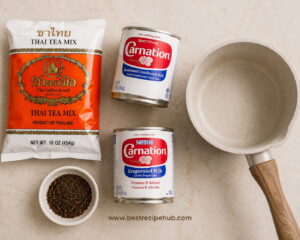
The three key ingredients: Thai tea mix, sweetened condensed milk, and evaporated milk.
Frequently Asked Questions
What gives Thai tea its orange colour?
The orange colour traditionally comes from the spice blend in Thai tea mix, including ingredients like star anise and tamarind seed. Many commercial mixes also include food colouring to achieve a consistent, vibrant orange shade that visually distinguishes it from other iced teas.
Can I make Thai tea without Thai tea mix?
You can substitute strongly brewed black tea, but the flavour won't be authentic. Thai tea mix contains a specific spice blend that gives the drink its signature vanilla and spice notes. The mix is worth seeking out if you want the real experience.
What is Thai tea traditionally made with?
Traditional Thai tea is made with strongly brewed black tea infused with spices, sweetened with sugar, and topped with condensed milk, evaporated milk, or coconut milk. The exact spice blend varies by brand and region.
Is Thai tea supposed to be very sweet?
Yes, Thai tea is traditionally quite sweet due to the sweetened condensed milk. However, you can easily reduce the amount of condensed milk at home without losing the core flavour. Start with less and adjust upward.
Why is my homemade Thai tea watery?
Watery Thai tea usually means the tea wasn't steeped long enough or was poured over ice while still warm, causing rapid melting. Steep for at least 15 minutes total and chill the tea fully before serving over ice. Using tea ice cubes also helps.
Can Thai tea be made dairy-free?
Yes. Substitute sweetened condensed coconut milk for the condensed milk and use coconut creamer or oat milk instead of evaporated milk for a fully dairy-free version.
How long does Thai tea concentrate last in the fridge?
Properly sweetened Thai tea concentrate can be stored in an airtight container in the refrigerator for 5–7 days, depending on your fridge temperature. Always give it a stir before using, as the sweetness can settle at the bottom.
Does Thai tea contain caffeine?
Yes. Since Thai tea is made from black tea leaves, it contains caffeine—typically comparable to a standard cup of brewed black tea, though exact amounts vary by brand and steep time. If you're sensitive to caffeine, consider a shorter steep or a smaller serving.
Final Thoughts
Authentic Thai tea isn't complicated, but it rewards attention to detail—a long steep, a proper chill, and a slow pour of milk at the end. Once you've got the base technique down, it becomes one of those drinks you can pull together in minutes using brewed concentrate you've already prepped.
Whether you're making it for a weekend treat or trying to recreate your favourite restaurant order, this method gets you as close to authentic as you can get in a home kitchen. If you're looking for more ways to use your kitchen staples, the recipe collection on our site has plenty of inspiration for your next cooking project.
For food safety guidance on storing dairy-based beverages, the USDA offers thorough refrigeration guidelines at www.fsis.usda.gov. Creamy, spiced, and impossibly satisfying, Thai iced tea is one of those drinks that feels like a treat every single time. Whether you're making it for a sunny afternoon, a dinner party, or just to satisfy a craving, the recipe above delivers consistent results without fuss. The key takeaways are simple: steep generously, chill completely, and pour the milk with care.
If you've been disappointed by watery or bland homemade versions before, give this method one honest try. The difference between "good enough" and "I can't believe I made this" is usually just a longer steep and a colder tea base—two adjustments that cost nothing but patience.
For more drink inspiration and flavour-packed recipes, browse the full collection of recipes on our site. And if you're looking for complementary dishes to serve alongside your Thai tea, consider something savoury and spicy to balance the sweetness—our guide to easy air fryer nachos or a hearty slow-cooked ribs recipe would pair beautifully.
Enjoy every last sip.