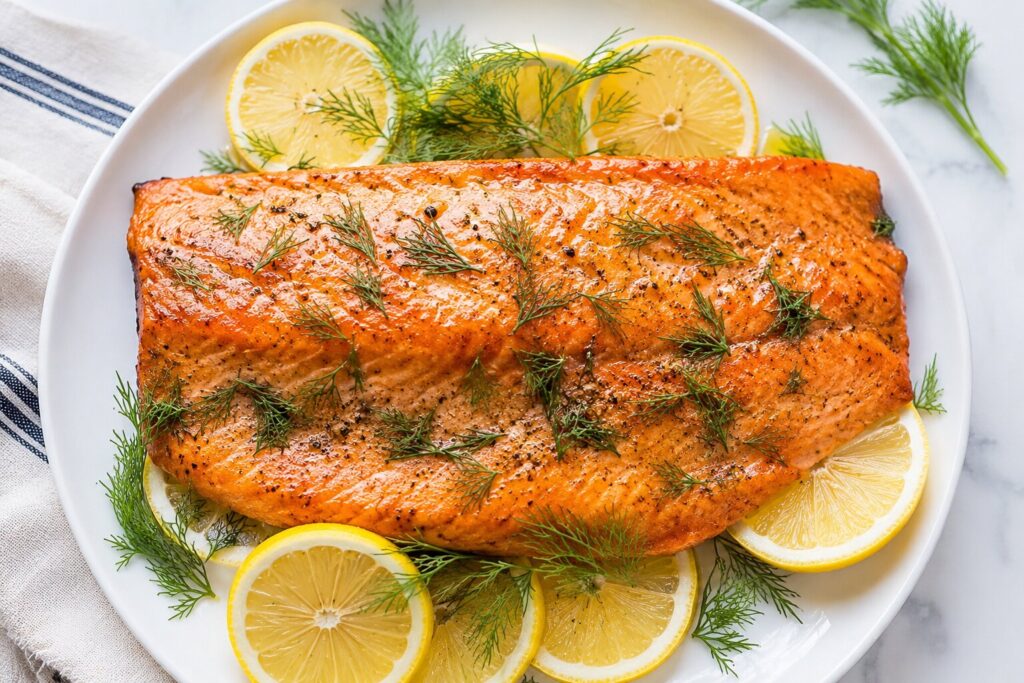
If you've ever stood at the fish counter admiring those beautiful pink fillets and wondered exactly how to cook them, you're in good company. Steelhead trout looks remarkably like salmon, yet behaves differently in the oven—it's more delicate, cooks faster, and rewards a slightly gentler hand.
This guide comes from dozens of test batches where I dialled in the exact oven temperature, the precise doneness window, and the handful of small steps that separate flaky, moist fish from dry, disappointing results. By the end you won't just have a recipe—you'll understand why each step matters, which means you can reproduce it perfectly every time. You can also read our guide on tater tot casserole recipe.
What Is Steelhead Trout, Exactly?
Understanding your ingredient is the foundation of cooking it well. Steelhead trout is a rainbow trout that migrates to the ocean, which gives it:
- A pink-orange flesh colour nearly identical to salmon
- Higher fat content than freshwater trout, making it richer and more forgiving to cook
- A milder, less "fishy" flavour than salmon, with a subtly sweet finish
- Thinner fillets, which cook faster than most salmon cuts
Steelhead Trout vs. Salmon: Quick Comparison
| Feature | Steelhead Trout | Salmon |
|---|---|---|
| Flavour | Milder, sweeter | Bolder, richer |
| Fat content | Moderate-high | High |
| Cook time | Faster | Slightly longer |
| Price | Often lower | Often higher |
| Texture | Delicate, tender | Firmer |
This comparison matters practically. If you follow a salmon recipe's timing for steelhead, you'll almost certainly overcook it. That single insight is the reason most home attempts go wrong—and exactly what this recipe corrects.
How to Choose the Best Steelhead Trout at the Store
Great results start long before the oven preheats. Picking the right fillet makes everything easier.
- Firm, moist flesh that springs back when pressed—mushy or separating flesh means the fish is past its best
- Vibrant pink-orange colour—dull, grey, or brown edges are warning signs
- Clean ocean smell—any strong, fishy, or sour odour means it's not fresh
- Ask about the source—farm-raised steelhead is widely available and generally sustainable; wild-caught offers a slightly deeper flavour when you can find it
- Uniform thickness—evenly-cut fillets cook more predictably than tapered pieces with thin tail ends
If buying frozen, look for vacuum-sealed packaging without ice crystals or freezer-burned patches. Steelhead trout is regarded as a smart seafood option by NOAA Fisheries, making it an easy choice for regular meals. You can also read our guide on easy weeknight dinners.
The Science Behind the Marinade
The oil-garlic-lemon mixture isn't just seasoning—each component plays a functional role:
- Oil or butter forms a barrier that slows moisture loss and helps distribute fat-soluble flavours like garlic and paprika evenly across the surface
- Lemon juice brightens the richness and subtly firms the surface proteins, helping the fillet hold its shape during baking
- Garlic and paprika add savoury depth without overpowering the fish's natural sweetness
This is why the same base allows so many flavour variations: the structure of the marinade stays the same; only the seasoning profile changes.
Why 400°F Is the Sweet Spot
In my testing, 400°F (204°C) consistently produces the best results for steelhead trout. Anything higher risks scorching the exterior before the centre finishes. Anything lower extends cooking time and can dry out the delicate flesh before it develops any browning.
The other key principle is carryover cooking. The fillet continues rising 3–5°F after it leaves the oven, which means you should pull it slightly earlier than you might expect. This is the difference between moist, flaky fish and something that crumbles into dry pieces.
Ingredients You'll Need
Steelhead trout has enough natural flavour that it doesn't need masking—just support.
For the fish:
- 4 steelhead trout fillets (6 oz each), skin-on
- 2 tablespoons olive oil or melted butter
- 2 cloves garlic, minced
- 1 tablespoon fresh lemon juice
- 1 teaspoon lemon zest
- 1 teaspoon smoked paprika
- 1/2 teaspoon sea salt
- 1/4 teaspoon black pepper
- Fresh dill or parsley, chopped
Optional finishing touches:
- Extra lemon wedges for serving
- A drizzle of honey for sweet-savoury contrast
- Red pepper flakes for subtle heat
Ingredient Notes Worth Knowing
- Skin-on vs. skinless: The skin protects the delicate flesh from drying out and makes the fillet easier to lift off the pan intact
- Fresh vs. frozen: Frozen steelhead works beautifully once fully thawed in the refrigerator overnight and patted completely dry—excess moisture is the enemy of even cooking
- Butter vs. olive oil: Butter adds richness and a nutty aroma; olive oil keeps things lighter and more Mediterranean—both work, so go with what you have
Step-by-Step: How to Bake Steelhead Trout
1. Prep the fish properly
Pat the fillets completely dry with paper towels. This affects how well the seasoning adheres and how the fish browns. Let them sit at room temperature for about 10 minutes—cold fish straight from the fridge cooks unevenly.
2. Preheat and prepare the pan
Preheat your oven to 400°F (204°C). Line a baking sheet with parchment paper or foil and lightly grease it.
3. Season with purpose
Whisk together the olive oil (or melted butter), garlic, lemon juice, lemon zest, smoked paprika, salt, and pepper. Brush this mixture generously over each fillet, covering the top and sides.
4. Bake to precise doneness
Place the fillets skin-side down on the prepared sheet, spaced a few inches apart. Bake for 12 to 15 minutes, depending on thickness.
Bake Time by Fillet Thickness
- Thin fillets (under 1 inch): closer to 12 minutes
- Thicker centre-cut fillets: closer to 15 minutes
5. Rest before serving
Let the fish rest for 3 to 5 minutes after removing it from the oven. This allows the carryover heat to finish cooking the centre while the juices redistribute. Garnish with fresh dill or parsley and a squeeze of lemon.
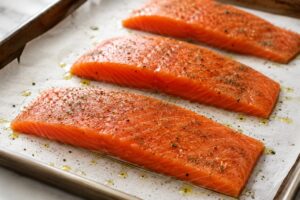 Fillets arranged skin-side down with the garlic-lemon marinade brushed evenly over the surface
The Doneness Test Every Home Cook Should Know
Timers alone are unreliable because oven calibration and fillet thickness vary. Use this two-part check instead:
- The flake test: Gently press a fork into the thickest part—if it separates into clean, opaque flakes without resistance, it's ready
- The colour test: The flesh should turn from translucent pink-orange to opaque pink throughout, with no glassy or raw-looking centre
If you cook fish regularly, an inexpensive instant-read thermometer removes all guesswork. Pull the fillet at 125–130°F for moist, tender results (it will continue rising as it rests). For well-done fish, aim for 140–145°F, though the texture becomes noticeably firmer.
Flavour Variations to Try
Once you've mastered the base method, steelhead trout becomes incredibly versatile. These tested variations keep the same cook time and temperature—only the flavour profile changes:
- Honey-Garlic Glaze: Add 1 tablespoon honey to the marinade for a sweet, caramelised finish
- Herb-Crusted: Press panko breadcrumbs, parmesan, and chopped herbs onto the fillets before baking for added crunch
- Cajun-Spiced: Swap the smoked paprika for 1 tablespoon Cajun seasoning for bold, smoky heat
- Asian-Inspired: Replace lemon juice with rice vinegar, add 1 teaspoon soy sauce and a drizzle of sesame oil
- Mediterranean Style: Top with chopped kalamata olives, cherry tomatoes, and crumbled feta before baking
The Mediterranean version pairs beautifully with simple Mediterranean sides like those found in our collection of easy Greek recipes.
What to Serve with Baked Steelhead Trout
A well-rounded plate balances the richness of the fish with something bright or starchy:
- Roasted asparagus or green beans for a quick, low-effort vegetable side
- Garlic butter rice or quinoa to soak up the pan juices
- A simple arugula salad with lemon vinaigrette for acidity and crunch
- Roasted baby potatoes for a heartier, comfort-food pairing
- Crusty bread to mop up any leftover marinade from the pan
For a restaurant-style presentation, plate the fillet skin-side down, spoon a little pan juice over the top, and finish with a lemon wedge and fresh herbs.
If you're looking for other high-protein dinners that come together quickly, our selection of high-protein meal prep ideas includes several options that work well alongside this fish.
Sauces That Pair Well with Steelhead Trout
A simple sauce can elevate this dish without overwhelming the delicate flavour:
- Lemon-Dill Yogurt Sauce: Whisk Greek yogurt with lemon juice, fresh dill, and a pinch of salt
- Brown Butter Sauce: Melt butter until golden and nutty, then finish with a splash of lemon juice
- Garlic Aioli: A quick mayonnaise-garlic blend adds creaminess without masking the fish
- Chimichurri: A parsley-garlic-vinegar version adds brightness and colour
Because steelhead is already moderately rich, heavy cream-based sauces can overpower the dish rather than enhance it.
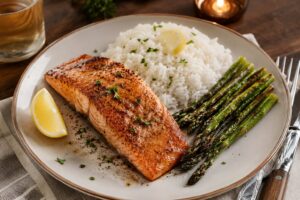 Finished fillet plated with roasted asparagus and rice, garnished with a lemon wedge and fresh herbs
Common Mistakes That Ruin Steelhead Trout
Knowing what goes wrong is just as valuable as knowing what goes right. The most frequent errors I see:
- Overcooking: Because steelhead is thinner than most salmon cuts, pulling it even 2–3 minutes late can dry it out significantly
- Skipping the pat-dry step: Excess surface moisture prevents proper browning and dilutes the seasoning
- Cooking straight from the fridge: Cold fish cooks unevenly, leaving a cold centre by the time the exterior is done
- Using too high a temperature: Anything above 425°F risks scorching the exterior before the interior finishes
- Not resting the fish: Cutting immediately after baking releases moisture that should stay locked in the flesh
Avoiding these five pitfalls alone will put your results ahead of most home-cooked fish attempts.
Oven-Baking vs. Other Cooking Methods
Steelhead trout can be pan-seared, grilled, or air-fried, but here's why oven-baking is the most reliable choice:
- Oven-baking (recommended for beginners): Even, hands-off cooking with no flipping or hot-pan monitoring
- Pan-searing: Crispier skin, but high direct heat can dry out the flesh within seconds if left too long
- Grilling: Adds smoky char, but delicate flesh sticks or falls apart without careful oiling and a fish basket
- Air-frying: Fast for small portions, but concentrated airflow can dry out thin fillets quickly
For consistency, ease, and minimal cleanup, baking remains the most foolproof method.
Storing and Reheating Leftovers
Steelhead trout keeps surprisingly well if handled correctly.
To store:
- Refrigerate cooked fillets in an airtight container for up to 3 days
- Freeze for up to 2 months, though texture is best within a few days
To reheat:
- Oven method (best): Warm at 275°F for 10–12 minutes, covered loosely with foil
- Stovetop method: Gently reheat in a covered pan over low heat with a splash of water or broth
- Avoid the microwave—it overcooks the edges while leaving the centre lukewarm
Nutritional Benefits of Steelhead Trout
Beyond its flavour and ease of cooking, steelhead trout is genuinely one of the more nutrient-dense proteins available.
- Rich in omega-3 fatty acids, which support heart and brain health—as recommended by the American Heart Association
- High-quality lean protein for muscle maintenance and satiety
- Good source of vitamin D and B12, nutrients many people fall short on
- Lower mercury levels compared to larger predatory fish, making it a smart choice for regular meals
A standard 6-ounce fillet delivers roughly 34 grams of protein and a substantial dose of heart-healthy fats, all for around 300–350 calories depending on preparation.
This makes steelhead a strong fit for:
- Low-carb and keto diets, since this recipe contains virtually no carbs
- Heart-healthy eating plans, given its favourable omega-3-to-saturated-fat ratio
- Post-workout recovery meals, thanks to high protein and digestible fats
Final Thoughts
Steelhead trout deserves a permanent spot in your weeknight rotation. It cooks quickly, tastes rich without being overwhelming, and comes out perfectly flaky every time when you follow the temperature and timing outlined here.
The core lesson: treat steelhead as its own fish, not a salmon substitute. Respect its thinner profile, moderate the heat, and let it rest before serving. Do that, and you'll have a foolproof recipe to return to again and again.
If you enjoy this straightforward oven method, you'll also appreciate our collection of hands-off baked chicken thigh recipes—another technique for consistently juicy results.
Frequently Asked Questions
What is the best temperature to bake steelhead trout?
400°F (204°C) works best, allowing the fillets to cook evenly in 12–15 minutes without drying out or scorching the exterior.
Is steelhead trout the same as salmon?
No. Steelhead is a separate species of rainbow trout that migrates to saltwater, giving it salmon-like colouring and fat content. However, it has a milder flavour and typically cooks faster due to thinner fillets.
How do I know when steelhead trout is fully cooked?
It's done when the fillet flakes easily with a fork and reaches an internal temperature of 125–130°F for moist results (140–145°F for well-done). The flesh should be opaque throughout with no translucent centre.
Should I cook steelhead trout skin-side up or down?
Bake it skin-side down. The skin protects the delicate flesh and prevents it from sticking to the pan.
Can I use frozen steelhead trout for this recipe?
Yes. Thaw it completely in the refrigerator overnight, then pat it thoroughly dry before seasoning. Cooking from frozen leads to uneven results.
What sides go best with baked steelhead trout?
Popular pairings include roasted asparagus, garlic butter rice, quinoa, arugula salad, or roasted potatoes. Lighter sides balance the fish's richness, while starches soak up the pan juices.
For more dinner inspiration built around simple techniques, browse our full recipe collection for quick, flavour-packed meals that come together on busy nights.