When your calendar is packed from morning meetings to evening commitments, nutritious eating often takes the hit. A vending machine snack here, a drive-thru dinner there — and suddenly your energy levels crash mid-afternoon.
High protein meal prep bridges that gap. With a few intentional hours on the weekend, you can have 4–5 days of balanced meals ready to grab and go. No decision fatigue, no hunger-driven fast food runs, no protein targets missed.
Why High Protein Meal Prep Actually Works
Protein does more than support muscle growth — it stabilizes your energy, curbs cravings, and keeps you full for hours. For anyone navigating a packed schedule, that makes all the difference.
Here's what consistent protein intake delivers:
- Extended fullness — Protein suppresses ghrelin, the hunger hormone, reducing the urge to snack between meals
- Passive calorie burn — Protein has a higher thermic effect than carbohydrates or fat, meaning your body burns more calories digesting it
- Eliminated decision fatigue — Prepped meals remove the daily "what do I eat?" question at the worst possible moment
- Muscle preservation — Consistent protein intake prevents muscle breakdown during high-stress weeks
- Stable blood sugar — High-protein meals slow glucose absorption, preventing the energy crashes that follow carb-heavy convenience foods
The USDA's Dietary Guidelines for Americans recommend 0.8 grams of protein per kilogram of body weight as a baseline, while active individuals benefit from 1.2–2.0 g/kg daily. Hitting those numbers consistently without a prep plan? Nearly impossible for most busy people.
The Big 3: Best Protein Sources for Meal Prep
Not all proteins reheat well. The best options for batch cooking share three traits: they hold texture after refrigeration, they're cost-effective at scale, and they're versatile enough to appear in multiple meals.
1. Chicken Breast and Thighs
- Chicken breast — ~31g of protein per 3.5 oz serving, very low in fat
- Chicken thighs — Slightly higher fat content, but hold up far better after reheating — ideal for soups, stir-fries, and salads
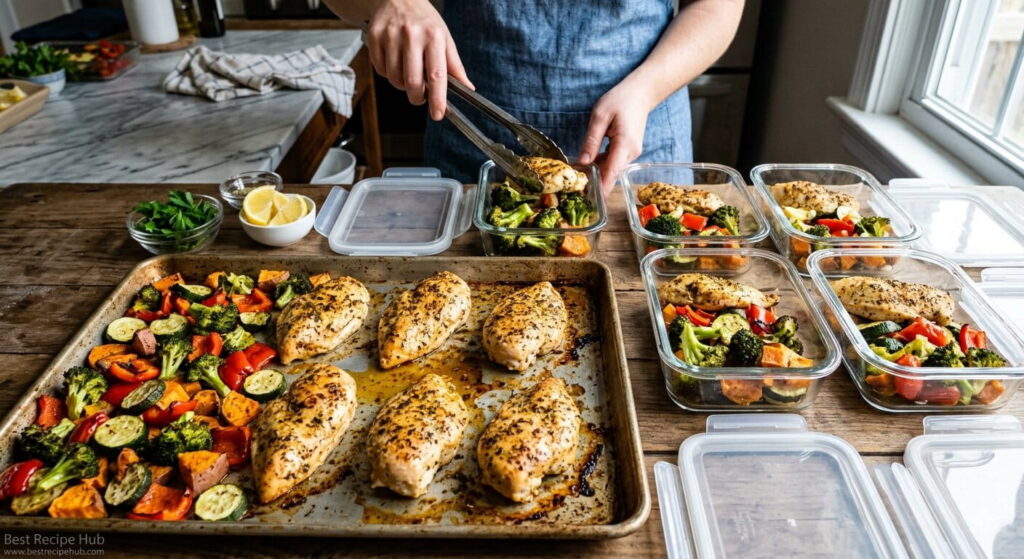
- Best prep method — Bake a full sheet pan at 400°F for 25 minutes. Slice half for bowls, shred the rest for wraps. One cook, multiple meals.
2. Eggs and Egg Whites
- Hard-boiled eggs last up to a week in the fridge and require zero reheating
- Egg muffins baked with vegetables yield 12 servings in under 30 minutes — perfect for grab-and-go breakfasts
- Egg whites deliver ~17g of protein per ½ cup for a leaner, lower-calorie option
- Cost advantage — Eggs remain among the cheapest high-protein foods, especially when bought in bulk
3. Legumes and Beans
- Lentils — ~18g of protein per cooked cup, plus fiber that amplifies fullness
- Chickpeas — ~15g per cup, perfect roasted as snacks or added to grain bowls
- Black beans — ~15g per cup, ideal for Mexican-style meal prep
- Edamame — ~17g per cup, ready to eat from frozen with virtually zero prep time
- Freeze-friendly — All legumes freeze without losing flavor or nutritional value
For those following a plant-forward approach, the wide collection of easy vegetarian options on our site makes bulk prep straightforward.
7 High Protein Meal Prep Ideas for Busy Weeks
These are practical, tested ideas — not theoretical recipes that require culinary training or three free hours.
1. Sheet Pan Chicken and Veggies
Ingredients: Chicken breast, broccoli, bell peppers, zucchini, olive oil, garlic powder, paprika
Steps:
- Preheat oven to 400°F
- Toss all ingredients with olive oil and spices on a large sheet pan
- Roast 25–30 minutes until chicken is cooked through
- Cool and divide into 4–5 airtight containers
Why it works: ~40g protein | ~350 calories | ready in under 35 minutes
2. Turkey and Quinoa Power Bowls
Ingredients: Lean ground turkey, quinoa, black beans, corn, salsa, Greek yogurt
Steps:
- Brown one pound of turkey with taco seasoning
- Cook a large batch of quinoa
- Combine turkey, quinoa, beans, and corn into containers
- Top with salsa and Greek yogurt instead of sour cream
Why it works: Quinoa adds 8g of protein per cup and delivers all nine essential amino acids — rare for a plant food. Greek yogurt replaces sour cream while doubling the protein per serving.
3. Greek Yogurt Overnight Oats
Ingredients: Plain Greek yogurt, rolled oats, chia seeds, almond milk, honey
Steps:
- In each jar, combine ½ cup Greek yogurt, ½ cup oats, 1 tbsp chia seeds, ¼ cup almond milk
- Stir, add a drizzle of honey, seal the jar
- Refrigerate overnight. Prep 5 jars on Sunday night
Why it works: One jar delivers 20–25g of protein. Breakfast is handled for the entire week in under 10 minutes. For more overnight inspiration, our dedicated breakfast jar guide offers additional flavor variations.
4. Hard-Boiled Egg and Cottage Cheese Snack Packs
Ingredients: Eggs, cottage cheese, cherry tomatoes, cucumber
Steps:
- Hard-boil 15–20 eggs in one batch. Refrigerate unpeeled
- Portion ½ cup of cottage cheese into small containers
- Add 3 eggs, cherry tomatoes, and sliced cucumber to each pack
Why it works: Cottage cheese delivers 14g of protein per ½ cup. These snack packs eliminate 3pm vending machine emergencies entirely.
5. Lentil and Spinach Soup
Ingredients: Red lentils, canned tomatoes, spinach, cumin, turmeric, vegetable broth, garlic
Steps:
- Sauté garlic in olive oil for 2 minutes
- Add lentils, tomatoes, broth, and spices. Bring to a boil
- Simmer 25–30 minutes, then stir in fresh spinach
- Portion into containers; freeze extras
Why it works: Yields 6–8 servings, freezes perfectly, ~18g protein per bowl, and costs under $8 to make.
6. Salmon Rice Bowls
Ingredients: Salmon fillets, brown rice, edamame, soy sauce, garlic, sesame oil
Steps:
- Marinate salmon in soy sauce, garlic, and sesame oil for 15 minutes
- Bake at 400°F for 12–15 minutes
- Cook a large batch of brown rice; steam or thaw edamame
- Assemble bowls: rice base, flaked salmon, edamame on top
Why it works: Salmon provides ~34g of protein per 5 oz fillet plus omega-3 fatty acids — a dual win for performance and heart health.
7. Cottage Cheese Egg Muffins
Ingredients: Eggs, cottage cheese, diced peppers, onion, spinach, shredded cheese
Steps:
- Preheat oven to 375°F. Grease a standard muffin tin
- Whisk 8 eggs with ½ cup cottage cheese
- Stir in diced vegetables, salt, and pepper
- Fill muffin cups ¾ full; bake 18–20 minutes
Why it works: Each muffin contains 8–10g of protein. A dozen on Sunday means portable, protein-dense breakfasts through Thursday.
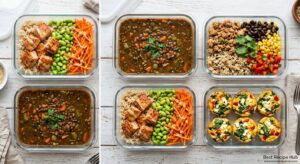 A complete weekly prep lineup featuring salmon bowls, egg muffins, lentil soup, and turkey quinoa bowls
Smart Storage Rules for Meal Prep Success
Even the best high protein meal prep ideas fail if food goes bad before you eat it. Follow these guidelines consistently:
Refrigerator Shelf Life
| Food Type | Days Fresh |
|---|---|
| Cooked meats (chicken, turkey, beef) | 3–4 days |
| Soups, stews, and legume dishes | 4–5 days |
| Hard-boiled eggs (unpeeled) | Up to 7 days |
| Greek yogurt overnight oats | 4–5 days |
Freezer Shelf Life
| Food Type | Months Fresh |
|---|---|
| Cooked chicken, turkey, and beef | Up to 3 months |
| Lentil soup and bean dishes | Up to 3 months |
| Cooked grains (rice, quinoa) | Up to 2 months |
| Egg muffins | Up to 1 month |
Container Best Practices
- Use glass containers with locking lids — microwave-safe, odor-resistant, and stain-free
- Label every container with the meal name and prep date
- Separate wet and dry components — store dressings and sauces in small side containers to prevent sogginess
- Uniform sizes make stacking easier and help you see all options at a glance
The One-Hour Weekly Meal Prep Routine
If you have exactly one hour per week, here is a repeatable, high-yield routine:
Minutes 0–10 — Start your protein. Get chicken in the oven, eggs boiling, or lentils simmering. These take longest, so they go first.
Minutes 10–25 — Cook your grains. Start a large pot of rice or quinoa. These simmer unattended while you move on.
Minutes 25–40 — Chop and roast vegetables. Use seasonal produce or frozen vegetables — zero chopping required.
Minutes 40–55 — Portion into containers. Divide all components into 4–5 complete meals, mixing proteins, grains, and vegetables.
Minutes 55–60 — Prep snacks. Assemble overnight oats jars or fill muffin tins for tomorrow's bake.
This modular system gives you flexibility without boredom. Monday's lunch is a chicken bowl. Tuesday's is a chicken wrap. Same prep, completely different eating experience.
5 Mistakes That Derail High Protein Meal Prep
Avoid these common pitfalls that cause meal prep to fail:
Overcomplicating the menu. Start with 2–3 protein sources — not 6 elaborate recipes. Complexity kills consistency.
Skipping breakfast protein. Most people front-load carbs in the morning, then struggle to hit protein targets all day. Overnight oats and egg muffins fix this permanently.
Ignoring snacks. Prepping main meals but skipping snacks leads to impulse choices at 3pm. Cottage cheese packs take five minutes to assemble.
Choosing meals that don't reheat well. Microwaved fish can be disruptive in shared workspaces. Use canned tuna or chicken for desk-friendly lunches.
Repeating the same flavors all week. Rotate spice profiles — Italian herbs Monday, Mexican Tuesday, teriyaki Wednesday — using the same base protein to keep every meal feeling fresh.
For heartier options that reheat beautifully, try a batch of our slow-cooked comfort meal for those weeks when you need something extra satisfying.
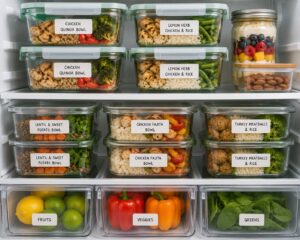 Labeled glass containers organized in the refrigerator for easy weekday access
How to Adapt Meal Prep for Different Dietary Preferences
For Plant-Based Eaters
Getting enough protein without animal products requires intentional combinations. Pair legumes with whole grains — rice and beans, lentil soup with whole wheat bread, hummus with pita — to create complete amino acid profiles. Tofu, tempeh, and edamame are your best friends for quick prep.
Our Mediterranean-inspired collection includes several plant-forward dishes that prep beautifully and deliver solid protein counts.
For Budget-Conscious Prep
The most cost-effective options remain eggs, canned tuna, dried lentils, canned chickpeas, and chicken thighs. Buying in bulk and choosing dried legumes over canned can bring your full weekly meal prep cost to under $30 for five days of lunches and dinners.
For Those Who Hate Reheated Food
Focus on meals designed to be eaten cold — grain bowls with vinaigrette, chickpea salads, chicken salad wraps, and overnight oats. These require zero reheating and often taste better after sitting overnight.
Frequently Asked Questions
Q1: How many grams of protein should I aim for in a meal prep meal?
Aim for 25–40 grams of protein per main meal and 10–15 grams per snack. This supports muscle maintenance, satiety, and consistent energy for most active adults. Adjust based on your body weight and daily activity level.
Q2: How long does high protein meal prep last in the fridge?
Most cooked proteins last 3–4 days in airtight containers. Soups and legume dishes stay fresh for 4–5 days. Freeze anything you won't eat within that window to prevent waste and maintain food safety.
Q3: What are the best high protein foods for meal prep beginners?
The best starting options are chicken breast, eggs, Greek yogurt, canned tuna, and lentils. They are affordable, easy to cook in bulk, and hold up well in the refrigerator for several days.
Q4: Can you meal prep high protein foods for an entire week?
Yes — prep proteins for 4–5 days and freeze the remainder for days 5–7. This keeps food fresh and safe throughout the full week rather than risking quality decline from extended refrigeration.
Q5: Is it possible to get enough protein on a plant-based meal prep plan?
Absolutely. Combine lentils, chickpeas, tofu, tempeh, edamame, quinoa, and hemp seeds across your weekly meals. Pairing complementary plant proteins — rice and beans, for example — ensures you obtain all essential amino acids.
Q6: What containers are best for high protein meal prep?
Glass containers with locking lids are the gold standard — microwave-safe, dishwasher-safe, and odor-resistant. BPA-free plastic is a budget-friendly alternative. Use 2–3 cup capacity containers for standard single-meal portions.
Q7: How do I prevent high protein meal prep meals from getting boring?
Use a modular prep system: prep proteins, grains, and vegetables separately, then combine them differently each day. Rotate spice profiles — Italian herbs, Mexican seasoning, teriyaki sauce — to make the same base ingredients feel like entirely different meals.
Q8: What are the cheapest high protein foods for meal prep on a budget?
The most cost-effective options are eggs, canned tuna, dried lentils, canned chickpeas, and chicken thighs. Buying in bulk and choosing dried legumes over canned can bring your full weekly meal prep cost to under $30 for five days of lunches and dinners.
Conclusion
High protein meal prep isn't about becoming a gourmet cook or spending your entire Sunday in the kitchen. It's about creating a system that makes eating well the path of least resistance during your busiest weeks.
Start small. Pick two recipes from this list — maybe the sheet pan chicken and the overnight oats — and prep them this weekend. See how it feels to have breakfast and lunch handled before Monday morning arrives.
After a few weeks, the habit locks in. Your energy stabilizes, your afternoon cravings disappear, and eating well stops feeling like one more thing on your to-do list.
Your next step: Choose one recipe from the seven above, write your grocery list, and set aside 60 minutes this weekend. That single hour will save you hours of daily food decisions — and keep your protein targets on track all week long.



1 thought on “The Best High Protein Meal Prep Ideas for Incredibly Busy People”