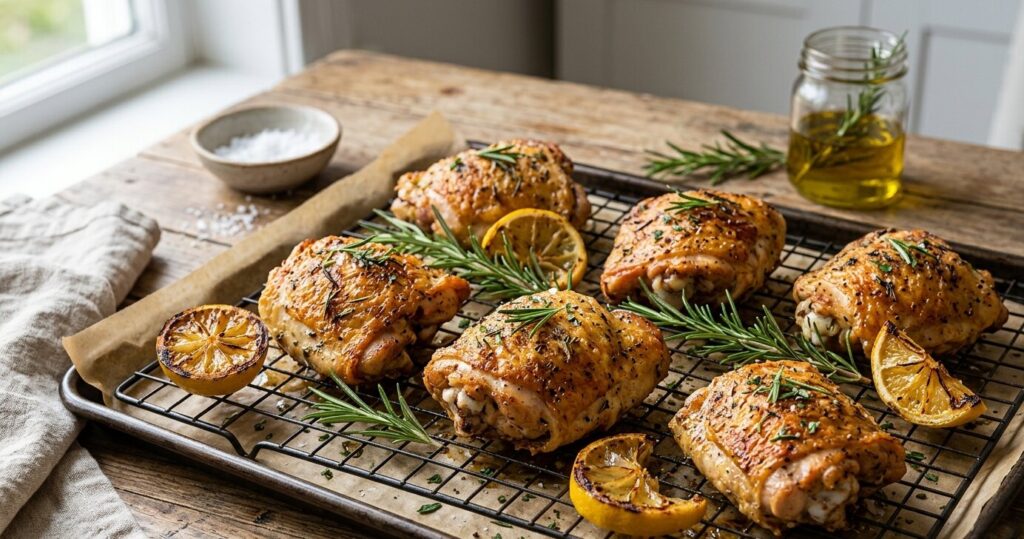
If you have ever opened the oven to find pale, rubbery skin and chicken that is dry on the outside yet pink near the bone, the problem is usually not the chicken. It is the method. Baked chicken thighs can be consistently juicy, deeply browned, and packed with flavor once you understand what actually makes them work: dry skin, high heat, and a thermometer.
This guide walks through the entire process, from choosing the right thighs to fixing the most common mistakes. Whether you need a fast weeknight dinner or something impressive enough for guests, you will have a simple system you can repeat every time. For more weeknight dinner ideas, start with this guide and then explore the rest of the recipe collection. For more on this, see our guide on best baked chicken thigh recipes.
Why Chicken Thighs Are the Most Forgiving Protein in the Kitchen
Chicken thighs deserve more attention than they usually get. They are dark meat, which means they contain more myoglobin and a higher fat content than chicken breasts. That fat does two useful things while the thighs bake:
- It self-bastes the meat from the inside, keeping the flesh moist.
- It renders into the skin, helping it turn brown and crisp.
Dark meat also contains more collagen. Collagen slowly breaks down into gelatin during cooking, which is why properly baked thighs feel silky and tender instead of dry and stringy. This gives the cook a wider margin for error. A chicken breast can go from perfectly juicy to dry in one minute. A thigh can handle a few extra degrees without falling apart, which makes it one of the best proteins for home cooks to practice on.
For the best texture and flavor, choose bone-in, skin-on thighs whenever possible. They cook evenly, stay juicy, and produce crackling skin. If you are meal-prepping for the week, use boneless skinless thighs as the protein in a weekly batch-cooking plan. For more on this, see our guide on baked chicken bruschetta.
Bone-In vs. Boneless: Which Thighs Should You Use?
The right thigh depends on how you plan to serve it.
Bone-In, Skin-On Thighs
Choose these when you want the deepest flavor and the crispiest skin. The bone conducts heat gently, which helps the meat cook more evenly, and the skin protects the flesh while rendering into a golden crust.
- Best for: Sunday dinners, entertaining, standalone main dishes
- Oven temperature: 425°F (220°C)
- Bake time: 40–45 minutes
- Internal finish temp: 175–185°F (80–85°C)
Boneless, Skinless Thighs
Choose these when you want speed and flexibility. They cook faster, slice easily, and soak up marinades well. They will not have the same crispy skin, but they still stay juicier than chicken breasts. For more on this, see our guide on ground chicken recipes 3.
- Best for: meal prep, tacos, rice bowls, stir-fries, saucy dishes
- Oven temperature: 400°F (205°C)
- Bake time: 25–30 minutes
- Internal finish temp: 175–185°F (80–85°C)
Boneless thighs with the skin still on are sometimes available too. If you find them, bake them at 425°F but check for doneness closer to the 30-minute mark.
How to Bake Perfect Chicken Thighs: Step-by-Step Method
Follow these steps in order and you will get the same result every time.
Step 1: Dry the Skin Thoroughly
Moisture is the enemy of crispy skin. Wet skin steams in the oven instead of browning, which leaves you with a soft, leathery exterior. For more on this, see our guide on how to make tea.
Start by patting the chicken completely dry with paper towels, including the underside. For the best results, place the thighs on a wire rack set inside a rimmed baking sheet, then leave them uncovered in the refrigerator for 1–2 hours or up to overnight. This air-drying step draws moisture out of the skin and seasons the surface at the same time.
If you have time, use a light dry brine. Sprinkle kosher salt over both sides at a rate of about 1 teaspoon per pound of chicken, then refrigerate uncovered overnight. The salt seasons the meat deeply and helps the skin dry out further. The same temperature and handling rules apply as with any raw poultry, so keep the chicken refrigerated until you are ready to cook. For more on this, see our guide on easy air fryer chicken recipes.
Step 2: Season Under and Over the Skin
Seasoning only the outside of the skin means the spices never reach the meat. To get flavor into every bite, season the flesh directly.
Here is a reliable all-purpose blend for four thighs:
| Ingredient | Amount |
|---|---|
| Kosher salt | 1 teaspoon per pound |
| Garlic powder | 1 teaspoon |
| Smoked paprika | 1 teaspoon |
| Onion powder | ½ teaspoon |
| Black pepper | ½ teaspoon |
| Dried oregano or thyme | ½ teaspoon |
| Cayenne pepper (optional) | ¼ teaspoon |
| Olive oil | 1 tablespoon |
Apply it in this order:
- Drizzle the olive oil over the chicken.
- Gently loosen the skin with your fingers, but do not tear it off.
- Sprinkle the seasoning directly onto the meat under the skin.
- Lay the skin back down.
- Season the outside of the skin generously and press lightly so the rub adheres.

Seasoning under the skin keeps the spice flavor in the meat, not just on the surface.
If you are using a store-bought spice mix, be careful with additional salt. Many blends already contain salt, so you may not need the full teaspoon per pound.
Step 3: Use a Wire Rack and the Right Pan
A wire rack set inside a rimmed baking sheet is the best setup for baked chicken thighs. It lifts the meat off the bottom of the pan, so hot air circulates underneath and the skin crisps on all sides. Rendered fat drips down instead of pooling around the chicken and steaming it.
A cast-iron skillet also works extremely well. It holds heat evenly and gives the underside a head start on browning. If you use one, preheat it in the oven for about 10 minutes before carefully placing the chicken in it.
Avoid glass baking dishes and covered pans for this recipe. Both trap steam and produce soft skin, no matter how high the oven temperature is.
Step 4: Bake at High Heat
The ideal temperature for bone-in, skin-on thighs is 425°F (220°C). Boneless, skinless thighs cook well at 400°F (205°C). Baking at 350°F might be common for other chicken dishes, but it is too low here. It renders the fat slowly and makes the skin pale and flabby.
| Thigh Type | Oven Temperature | Approximate Bake Time |
|---|---|---|
| Bone-in, skin-on | 425°F (220°C) | 40–45 minutes |
| Boneless, skinless | 400°F (205°C) | 25–30 minutes |
| Extra-large bone-in | 425°F (220°C) | 45–50 minutes |
Use the middle rack for even heat distribution. If the skin needs extra color in the last few minutes, move the pan to the upper third of the oven. Do not cover the pan and do not open the oven door more than necessary.
Step 5: Check the Internal Temperature, Not the Clock
Time is just a guideline. The only reliable way to know when baked chicken thighs are done is to measure the internal temperature.
Insert an instant-read thermometer into the thickest part of the thigh, away from the bone. According to USDA poultry safety guidance, chicken is safe at 165°F (74°C). For thighs specifically, aim higher.
- 165°F (74°C): Safe, but still slightly firm for dark meat.
- 175°F (79°C): The collagen begins to break down fully, and the meat turns noticeably more tender.
- 180–185°F (82–85°C): The sweet spot for silky, pull-apart thighs.
Unlike chicken breasts, thighs do not punish you for going a little past the safe minimum. The extra heat melts connective tissue and makes the meat even more succulent.
Step 6: Rest Before Serving
Resting is not optional. As chicken cooks, heat pushes the juices toward the center. Cutting into it immediately lets those juices pour out onto the cutting board instead of staying in the meat.
Leave the thighs on the wire rack, tent them loosely with foil, and rest them for at least 5–10 minutes. The temperature will also rise slightly during this time, which is known as carryover cooking.
5 Flavor Variations That Keep It Interesting
Once the base method feels familiar, these flavor variations turn the same batch of thighs into completely different meals.
Garlic Butter Herb
Melt 3 tablespoons of butter with 4 minced garlic cloves, 1 teaspoon of chopped rosemary, and 1 teaspoon of chopped thyme. Brush the mixture over the thighs twice during the final 10–12 minutes of baking for a rich, aromatic finish.
Honey Soy Glazed
Whisk together 2 tablespoons soy sauce, 2 tablespoons honey, 1 tablespoon rice vinegar, and 1 teaspoon sesame oil. Brush the glaze on during the final 10 minutes so the sugars caramelize without burning.
Lemon Herb Mediterranean
Mix 2 tablespoons olive oil, the juice of 1 lemon, 3 minced garlic cloves, and 1 teaspoon dried oregano. Marinate for 1–4 hours before baking, then finish with fresh lemon juice and chopped parsley.
Crispy Parmesan Crusted
Combine ⅓ cup grated Parmesan, ⅓ cup panko breadcrumbs, 1 teaspoon Italian seasoning, and 2 tablespoons olive oil. Press the mixture onto the skin side before baking for an extra crunchy, savory crust.
Spicy Chipotle Lime
Stir together 2 chopped chipotle peppers in adobo, the juice of 2 limes, 1 teaspoon ground cumin, and 1 tablespoon honey. Brush over the thighs in the final 10 minutes. They are excellent over rice or tucked into tacos.
What to Serve with Baked Chicken Thighs
The same high oven temperature makes it easy to build a full dinner at once.
Vegetables: Toss broccoli, asparagus, green beans, or Brussels sprouts with olive oil, salt, and pepper, then roast them on a separate sheet pan alongside the chicken. Most vegetables cook in 15–20 minutes at 425°F.
Starches: Creamy mashed potatoes, garlic butter rice, roasted potatoes, or buttered egg noodles all pair well with the pan juices.
Quick pan sauce: After removing the chicken, pour off most of the fat and set the pan over medium heat. Add a splash of chicken broth or white wine, scrape up the browned bits with a spoon, and simmer for 2 minutes. Whisk in a tablespoon of butter for a glossy, deeply flavored sauce.

A tray of baked thighs and roasted vegetables makes a complete weeknight dinner.
Serve the chicken alongside buttery drop biscuits or start the meal with a hearty bowl of soup if you want a full spread.
How to Store, Reheat, and Repurpose Leftovers
Baked chicken thighs keep well, which makes them excellent for meal prep.
Storing
Cool the chicken completely before refrigerating. Store in an airtight container and refrigerate for up to 4 days. For longer storage, freeze the thighs for up to 3 months. If you plan to freeze them, remove the skin first because it tends to turn soggy after thawing.
Reheating
For crispy skin again, skip the microwave. Place the thighs on a wire rack set inside a baking sheet, then reheat at 375°F (190°C) for 12–15 minutes. The dry heat re-crisps the skin while keeping the meat moist.
Leftover Ideas
Shred the meat for chicken tacos, slice it over grain bowls, or chop it into pasta with marinara or a cream sauce. You can also fold shredded chicken into weeknight fried rice for a fast next-day meal.
Common Mistakes That Ruin Baked Chicken Thighs
These six mistakes explain most disappointing results.
| Mistake | What Happens | The Fix |
|---|---|---|
| Cooking straight from the fridge | The outside cooks faster than the inside | Let thighs sit at room temperature for 20–30 minutes |
| Crowding the pan | Steam forms and the skin turns soft | Leave at least 1 inch between pieces |
| Baking at a low temperature | The skin renders slowly and stays pale | Use 425°F for bone-in thighs |
| Covering the pan | Moisture gets trapped against the skin | Bake uncovered on a wire rack |
| Checking color instead of temperature | Pink near the bone or dry flesh | Always use an instant-read thermometer |
| Basting constantly | The oven loses heat every time the door opens | Baste once at most, during the final 10 minutes |
Frequently Asked Questions
What temperature should I bake chicken thighs at?
Bake bone-in, skin-on thighs at 425°F (220°C) for 40–45 minutes. Boneless, skinless thighs are best at 400°F (205°C) for 25–30 minutes. High heat is essential for crispy skin and well-rendered fat.
How do I know when baked chicken thighs are done?
Insert an instant-read thermometer into the thickest part of the thigh, away from the bone. The USDA safe minimum is 165°F, but thighs taste best when cooked to 175–185°F, where the collagen breaks down and the meat becomes tender.
Should I cover chicken thighs when baking?
No. Covering traps steam and makes the skin soft. Bake thighs uncovered on a wire rack. If the skin is browning too quickly before the meat is fully cooked, tent the pan loosely with foil for the last few minutes.
Can I bake frozen chicken thighs without thawing?
Yes, but the result will not be as good. Baking from frozen adds roughly 50% more time, and the skin will not crisp well. Thaw chicken thighs in the refrigerator overnight before baking for the best texture.
How do I get crispy skin on baked chicken thighs?
Start with dry skin, bake at 425°F, use a wire rack, and leave space between the pieces. Moisture, low heat, and crowded pans are the main reasons skin stays flabby.
Conclusion
Perfect baked chicken thighs come down to three consistent habits: dry the skin, bake hot, and use a thermometer. Choose bone-in, skin-on thighs for the deepest flavor, season generously under the skin, and pull them from the oven at 175–185°F. Let them rest for a few minutes, and they will reward you with juicy meat and crackling skin every single time.
Pick one of the five variations and cook it this week. Set your oven to 425°F, add a tray of roasted vegetables to the same oven, and you will have a dinner that feels restaurant-quality with very little active work. Once this method becomes routine, you will never go back to pale, rubbery chicken again.



3 thoughts on “How to Make Perfect Baked Chicken Thighs Every Single Time”