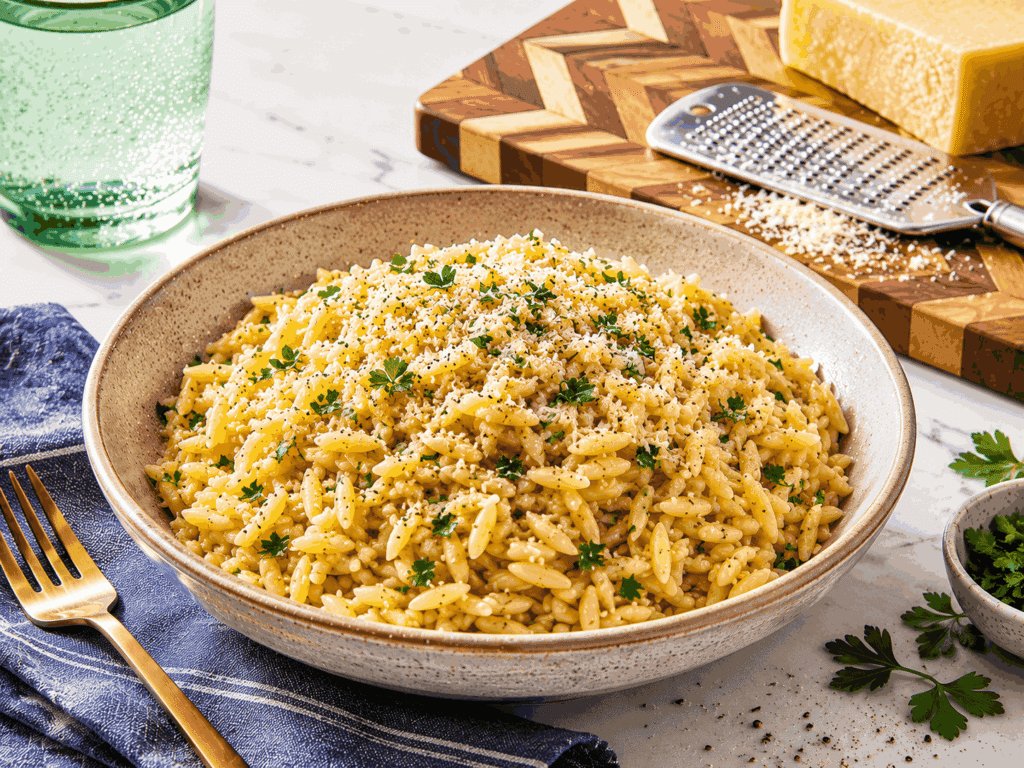
Orzo is the most underrated shape in the pasta aisle. It cooks in under ten minutes, absorbs sauce like risotto rice, and works hot, warm, or cold — which means one box can carry you from a creamy Parmesan skillet dinner on Monday to a lemony picnic salad on Saturday.
This guide covers the techniques that actually matter: the three ways to cook orzo, the liquid ratios that prevent gluey results, a master creamy orzo recipe you can memorize, plus one-pot dinners, make-ahead salads, and kid-tested family favorites. Everything here is built around the mistakes people make most — mushy orzo, salads that dry out overnight, and sauces that break when reheated.
What Is Orzo, Exactly?
Orzo (Italian for "barley," because it resembles a barley grain) is a small rice-shaped pasta made from durum wheat semolina. In Greek cooking the same shape is called kritharaki or manestra; in the Middle East you'll see a similar toasted version called lisan al-asfour.
It is pasta, not a grain. That matters for two reasons:
- It contains gluten unless you buy a labeled gluten-free version (usually corn and rice flour).
- It releases starch as it cooks, which is exactly why it turns creamy without much dairy — and exactly why it can turn to paste if you walk away.
Orzo sizes and styles
| Type | Look | Best for |
|---|---|---|
| Standard semolina orzo | Pale, glossy grains ~6 mm | Everything — the default choice |
| Toasted orzo | Golden brown, nuttier | Pilafs, soups, brothy skillet meals |
| Whole wheat orzo | Tan, chewier | Salads, bowls with bold dressings |
| Gluten-free orzo | Slightly duller, softer | Salads; cook 1–2 min under package time |
| Pearl couscous (not orzo) | Round, springy | A substitute, but cooks differently |
In practice: brands vary in size more than you'd expect. Always start tasting two minutes before the package time says you should.
The Three Ways to Cook Orzo
Nearly every orzo recipe you'll ever meet is one of these three methods. Learn them once and you can improvise forever.
1. Boiled (best for pasta salads)
Cook in a large pot of well-salted boiling water — about 4 quarts of water and 1 tablespoon of salt per pound. Standard orzo needs 8–9 minutes for al dente. Drain, then rinse briefly under cool water to stop cooking and wash off excess starch so the grains stay separate.
Rinsing is normally a pasta crime. For cold salads it's the correct move.
2. Pilaf / absorption method (best for side dishes)
Toast the dry orzo in butter or olive oil until it smells nutty and turns light gold, then add hot liquid and simmer covered until absorbed. This is the method behind the creamy recipe below, and it delivers the deepest flavor because toasting develops the wheat's natural sweetness.
3. Orzotto (best for one-pot mains)
Treat orzo like risotto rice: add hot stock in stages, stirring, until the starch builds a silky sauce. Slower, but the texture is genuinely restaurant-level.
Liquid ratios that work
| Method | Dry orzo | Liquid | Time | Result |
|---|---|---|---|---|
| Boiled | 1 cup (190 g) | 4 qt water | 8–9 min | Separate grains |
| Pilaf | 1 cup | 2 cups broth | 9–11 min, covered | Tender, lightly creamy |
| Orzotto | 1 cup | 2½ cups broth, added in thirds | 12–14 min, stirring | Thick and glossy |
| Soup | ½ cup | 6+ cups broth | Add last 8 min | Brothy, absorbs as it sits |
One cup of dry orzo yields roughly 2½ cups cooked — enough for four side portions or two generous mains.
Master Recipe: Creamy Garlic Parmesan Orzo
This is the backbone recipe. Once you can make it, chicken orzo, shrimp orzo, and lemon orzo are all one ingredient away.
Yield: 4 side servings or 2 mains · Active time: 20 minutes · Skillet: 10–12 inch
Ingredients
| Ingredient | Amount | Notes |
|---|---|---|
| Orzo pasta | 1 cup (190 g) | Standard or toasted |
| Unsalted butter | 2 tbsp | Or 2 tbsp olive oil |
| Garlic, minced | 4 cloves | Add late — it burns fast |
| Chicken or vegetable broth | 2 cups, hot | Low-sodium so you control salt |
| Parmigiano-Reggiano, finely grated | ¾ cup (about 60 g) | Grate it yourself |
| Heavy cream | ¼ cup | Or ⅓ cup whole milk + 1 tsp butter |
| Fine salt | ½ tsp | Adjust after the cheese goes in |
| Black pepper | ¼ tsp, freshly ground | |
| Flat-leaf parsley, chopped | 2 tbsp | Chives or dill also work |
| Lemon zest | ½ tsp (optional) | Lifts the whole dish |
Method
- Toast. Melt the butter over medium heat. Add the dry orzo and stir for 2–3 minutes until the grains smell toasty and turn the color of pale straw. Don't rush this on high heat — the edges scorch before the centers develop flavor.
- Bloom the garlic. Add the garlic and stir for 30–45 seconds, just to fragrance. Garlic burns in well under a minute at this temperature.
- Simmer. Pour in the hot broth (cold broth stalls the pan and adds minutes). Bring to a gentle simmer, then reduce the heat to low and cook 9–11 minutes, stirring every couple of minutes and scraping the bottom.
- Check the texture. You want the orzo tender with the faintest bite and a little loose liquid still in the pan — it should look slightly too wet. It will tighten in the next step.
- Finish off the heat. Pull the pan from the burner, wait 30 seconds, then stir in the cream and Parmesan until smooth. Adding cheese to a boiling pan is the number-one cause of grainy, separated orzo.
- Season and serve. Salt, pepper, parsley, optional lemon zest. Serve within 10 minutes for peak creaminess.
Quick answer: how do you make Parmesan garlic orzo?
Toast 1 cup orzo in butter, add garlic for 30 seconds, simmer in 2 cups hot broth for 9–11 minutes, then stir in cream and grated Parmesan off the heat. Season and serve. Total time: about 20 minutes.
One-Pot Orzo Dinners
The absorption method makes orzo a natural for single-skillet meals: the pasta cooks in the same liquid that becomes the sauce, so nothing gets rinsed away. The one rule is timing — add orzo only when everything slower is nearly done, or you'll end up with mush surrounding undercooked vegetables.
Chicken and spinach orzo skillet
Sear seasoned chicken thighs or diced breast, set aside, then build the pilaf in the same pan so the browned bits dissolve into the broth. Return the chicken for the last 5 minutes and stir in a few big handfuls of spinach at the end. If you prefer dark meat, the technique in our guide to juicy oven-roasted thighs transfers directly to the skillet. For lean cuts, our notes on cooking breast meat without drying it explain the resting step most people skip.
Tomato orzo with feta
Simmer orzo in broth with a can of crushed tomatoes plus a pinch of sugar, then crumble feta over the top and cover for two minutes so it softens without melting into strings. Halved sweet tomatoes blistered in olive oil add a second layer of flavor — the roasting method in these ideas for small summer tomatoes works beautifully stirred in at the finish.
Lemon orzo with salmon
Cook the orzo pilaf-style with a strip of lemon peel in the broth, then top with flaked salmon and dill. Cooking the fish separately keeps the flakes intact; a quick crisp-edged salmon fillet finishes in about the same time the orzo needs.
Orzo with meatballs (the family peacekeeper)
Poach small meatballs directly in the simmering broth for the last 10 minutes — they season the liquid as they cook. Our go-to method for tender meatballs scales down well to 1-inch portions for this.
Spiced orzo with chickpeas and greens
Toast the orzo with cumin, coriander, and a pinch of cinnamon, then simmer with chickpeas and finish with chopped chard. If that warm-spice direction appeals, the flavor logic behind North African pantry cooking pairs naturally with orzo, and sturdy stems from rainbow-stemmed leafy greens can go in early with the aromatics.
Trade-off worth knowing: one-pot orzo tastes better and dirties fewer dishes, but leftovers thicken hard overnight because the pasta keeps absorbing. Cook one-pot meals for same-day eating; use the boiled method when you're deliberately making leftovers. If skillet pasta becomes your default, our broader collection of single-skillet noodle dinners uses the same absorption principles with other shapes.
Orzo Pasta Salads That Don't Dry Out
Orzo salad is the best make-ahead pasta salad there is, because the grains hold dressing without going limp. But it fails in a predictable way: it tastes perfect at 6 p.m. and chalky by noon the next day.
The fix, in three steps
- Cook to true al dente — pull it a full minute early. It softens in the dressing.
- Dress it warm, not cold. Warm orzo absorbs about a third of the vinaigrette immediately; that's the layer that keeps it seasoned from the inside.
- Reserve a third of the dressing and add it just before serving to refresh the surface.
Vinaigrette ratio
Use 3 parts oil to 1 part acid, then add ½ teaspoon Dijon per ¼ cup of oil as an emulsifier. For 1 cup of dry orzo (about 2½ cups cooked), start with ⅓ cup total dressing and adjust.
Three combinations that work
| Salad | Add-ins | Dressing |
|---|---|---|
| Mediterranean | Cucumber, cherry tomatoes, Kalamata olives, red onion, feta, oregano | Lemon-olive oil |
| Lemon-herb with peas | Frozen peas (thawed in the colander), dill, mint, scallion, toasted pine nuts | Lemon, Dijon, olive oil |
| Roasted vegetable | Zucchini, bell pepper, red onion, chickpeas, basil | Balsamic, garlic |
A common mistake is salting the cucumbers and tomatoes into the salad hours ahead — they leach water and dilute everything. Salt them separately, drain 10 minutes, then fold in. Batch-roasting the vegetables in advance also speeds this up; the timing chart in our guide to crisp-tender basket-roasted veg covers most of what goes into an orzo salad.
Orzo salad is also naturally scalable for potlucks: it holds at room temperature for the two-hour window food safety guidance allows, and the USDA's food safety resources are worth a skim before any outdoor gathering, since the safe holding time drops to one hour above 90°F.
Family Favorites and Kid-Friendly Ideas
Orzo's small size is a genuine advantage with picky eaters — it looks like rice, feels familiar, and hides finely chopped vegetables well.
- Butter-Parmesan orzo: the master recipe minus garlic and cream. Two ingredients, zero resistance.
- Cheesy orzo "mac": stir in ½ cup shredded sharp cheddar off the heat instead of Parmesan.
- Chicken orzo soup: add ½ cup orzo to the last 8 minutes of a pot of chicken soup. It will keep drinking broth overnight, so store the pasta separately if you want soup rather than stew on day two.
- Orzo with ground meat and hidden veg: grate carrot and zucchini into browned ground chicken or turkey, then fold in cooked orzo. Our lighter ground-poultry dinners work as a base for exactly this.
- Sheet-pan protein + orzo side: a simple pilaf under quick weeknight air-fryer chicken turns a 15-minute protein into a full plate.
What to serve with orzo
| Pairing | Why it works |
|---|---|
| Grilled or roasted chicken | High-protein, neutral — the safest crowd-pleaser |
| Garlic shrimp | 3-minute cook time matches the orzo |
| Baked salmon | Cream and lemon both flatter oily fish |
| Roasted broccoli or asparagus | Bitterness cuts the richness |
| Big green salad with sharp vinaigrette | Acid resets the palate between rich bites |
Nutrition, Substitutions, and Honest Trade-Offs
A 2-ounce (56 g) dry serving of semolina orzo runs roughly 200 calories with about 7 g of protein and 1–2 g of fiber — nutritionally near-identical to any other durum wheat pasta. If you want exact values for a specific product, check the label or look the ingredient up in the USDA's FoodData Central database rather than relying on generalized figures.
Practical swaps:
- Whole wheat orzo roughly triples the fiber and holds up better in salads, but it needs 1–2 extra minutes and tastes noticeably earthier. It's a poor match for delicate cream sauces.
- Gluten-free orzo works, with caveats: it releases more starch, breaks apart if overcooked, and does not reheat well. Cook it 1–2 minutes short and use it in salads.
- Lower-fat creamy orzo: replace the cream with ⅓ cup whole milk plus 1 extra tablespoon of Parmesan, or stir in ¼ cup plain Greek yogurt off the heat. Cottage cheese blended smooth also works surprisingly well — the same trick behind our high-protein curd-cheese dishes.
- Salt control: because the orzo absorbs the broth entirely in the pilaf method, using full-sodium broth plus Parmesan almost always overshoots. Start with low-sodium and season at the end.
Troubleshooting: Fixing Common Orzo Problems
| Problem | Cause | Fix |
|---|---|---|
| Gluey, clumped orzo | Too little liquid or overcooking | Loosen with hot broth off the heat; next time pull it 1 minute early |
| Sauce turned grainy | Cheese added to boiling liquid | Remove from heat 30 seconds before adding cheese; use freshly grated |
| Scorched bottom of pan | Too little stirring, heat too high | Simmer on low, stir every 2 minutes, use a heavy-bottomed pan |
| Bland even after salting | Cooked in water instead of broth | Use broth, and finish with lemon zest or grated cheese |
| Salad tastes dry next day | All dressing absorbed | Hold back ⅓ of the vinaigrette and add at serving |
| Bitter, harsh garlic | Added with the dry orzo | Add garlic in the final 30–45 seconds before liquid |
| Leftovers set like a brick | Starch continues absorbing | Reheat with 2–3 tbsp liquid per cup, stirring |
Storage, Reheating, and Meal Prep
- Refrigerator: store cooked orzo in an airtight container and use it within 3–4 days, in line with standard leftover guidance. Cool it within two hours of cooking.
- Freezer: plain boiled orzo freezes acceptably for up to 2 months, spread flat in a bag. Cream-based orzo is a weaker candidate — dairy sauces often separate on thawing.
- Reheating: add 2–3 tablespoons of broth, milk, or water per cup of orzo, then warm gently in a skillet over low heat or microwave in 45-second bursts, stirring between. Reheat to steaming hot throughout.
- Meal prep strategy: cook a double batch of plain boiled orzo on Sunday. Dress a third as salad, keep a third plain for reheating with a protein, and use the last third in soup mid-week.
Build-Your-Own Orzo Formula
Once the technique is second nature, stop following recipes:
1 cup orzo + 2 cups hot broth + fat + aromatic + finisher + protein + green
| Slot | Options |
|---|---|
| Fat | Butter, olive oil, bacon fat |
| Aromatic | Garlic, shallot, leek, onion, fennel |
| Finisher | Parmesan, feta, goat cheese, lemon + herbs, pesto, harissa |
| Protein | Chicken, shrimp, salmon, meatballs, chickpeas, white beans |
| Green | Spinach, peas, chard, asparagus, broccoli, arugula (raw, at the end) |
Pick one from each row and you have a defensible dinner. That flexibility is the whole point of keeping orzo in the pantry.
Conclusion
Orzo earns its shelf space because it does three jobs well: it becomes a creamy skillet dinner in 20 minutes, a make-ahead salad that improves in the fridge, and a soup pasta kids will actually finish. Master the toast-then-simmer pilaf method, respect the 2:1 broth ratio, add cheese off the heat, and hold back some vinaigrette for salads — those four habits cover almost every orzo recipe you'll ever cook.
Start with the creamy garlic Parmesan version tonight, then run it through the build-your-own formula next week with shrimp and lemon or chickpeas and chard.
Bookmark this page, then browse our full collection of tested weeknight dinners to pair with your orzo — and if you're feeding the family on a tight clock, our fast basket-cooked mains get a protein on the plate in the same 20 minutes the orzo needs.
Why Trust This Guide
These recipes and ratios reflect repeated home-kitchen testing across different brands of orzo and different pan sizes, because results genuinely shift between them. Cooking times are given as ranges rather than absolutes for that reason. Food storage and holding-time advice follows current published federal food safety guidance rather than kitchen folklore, and nutrition figures are described as approximate ranges — where a precise number depends on the specific product, we point you to the label instead of inventing one.
Frequently Asked Questions
Is orzo pasta or rice?
Orzo is pasta, made from durum wheat semolina. It only looks like rice. That means it contains gluten and cooks by pasta rules, not rice rules.
How long does orzo take to cook?
About 8–9 minutes boiled in salted water, or 9–11 minutes simmered in broth using the pilaf method. Whole wheat needs 1–2 minutes more; gluten-free needs 1–2 minutes less. Always taste early.
How much dry orzo per person?
Roughly 2 ounces (about ⅓ cup) dry per person as a side, or 3–4 ounces as a main. One cup dry yields about 2½ cups cooked.
Do I rinse orzo after cooking?
Rinse it only for cold pasta salads, to stop cooking and prevent clumping. Never rinse orzo destined for a sauce — that surface starch is what makes it creamy.
Can I make orzo ahead of time?
Yes. Cooked orzo keeps 3–4 days refrigerated in an airtight container. Creamy versions thicken as they sit; loosen them with a splash of broth or milk when reheating.
Can I use milk instead of heavy cream?
Yes — use ⅓ cup whole milk plus an extra tablespoon of butter or Parmesan. The result is slightly thinner, and skim milk is more likely to look watery.
What's the best cheese for orzo?
Freshly grated Parmigiano-Reggiano or Pecorino Romano for creamy dishes; feta or goat cheese for salads. Pre-shredded cheese contains anti-caking starch that makes sauces grainy.
Why did my orzo turn out mushy?
Almost always overcooking or too little liquid movement. Simmer gently rather than boiling hard, stir every couple of minutes, and pull it while there's still a faint bite.
Can I substitute something for orzo?
Pearl couscous, acini di pepe, ditalini, or fregola all work in similar roles. Adjust the liquid and timing to the package directions — none of them absorb at exactly the same rate.
Is orzo healthy?
It's comparable to other wheat pasta: a solid carbohydrate base with modest protein and low fiber. Choose whole wheat for more fiber, keep portions to about 2 ounces dry, and build the plate around vegetables and lean protein.



5 thoughts on “Orzo Recipes Made Easy: One-Pot Meals, Pasta Salads, and Family Favorites”