
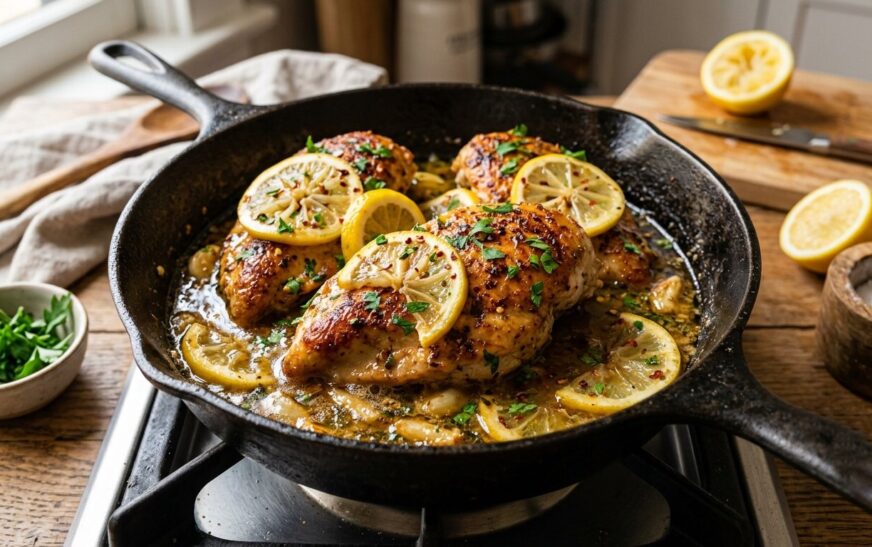
This Easy Lemon Garlic Chicken recipe is a quick, vibrant dinner option that brings incredible flavor to your table in under 30 minutes. Combining fresh citrus, robust garlic, and aromatic herbs, it creates a beautifully tender dish that is perfect for busy weeknights. You can explore top-rated variations from the web, or follow the classic skillet recipe outlined below.
Why Lemon Garlic Chicken Works So Well
The magic of this dish isn’t complicated – it’s chemistry. Acid, fat, and aromatics are a classic flavor trio for a reason:
- Lemon juice brightens and balances richness, cutting through the savoriness of the chicken and butter.
- Garlic adds deep, pungent flavor that mellows and sweetens as it cooks.
- Butter or olive oil carries flavor and helps create that glossy, restaurant-style pan sauce.
This balance also explains why lemon garlic chicken shows up constantly in Mediterranean and American home cooking. It’s not a trend – it’s a technique that has quietly worked for generations of home cooks.
From a practical standpoint, this recipe solves a real problem: chicken breast dries out easily. Here’s how the method below directly addresses that:
- The quick sear locks in a flavorful crust before the chicken overcooks.
- The pan sauce keeps the meat moist during the final simmer.
- A short resting period lets the juices redistribute instead of spilling out.
What You’ll Need
You don’t need anything exotic here. That’s part of the appeal.
For the Chicken
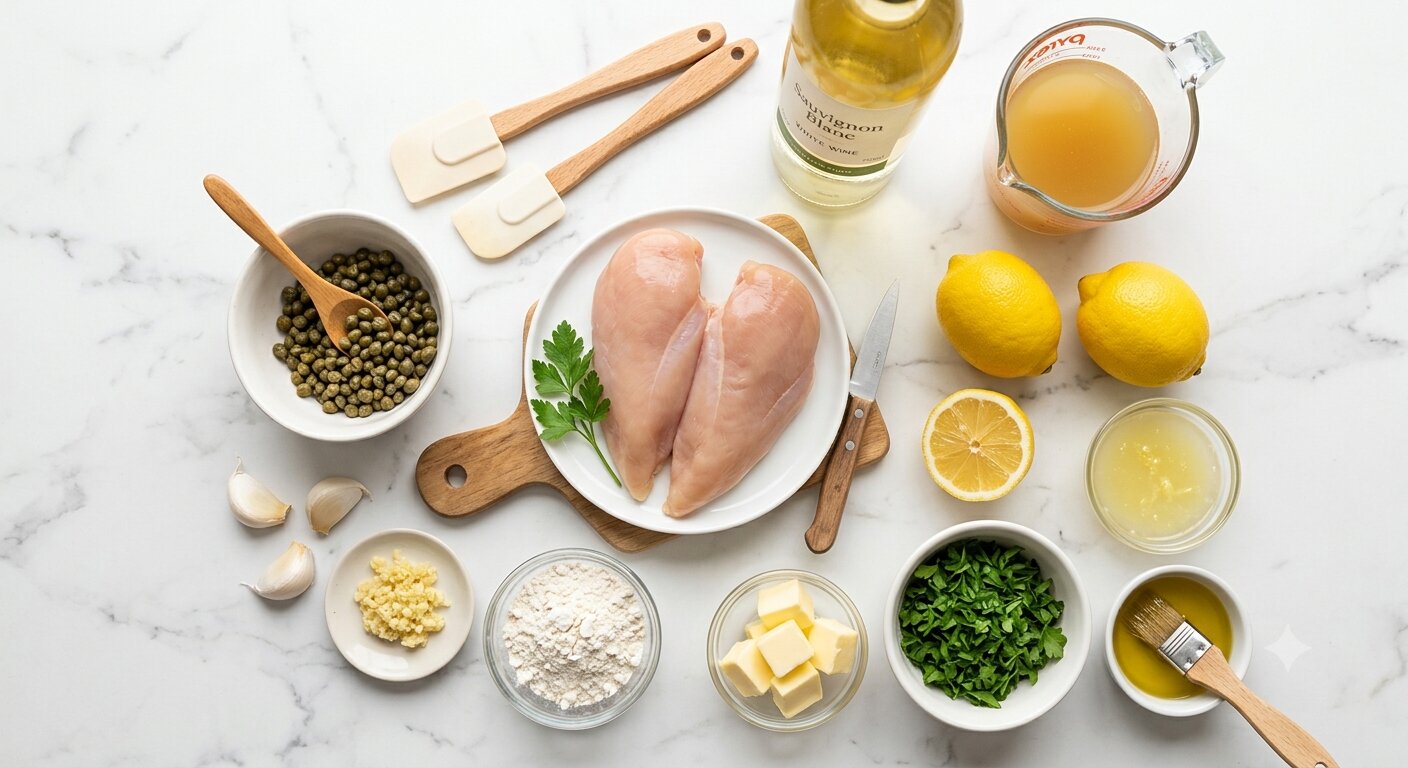
- 4 boneless, skinless chicken breasts (or 6–8 boneless thighs)
- 1 teaspoon salt
- ½ teaspoon black pepper
- 1 teaspoon paprika (optional, for color and a subtle smokiness)
- 2 tablespoons olive oil
For the Lemon Garlic Sauce
- 4 tablespoons unsalted butter
- 5–6 cloves garlic, minced
- ⅓ cup fresh lemon juice (about 2 lemons)
- 1 teaspoon lemon zest
- ½ cup chicken broth
- 1 tablespoon fresh parsley, chopped
- Pinch of red pepper flakes (optional)
A quick but important note: always use fresh lemon juice, not bottled. Bottled juice has a flat, slightly metallic taste that dulls the entire dish. Fresh lemon is non-negotiable for the bright flavor this recipe promises.
How to Make Lemon Garlic Chicken (Step-by-Step)
This method works whether you’re using a skillet on the stovetop or finishing things in the oven.
Step 1: Prep and Season the Chicken
- Pat the chicken dry with paper towels. A wet surface won’t brown – it will steam, and you’ll lose the golden crust that holds in flavor.
- Season both sides generously with salt, pepper, and paprika.
- Let the chicken sit at room temperature for 10 minutes before cooking, so it sears evenly.
Step 2: Sear Until Golden
- Heat olive oil in a large skillet over medium-high heat.
- Add the chicken and don’t move it for 5–6 minutes per side.
- Resist the urge to peek constantly – undisturbed contact with the pan is what builds the golden-brown crust.
- Once both sides are golden and the internal temperature reaches 165°F, remove the chicken and set it aside.
Step 3: Build the Lemon Garlic Sauce
In the same skillet (don’t wipe it out – those browned bits are flavor gold):
- Lower the heat to medium.
- Melt the butter and add the minced garlic.
- Sauté for 30–45 seconds, just until fragrant. Garlic burns fast, and burnt garlic turns bitter, so don’t walk away here.
- Pour in the chicken broth and lemon juice, scraping the bottom of the pan to release any stuck-on bits.
- Simmer for 2–3 minutes until the sauce slightly reduces and thickens.

Step 4: Bring It All Together
- Return the chicken to the skillet, spooning sauce over each piece.
- Let it simmer for 2–3 more minutes so the chicken reabsorbs some of that lemon-garlic flavor.
- Finish with lemon zest, fresh parsley, and red pepper flakes if you like a little heat.
That’s it. Twenty-five minutes, one pan, and a finished dish that looks like it came from a restaurant.
Pro Tips for the Best Lemon Garlic Chicken
These details consistently separate a good version of this dish from a forgettable one:
- Pound thick chicken breasts to an even thickness. Uneven chicken cooks unevenly – the thin end overcooks while the thick end stays raw.
- Let the chicken rest for 5 minutes after cooking. Cutting into it immediately releases all the juices onto the cutting board instead of into the meat.
- Taste the sauce before serving. Lemons vary in acidity. If it tastes too sharp, add a touch more butter or a pinch of sugar to balance it.
- Use a meat thermometer. Guessing leads to either dry, overcooked chicken or undercooked chicken – neither is worth the risk.
- Don’t overcrowd the pan. If the chicken pieces touch, they release steam instead of searing, and you lose the crust.
Common Mistakes That Ruin Lemon Garlic Chicken
Most failures with this dish come down to a handful of avoidable errors:
- Cooking straight from the fridge. Cold chicken hitting a hot pan cooks unevenly – the outside browns while the center lags behind.
- Adding lemon juice too early. If lemon juice hits the pan before the garlic has had a chance to bloom in the butter, the dish tastes sharp and one-note instead of layered.
- Using a pan that’s too small. Crowding forces the chicken to steam rather than sear, which means no golden crust and a paler, less flavorful dish.
- Skipping the rest period. Even five minutes off the heat lets the juices redistribute through the meat instead of pooling out when you cut into it.
- Over-reducing the sauce. Lemon-based sauces can go from glossy to greasy-thin if left on heat too long, since the butter separates.
Avoiding these five issues alone will put your results ahead of most home versions of this dish.
Lemon Garlic Chicken Variations
Once you understand the base technique, you can adapt it to whatever you have on hand:
- Lemon Garlic Chicken Thighs: Bone-in or boneless thighs are more forgiving than breast meat thanks to their higher fat content. They take slightly longer to cook (about 8–9 minutes per side) but reward you with extra juiciness.
- Baked Lemon Garlic Chicken: Sear the chicken for color, then transfer it to a 400°F oven for 12–15 minutes to finish cooking while you make the sauce separately on the stovetop. Ideal for batch meal prep.
- Grilled Lemon Garlic Chicken: Marinate the chicken in the lemon-garlic mixture for 30 minutes to 4 hours before grilling. The direct heat adds a smoky char that pairs beautifully with the bright citrus.
- Creamy Lemon Garlic Chicken: Stir in 2–3 tablespoons of heavy cream at the end of the sauce step for a richer, velvety finish – especially good served over pasta.
What to Serve With Lemon Garlic Chicken
This dish pairs well with almost anything because the flavor profile is light, bright, and not overly heavy:
- Garlic butter rice or orzo to soak up the extra sauce
- Roasted asparagus or green beans for a simple vegetable side
- Crusty bread for mopping up every last bit of sauce
- A simple arugula salad with olive oil and lemon for a dish that echoes the main flavors
- Mashed potatoes if you want something heartier
If you’re serving guests, rice and asparagus is the combination that consistently gets the most compliments – it’s colorful, balanced, and doesn’t compete with the chicken’s flavor.

Storing and Reheating Lemon Garlic Chicken
This recipe holds up well, which makes it a strong meal-prep candidate:
- Refrigerator: Store in an airtight container for up to 4 days.
- Freezer: Freeze cooked chicken and sauce together for up to 3 months. Thaw overnight in the fridge before reheating.
- Reheating: Warm gently in a skillet over low heat with a splash of broth or water to loosen the sauce.
- Microwave: Works in a pinch – use 50% power and check often to avoid drying out the chicken.
- Avoid high heat when reheating. It tightens the proteins in the chicken, making it rubbery, and the sauce is more likely to separate.
Final Thoughts
Lemon garlic chicken earns its place in a regular dinner rotation for a few clear reasons:
- It’s fast enough for a weeknight but impressive enough for guests.
- It’s forgiving, with built-in margin for error at almost every step.
- It’s endlessly adaptable, from thighs to grilling to a creamy finish.
Once you’ve made it a few times, you’ll start adjusting it instinctively – a little more garlic here, an extra splash of lemon there – and that’s exactly how a simple recipe becomes a reliable go-to.
Frequently Asked Questions
How long does lemon garlic chicken take to make?
This recipe takes about 25–30 minutes from start to finish, including prep, searing, and simmering the sauce.
What’s the best cut of chicken for lemon garlic chicken?
Boneless, skinless chicken breasts are the most common choice, but boneless thighs are juicier and more forgiving if you’re worried about overcooking.
Can I make lemon garlic chicken ahead of time?
Yes. It reheats well for up to 4 days when stored in the refrigerator, making it a good option for meal prep.
What can I substitute for fresh lemon juice?
Fresh lemon juice is strongly recommended over bottled juice, since bottled versions often taste flat or slightly metallic and dull the dish’s flavor.
Is lemon garlic chicken healthy?
Yes, it’s generally considered a lighter protein option since it relies on lemon, garlic, and a modest amount of butter or oil rather than heavy cream or breading. A typical serving of chicken breast prepared this way provides roughly 30–35 grams of protein with relatively low carbohydrates, making it a solid fit for low-carb, high-protein, or general weight-management eating patterns. Swapping butter for olive oil and trimming the portion size further lightens the dish without sacrificing flavor.
Can I use this recipe with chicken thighs instead of breasts?
Absolutely. Boneless thighs work well with the same method, though they typically need 1–2 extra minutes per side to cook through fully.
Why is my lemon garlic chicken sauce too thin?
The sauce usually thickens as it simmers and reduces. If it’s still thin, let it cook a bit longer over medium heat, or whisk in a small amount of cornstarch mixed with water.
What sides go best with lemon garlic chicken?
Rice, roasted vegetables like asparagus or green beans, crusty bread, and a light salad all complement the dish’s bright, savory flavor without overpowering it.