
You step through the door tired, hungry, and facing the eternal question: what’s for dinner? The easy route—takeout or something from the freezer—leaves you feeling heavy. The better route—a home-cooked meal—seems impossible when your energy is shot.
That’s where one-pan, 30-minute meals change everything. They’re not a compromise; they’re a fundamentally smarter way to cook. By limiting yourself to a single pan and a half-hour window, you eliminate the two biggest obstacles to healthy home cooking: decision fatigue and cleanup dread.
This guide delivers a complete system for making genuinely nutritious, delicious meals in under 30 minutes with only one pan to wash. You’ll learn the principles that work, five tested recipes, a pantry setup that makes it automatic, and pro techniques that cut your active cooking time in half.
Why One-Pan, 30-Minute Meals Actually Work
Most people abandon healthy eating because the effort-to-reward ratio feels wrong. A complicated recipe with multiple pans, constant stirring, and a mountain of dishes creates friction that kills motivation. One-pan cooking removes that friction entirely.
Here’s why this method works so reliably:
- Fewer decisions – One surface, one cooking environment, one cleanup cycle. Less mental load means you’re more likely to cook again tomorrow.
- Flavor concentration – Ingredients cook together, sharing fats, aromatics, and natural juices in a way that multi-pan cooking misses. The fond (browned bits) on the pan becomes a built-in sauce base.
- Faster active time – You prep, toss, and step back. The pan does the heavy lifting. Most recipes require only 10–15 minutes of hands-on work.
- Natural portion control – A single pan limits total quantity, helping you manage calorie intake without counting.
- Lower barrier to entry – Less equipment means less intimidation, especially if you’re new to cooking. You don’t need a complete kitchen arsenal—just a good skillet or sheet pan.
The takeaway: cooking at home matters far more than how elaborate the meal is. Consistency beats perfection every time. If you’re looking for more ways to streamline your cooking routine, browse our full collection of quick weeknight dinner ideas built on the same principle.
The Non-Negotiable Principles of Healthy 30-Minute Meals
Speed and nutrition can coexist, but only if you have a framework. Without one, most people default to either fast-but-unhealthy or healthy-but-slow. Here’s the three-part system that solves that.
1. Build Around a Protein Anchor
Every satisfying quick dinner starts with a protein decision. Protein regulates hunger hormones, preserves lean muscle, and keeps you full 2–3 hours longer than carb-dominant meals. It also provides the structural anchor every one-pan meal needs.
| Protein | Cook Time | Why It Works |
|---|---|---|
| Shrimp | 3–5 min | Fastest protein you can cook; defrosts in cold water in 15 minutes |
| Chicken thighs (boneless, skinless) | 20–22 min | Forgiving, stay moist, full of flavor even without brining |
| Eggs | 5–8 min | Cheap, versatile, nutrient-dense; perfect for one-pan bakes |
| Canned lentils | 0 min prep | Pre-cooked, high fiber, zero waiting; just drain and heat |
| Firm tofu | 8–10 min | Crisps beautifully in a hot pan; absorbs any sauce |
| Ground beef/turkey | 8 min | Browns fast, pairs with everything; use lean (90/10 or 93/7) |
| Salmon fillets | 10–12 min | Rich in omega-3s; cooks quickly skin-side down for crispiness |
2. Use Smart-Prep Vegetables
You don’t need to chop everything from scratch every night. Smarter vegetable sourcing is often the difference between 30 minutes and 50.
Smart vegetable choices for fast meals:
- Frozen vegetables (peas, spinach, edamame, stir-fry blends) – flash-frozen at peak ripeness, nutritionally equivalent to fresh, and often cheaper
- Pre-washed baby greens – zero prep; go straight from bag to pan
- Cherry tomatoes – no cutting required; blister beautifully in a hot pan
- Canned chickpeas – already cooked; drain and they’re ready instantly
- Pre-shredded cabbage or coleslaw mix – instant stir-fry base
- Jarred roasted red peppers – pre-cooked; adds sweetness and color instantly
3. Master the Flavor Triangle
Healthy food tastes bland when it lacks a deliberate flavor system. Professional cooks follow a three-point formula you can apply to any cuisine:
- Fat – olive oil, sesame oil, coconut oil, or a small knob of grass-fed butter. Fat carries flavor compounds to your taste receptors.
- Acid – fresh lemon juice, lime, apple cider vinegar, or a splash of balsamic. Acid brightens everything and cuts through richness.
- Salt + Umami – sea salt combined with soy sauce, miso paste, fish sauce, or nutritional yeast. Umami adds depth that makes food taste complete.
Rule of thumb: If a dish tastes flat, it’s almost always missing acid. Add a squeeze of lemon before reaching for more salt.
5 Healthy One-Pan 30-Minute Meals You Should Make This Week
These recipes are real, tested repeatedly, with honest macro data and realistic time estimates. Each uses only one pan (or sheet pan) and takes 30 minutes or less from start to finish.

A selection of the quick, healthy meals you can make in 30 minutes or less using just one pan.
Meal 1: Garlic Lemon Shrimp with Zucchini Noodles
Why it works: Shrimp cooks in under 5 minutes. Zucchini noodles take 3. Cold pan to plated dinner: approximately 12–15 minutes total.
Nutrition per serving: 320 calories | 34g protein | 12g fat | 8g carbs
How to make it – step by step:
- Heat 2 tbsp olive oil in a large skillet over medium-high heat.
- Sauté 3 minced garlic cloves for 60 seconds until fragrant.
- Add 300g shrimp and a pinch of chili flakes; cook 2 minutes per side (they should be pink and opaque).
- Toss in zucchini noodles (spiralized or store-bought); cook 2–3 minutes until just tender.
- Finish with a generous squeeze of lemon and fresh parsley.
Pro tip: If you want more volume, add a handful of frozen peas in the last minute. They thaw instantly and add fiber.
Meal 2: Sheet Pan Chicken Thighs with Roasted Chickpeas and Broccoli
Why it works: 5 minutes of prep, then 25 minutes of completely passive cooking while you decompress, help with homework, or take a quick shower.
Nutrition per serving: 480 calories | 42g protein | 18g fat | 28g carbs
How to make it – step by step:
- Preheat oven to 425°F (220°C). Line a sheet pan with parchment for easier cleanup.
- Drain and pat dry one can of chickpeas (dry chickpeas = crispier chickpeas).
- Toss chicken thighs, chickpeas, and broccoli florets with 2 tbsp olive oil.
- Season generously with smoked paprika, cumin, garlic powder, salt, and pepper.
- Spread everything in a single layer on the sheet pan – don’t overcrowd, or the vegetables will steam instead of roast.
- Roast 25–28 minutes; chicken skin should be golden and crispy (internal temp 165°F).
Serve with: A squeeze of lemon and a dollop of Greek yogurt or tahini sauce.
Meal 3: One-Pan Spiced Lentil and Spinach Dal
Why it works: A plant-based powerhouse that’s high in fiber, iron, and folate. Canned lentils make it genuinely fast – no soaking or long cooking required.
Nutrition per serving: 390 calories | 22g protein | 9g fat | 52g carbs
How to make it – step by step:
- Sauté 1 diced onion, 3 garlic cloves, and 1 tsp grated ginger in 1 tbsp oil for 3 minutes.
- Add 1 tsp cumin and 1 tsp turmeric; stir and toast the spices for 30 seconds (this unlocks their flavor).
- Pour in one can of crushed tomatoes and one can of drained green lentils.
- Add half a can of full-fat coconut milk; stir and simmer 8 minutes, stirring occasionally.
- Wilt in 2 large handfuls of fresh spinach (or frozen – just add straight from the bag).
- Serve with warm whole grain flatbread or a microwaved pouch of brown rice.
For extra protein: Stir in a spoonful of Greek yogurt or top with a fried egg.
Meal 4: Sesame Ginger Beef Stir-Fry
Why it works: Ground beef browns in 8 minutes flat. The pre-made sauce base (batch it Sunday, use it all week) means this meal is essentially an assembly job.
Quick sauce formula (makes 4 servings):
- 3 tbsp soy sauce (or tamari for gluten-free)
- 1 tbsp sesame oil
- 1 tbsp rice vinegar
- 1 tsp honey (or maple syrup)
- 1 tsp cornstarch (dissolved in 1 tbsp water)
Nutrition per serving: 450 calories | 38g protein | 20g fat | 24g carbs
How to make it – step by step:
- Brown 1 lb lean ground beef in a hot wok or skillet, breaking it apart with a wooden spoon.
- Add 2 minced garlic cloves and 1 tsp grated ginger; cook 1 minute until fragrant.
- Add 2 cups frozen stir-fry vegetables straight from the freezer – no thawing needed.
- Pour in the sauce; toss and cook 3 minutes until glossy and thickened.
- Serve over microwaved brown rice or cauliflower rice.
Swap idea: Use ground chicken or turkey instead of beef for a leaner option. For more variety in this category, try some of our easy ground chicken dishes that follow the same quick-cooking principle.
Meal 5: Mediterranean Baked Eggs (Shakshuka-Style)
Why it works: The ultimate lazy cook’s weapon. One skillet. Minimal chopping. Maximum visual impact and flavor depth.
Nutrition per serving: 340 calories | 18g protein | 16g fat | 28g carbs
How to make it – step by step:
- Sauté 1 diced onion, 2 garlic cloves, and 1 sliced bell pepper in 1 tbsp olive oil for 4 minutes.
- Add 1 tsp harissa paste (or ½ tsp red pepper flakes), 1 tsp cumin, and 1 tsp smoked paprika; stir 30 seconds.
- Pour in one can of crushed tomatoes (14 oz); simmer 8 minutes, stirring occasionally, until slightly thickened.
- Use a spoon to create 4 wells in the sauce.
- Crack one egg into each well; cover the skillet with a lid (or foil).
- Cook 5–6 minutes – whites should be set, yolks still slightly runny.
- Top with crumbled feta, fresh herbs (parsley or cilantro), and a drizzle of olive oil.
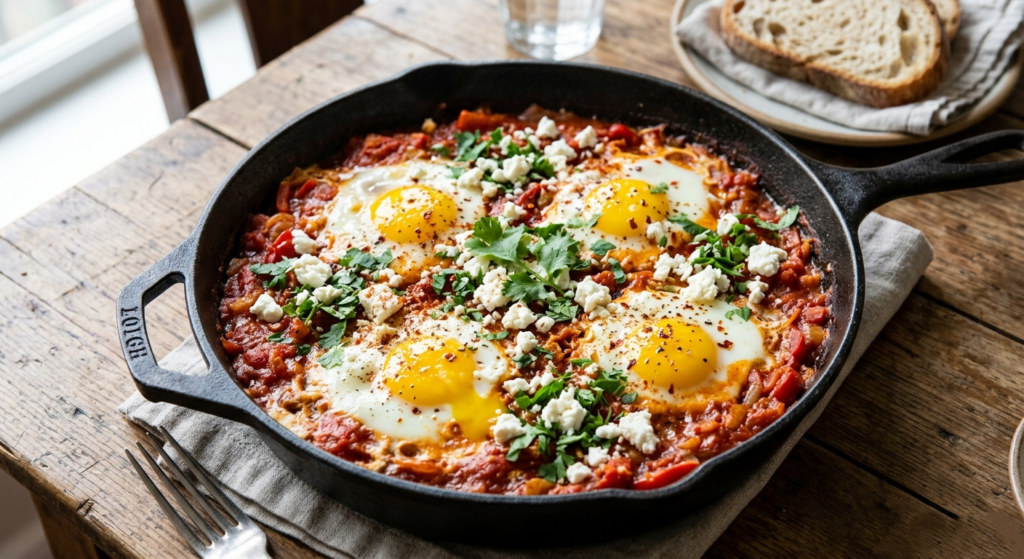
Shakshuka-style baked eggs: a one-pan winner for lazy cooks that comes together in under 30 minutes.
Serve with: Warm pita or crusty bread for dipping.
The Lazy Cook’s Pantry: What to Always Have Stocked
The secret to consistent easy healthy meals isn’t motivation – it’s inventory management. A well-stocked pantry turns a 30-minute meal from a planning exercise into a daily automatic.
Shelf-Stable Staples
- Canned chickpeas, lentils, and black beans
- Canned crushed tomatoes and full-fat coconut milk
- Microwave rice pouches (brown rice, quinoa, or mixed grain)
- Soy sauce, fish sauce, and harissa paste
- Olive oil and toasted sesame oil
- Spice essentials: smoked paprika, cumin, turmeric, chili flakes, garlic powder, onion powder
Freezer Essentials
- Frozen shrimp (defrosts in 15 minutes under cold running water)
- Frozen stir-fry vegetable blends (broccoli, bell peppers, snap peas)
- Frozen edamame, peas, and spinach
- Individually portioned chicken thighs or fish fillets (salmon, cod, or tilapia)
- Frozen fruit for quick smoothies or oatmeal toppings
Fridge Non-Negotiables
- Eggs – always, without exception
- Pre-washed baby spinach or arugula
- Lemons and limes for finishing (they’re your secret weapon)
- Garlic and ginger (pre-minced jars are completely fine – zero shame)
- Feta cheese and Greek yogurt for finishing and topping
- Cottage cheese – a versatile, high-protein base for sauces and wraps. Find more ways to use it in our high-protein cottage cheese recipes.
Time-Saving Techniques That Professional Cooks Use
Cooking faster isn’t about rushing – it’s about systematically removing unnecessary steps before you even turn on the stove.
1. Mise en Place in Two Minutes, Not Twenty
Rough chops roast just as well as precision cuts. Save knife perfectionism for when it genuinely matters (raw salads, sushi). For one-pan meals, uniform size helps even cooking, but perfect julienne is a waste of time.
2. Sequential Pan Cooking
Sear protein first → set aside → cook vegetables in the same pan with the leftover fond (those browned bits = pure flavor) → return protein at the end. One pan, full flavor development, zero waste. This works beautifully for chicken breasts or pork chops.
3. Leverage Residual Heat
Turn the heat off 2 minutes before food is done. The pan stays hot enough to finish cooking without overcooking. This is especially critical for eggs, shrimp, and fish, which go from perfect to rubbery in under a minute.
4. Batch Your Flavor Bases on Sunday
Spend 10 minutes making a double batch of your stir-fry sauce or spiced tomato base. Store in a labeled jar in the fridge. That single step turns any weeknight meal into a 15-minute assembly. If you already have a favorite sauce from our one-pot pasta recipes, double it and use it here.
5. Use the Two-Ingredient Rule
For each meal, identify the two ingredients that take longest to cook. Start those first. Everything else fits around them. Example: for sheet pan chicken, the chicken and chickpeas go in first; the broccoli joins halfway through.
6. Leverage Your Air Fryer
If you have an air fryer, use it alongside your skillet for extra speed. Many one-pan recipes can be split: protein in the air fryer, vegetables on the stovetop. Browse our easy air fryer meal ideas for inspiration.
The Health Case: Why 30-Minute Home Cooking Beats Meal Kits and Takeout
Still on the fence? Consider these comparisons side by side:
| Factor | Home 30-Min Meal | Meal Kit | Takeout |
|---|---|---|---|
| Cost per serving | $3–6 | $10–14 | $15–20 |
| Sodium control | Full control | Moderate | Minimal |
| Calorie transparency | Full control | Partial | None |
| Prep time | 5–10 min | 15–25 min | 0 min |
| Nutritional quality | High | Moderate–High | Variable |
Three evidence-based reasons to make this a habit:
-
Nutritional control: Home cooking gives you complete control over oil quantity, sodium levels, sugar content, and portion size – four variables that meal kits and restaurants routinely mismanage. The USDA’s MyPlate guidelines recommend filling half your plate with vegetables and fruits; at home, you can actually do that.
-
Cost savings: Cooking at home just five nights per week can save a household of two over $3,000 per year compared to regular takeout. That’s a real vacation fund.
-
Mental health: Research in health psychology suggests that people who cook dinner at home more than five times per week report higher life satisfaction and lower anxiety – independent of diet quality. The act of cooking can be a mindful, grounding ritual.
To keep your meals aligned with healthy eating guidelines, refer to the USDA’s MyPlate for portion recommendations and balanced meal planning.
Common Mistakes to Avoid (Even Experienced Cooks Make These)
-
Overcrowding the pan. This is the #1 mistake. Too much food in one pan lowers the temperature and causes steaming instead of searing. Cook in batches if necessary, or use a larger sheet pan.
-
Adding all vegetables at once. Dense vegetables (carrots, broccoli stems) need a head start. Tender vegetables (spinach, zucchini) go in last. Layer them by cook time.
-
Skipping the acid at the end. A squeeze of lemon or drizzle of vinegar after cooking can transform a flat dish into a bright, balanced one.
-
Using the wrong pan for the job. For stovetop-to-oven recipes, use a cast iron or stainless steel skillet. Non-stick pans usually can’t handle high oven heat. For more details on oven-safe cookware, see the method used in our sheet pan chicken thigh recipes – they use a simple sheet pan approach.
Frequently Asked Questions
Q1: Can 30-minute meals actually be healthy?
Yes. Nutritional quality is determined by ingredient selection, not cooking time. Meals built around lean proteins, vegetables, legumes, and whole grains can be fully prepared in 30 minutes or less without sacrificing any nutritional value.
Q2: What are the easiest 30-minute meals for beginners?
The easiest options are shakshuka (baked eggs in tomato sauce), shrimp stir-fry, and sheet pan chicken with vegetables. These require minimal knife skills, use forgiving ingredients, and have short active cooking times.
Q3: How do I meal prep to make 30-minute meals even faster?
Focus on prepping components, not complete meals: cook a batch of grains, portion proteins, and wash vegetables on Sunday. This turns a 30-minute meal into a 15-minute assembly on weeknights.
Q4: Are frozen vegetables as nutritious as fresh for quick meals?
Yes – often more so. Frozen vegetables are flash-frozen within hours of harvesting, locking in vitamins and minerals at peak concentration. They’re nutritionally comparable to fresh and often superior to produce stored in a fridge for several days.
Q5: What’s the best pan for one-pan meals?
A 12-inch cast iron skillet or a high-sided stainless steel sauté pan is ideal. Cast iron retains heat exceptionally well for searing; stainless is easier to deglaze for pan sauces. Both are oven-safe, making them versatile for stovetop-to-oven recipes.
Q6: Can I make 30-minute meals on a tight budget?
Absolutely. Eggs, canned legumes, frozen vegetables, and ground meat are among the most affordable nutrient-dense ingredients available. A well-planned 30-minute meal can come in under $3 per serving without compromising nutritional quality.
Q7: How do I keep 30-minute meals from getting repetitive?
Rotate your protein–grain–vegetable combinations weekly and swap your flavor profile with each rotation (Mediterranean, Asian, Mexican, Middle Eastern). With 5 proteins, 4 grains, and 6 vegetable options, you have over 100 unique meal combinations without learning a single new technique.
Q8: What’s the best way to add more flavor to quick meals without extra cooking time?
The most effective trick is finishing flavor – a squeeze of fresh lemon, a drizzle of quality olive oil, a handful of fresh herbs, or a dollop of Greek yogurt added after cooking. These take zero additional cooking time and dramatically elevate the final result.
Conclusion
One-pan, 30-minute meals aren’t a compromise – they’re a smarter way to feed yourself well, even when you’re short on time and energy. The principles are simple: pick a fast-cooking protein, use smart-prep vegetables, and apply the flavor triangle. The recipes are tested and forgiving. The pantry staples make it automatic.
Your next step: Pick one recipe from this list and make it tonight. See how fast and satisfying it can be. Once you’ve built the habit, you’ll wonder why you ever reached for the takeout menu.
If you want even more meal ideas that fit the same philosophy, explore our collection of quick chicken breast recipes – they’re all designed to be fast, healthy, and one-pan friendly.



4 thoughts on “One-Pan Magic: Healthy 30 Minute Meals for Lazy Cooks”