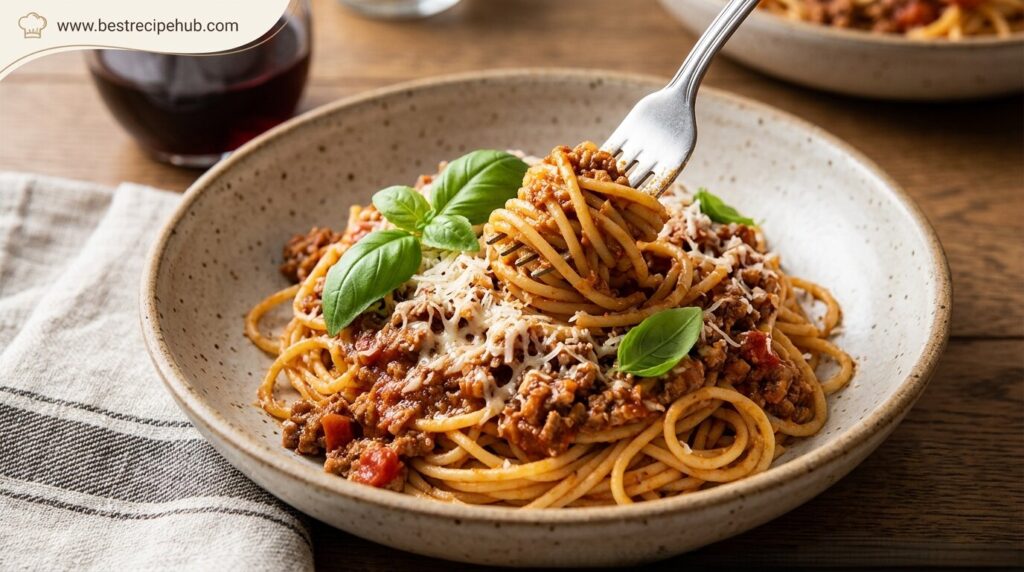
If you’ve ever stood in the pasta aisle at 5 p.m. with a half-thawed pound of ground beef on the counter, you know the drill: grab a jar of sauce, boil some noodles, and call it dinner. But that jarred sauce is a shortcut that costs you flavor, texture, and the deep satisfaction of a meal built from real ingredients.
This recipe is the one I’ve turned to for more than a decade — for weeknight dinners, Sunday family feasts, and potluck requests that always end with “please bring your pasta.” It’s the version that survived every test: picky kids, last-minute guests, and the occasional “I only have 45 minutes” panic. You don’t need a slow cooker or a secret ingredient. You just need to follow a few simple steps in the right order. You can also read our guide on chicken dinner ideas.
The result is a rich, savory meat sauce that clings to every strand of spaghetti, with a depth that no jar can match. No added sugar, no fillers — just real tomatoes, properly browned meat, and a patient simmer.
Why Make Spaghetti Sauce From Scratch?
Store-bought sauce is convenient, but it’s also a one-note compromise. Most commercial sauces rely on added sugar, high-fructose corn syrup, and a list of preservatives to mask the flat taste of under-ripened tomatoes. A homemade sauce, by contrast, builds flavor layer by layer:
- Aromatics cooked slowly — onion, carrot, and garlic softened until sweet, not just dumped in raw.
- Meat browned properly — deep caramelization from the Maillard reaction, not gray crumbles.
- A long, gentle simmer — at least 45 minutes, so the flavors meld and the sauce thickens naturally.
Skip any of these, and you’ll end up with something that tastes like canned tomatoes with meat floating in it. Do them all, and you’ll understand why this dish has been a staple of Italian-American home cooking for generations. You can also read our guide on cinnamon sugar recipe.
Ingredients for Authentic Homemade Meat Sauce
This recipe makes enough for 6 generous servings. The leftovers reheat beautifully — and actually taste better the next day.
For the Meat Sauce
| Ingredient | Amount | Notes |
|---|---|---|
| Ground beef (80/20) | 1 lb | Fat is essential for flavor and moisture |
| Ground pork or Italian sausage | ½ lb | Adds depth that beef alone can’t match |
| Yellow onion, finely diced | 1 medium | About 1 cup |
| Carrots, finely diced | 2 medium | About ¾ cup – adds natural sweetness |
| Garlic cloves, minced | 3–4 | Fresh only, not pre-minced |
| Olive oil | 2 tbsp | Use a good-quality extra virgin |
| Crushed tomatoes | 1 (28 oz) can | San Marzano-style preferred |
| Tomato paste | 1 (6 oz) can | Double-concentrated if available |
| Beef or chicken broth | 1 cup | Low-sodium to control salt |
| Dry red wine | ½ cup | Optional, but recommended (Chianti or Merlot) |
| Dried oregano | 1 tsp | Crush between fingers to release oils |
| Dried basil | 1 tsp | Or 2 tbsp fresh, added at the end |
| Bay leaf | 1 | Remove before serving |
| Red pepper flakes | ½ tsp | Optional, for mild heat |
| Salt and black pepper | To taste | Season in layers |
| Grated Parmesan cheese | ¼ cup | Plus more for serving |
For the Pasta
- 1 lb spaghetti (or your favorite long pasta)
- 1 tbsp salt for the pasta water
- Fresh basil or parsley, chopped, for garnish
Why the tomatoes matter: The quality of your canned tomatoes is the single biggest factor in the final sauce. San Marzano-style crushed tomatoes have a naturally low acidity and a sweetness that reduces the need for any added sugar. If you can’t find them, look for a brand with no added citric acid or calcium chloride — those additives can make the sauce taste metallic or thin. You can also read our guide on tater tot casserole recipe.
How to Make Spaghetti With Meat Sauce From Scratch
The process breaks into five manageable stages. None is difficult, but each must happen in the right order.
Step 1: Build the Aromatic Base
- Heat the olive oil in a large, heavy-bottomed pot or Dutch oven over medium heat.
- Add the diced onion and carrot. Cook for 5–6 minutes, stirring occasionally, until the onion is translucent and the carrot has softened.
- Add the minced garlic and cook for 30–60 seconds, just until fragrant — garlic burns fast, so don’t walk away.
A common mistake is rushing this step. Pale, hard aromatics never develop the sweetness that underpins the whole sauce. Take the time to let them sweat properly.
Step 2: Brown the Meat the Right Way
- Push the vegetables to one side of the pot and add the ground beef and pork.
- Break the meat into large chunks — don’t stir it into fine crumbles.
- Let each chunk sit undisturbed for 2–3 minutes before turning. This creates real browning (the Maillard reaction) rather than steaming.
- Season with a pinch of salt and pepper once the first side is browned.
- Drain excess fat only if there’s a noticeable pool — a few tablespoons left in the pot add flavor.
The science of browning: When meat is crowded in the pan, it releases moisture and steams instead of browning. Work in batches if your pot is small, or use a wider pan. For more on safe handling of ground meat, the USDA Food Safety and Inspection Service recommends cooking to an internal temperature of 160°F. You can also read our guide on homemade pancakes from scratch.
Step 3: Simmer Low and Slow
- Stir in the tomato paste directly with the meat and cook for 1–2 minutes. This tames the raw, tinny taste and deepens the color.
- Pour in the red wine, if using, and let it bubble for a minute to cook off the alcohol.
- Add the crushed tomatoes, broth, oregano, basil, bay leaf, and red pepper flakes.
- Stir to combine, then bring to a low simmer. Reduce the heat to the lowest setting.
- Cover partially and let it cook for 45 minutes to 1 hour, stirring every 10–15 minutes.
- Remove the bay leaf and stir in the grated Parmesan during the last 5 minutes.
The sauce should reduce slightly and turn a deep brick-red. Taste and adjust salt near the end — flavors concentrate as the sauce simmers, so oversalting early is easy.
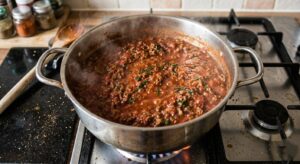 The sauce thickens and darkens as it simmers, developing a deep, savory flavor.
Step 4: Cook the Pasta the Right Way
- Bring a large pot of water to a rolling boil. Use at least 4 quarts of water for 1 lb of pasta.
- Salt the water generously — 1 tablespoon of kosher salt per gallon. This is the only chance to season the pasta itself.
- Cook the spaghetti 1 minute less than the package instructions for al dente (firm to the bite).
- Before draining, reserve at least 1 cup of the starchy pasta water.
Why the pasta water matters: The starch acts as a natural emulsifier, helping the sauce cling to the noodles instead of sliding off. It also loosens the sauce without thinning it like plain water would.
Step 5: Combine and Finish
- Add the drained, slightly underdone spaghetti directly into the pot of sauce.
- Toss together over low heat for 1–2 minutes. The pasta finishes cooking in the sauce, absorbing flavor instead of just wearing a coat of it.
- If the sauce looks too thick, add a splash of reserved pasta water. Stir until the sauce coats each strand.
- Serve immediately, topped with fresh basil, extra Parmesan, and a crack of black pepper.
Pro Tips From Years of Making This Sauce
These small adjustments separate good meat sauce from exceptional meat sauce:
- Add a Parmesan rind to the simmering sauce (fish it out before serving). It adds a subtle, savory depth.
- Tame acidity with cream, not sugar. If your tomatoes taste sharp, stir in a splash of heavy cream or a pinch of baking soda. Sugar masks the acidity but can make the sauce taste candy-like.
- Make it the day before. Meat sauce genuinely tastes better after 24 hours in the fridge — the flavors meld and mellow.
- Use a wide, heavy pot. More surface area means faster reduction and deeper browning. A narrow saucepan will produce a watery, underdeveloped sauce.
- Don’t oversalt early. Tomato paste, Parmesan, and broth all add salt later. Season in layers and taste at the end.
Common Mistakes That Ruin Homemade Spaghetti
Even experienced cooks fall into these traps:
- Rushing the simmer. A 15-minute sauce always tastes like canned tomatoes. Give it at least 45 minutes.
- Overcooking the pasta. Mushy noodles can’t hold sauce properly and fall apart on the fork.
- Skipping the pasta water. It’s the easiest way to improve sauce adhesion — and it’s free.
- Using lean meat only. 93/7 ground beef yields a dry, grainy sauce. The fat in 80/20 is essential for richness.
- Adding sugar as a crutch. Fix acidity with proper ingredients (quality tomatoes, a splash of cream, or a pinch of baking soda) rather than masking it.
Easy Variations on This Classic Recipe
This base is flexible enough to adapt to different tastes and pantries:
- Spicy Arrabbiata-Style: Double the red pepper flakes and add a finely diced fresh chili (like serrano or Fresno) with the garlic.
- Meatball Version: Skip loose ground meat and instead form 1½-inch meatballs, brown them in the pot, then simmer in the same sauce. The meatballs stay tender and infuse the sauce with extra flavor.
- Vegetable-Boosted: Stir in finely diced zucchini, mushrooms, or bell pepper with the aromatics. They soften and melt into the sauce.
- Lighter Version: Use ground turkey or chicken (93/7) and reduce the oil to 1 tablespoon. Add a splash of broth to keep the sauce moist.
- Gluten-Free: Substitute your favorite gluten-free spaghetti. Watch cook times closely — they vary by brand, and al dente is even more critical with gluten-free pasta.
How to Serve: Beyond Basic Spaghetti
While spaghetti is the classic pairing, this sauce works beautifully with other pasta shapes: rigatoni, penne, or pappardelle. It also makes a fantastic base for lasagna, baked ziti, or a hearty pasta bake. For a complete meal, serve with a simple green salad and crusty bread — a few of our easy weeknight dinners pair well alongside it.
How to Store and Reheat Leftovers
Homemade meat sauce is one of the most freezer-friendly dishes you can make. Proper storage preserves both flavor and texture.
- Refrigerator: Store sauce and pasta separately in airtight containers for up to 4 days. The pasta will absorb sauce if stored together, turning mushy.
- Freezer: Sauce alone (without pasta) freezes beautifully for up to 3 months. Cool completely, then transfer to freezer-safe bags or containers. Label with the date.
- Reheating: Thaw overnight in the fridge, then reheat gently on the stovetop over medium-low heat. Add a splash of water or broth to loosen the sauce. Avoid microwaving on high power — it can make the meat rubbery and the sauce separate.
For more meal prep strategies, check out our high-protein meal prep ideas that can be paired with this sauce.
Final Thoughts
A great homemade spaghetti with meat sauce isn’t about complicated techniques. It’s about a few steps done right:
- Real browning, not boiling.
- Slow, patient simmering.
- Finishing the pasta in the sauce rather than under it.
Once you’ve made this version a few times, you’ll understand why this dish is a cornerstone of family cooking. It’s not fancy — it’s just done right. And it’s a recipe you’ll pass down, exactly as it is.
Try this recipe tonight and share your results in the comments below — we’d love to see your take on a classic.
Frequently Asked Questions
Q: How long should homemade meat sauce simmer?
A: For the best flavor, simmer for at least 45 minutes, though 1–2 hours on low heat develops even deeper flavor. Shorter cooking times often leave the sauce tasting like plain canned tomatoes. You can also use a slow cooker after browning — cook on low for 4–6 hours.
Q: What is the secret to restaurant-quality spaghetti sauce?
A: The key is browning the meat properly without overcrowding the pan, cooking the tomato paste briefly before adding liquids, and simmering low and slow to concentrate flavor. Finishing pasta directly in the sauce also makes a major difference. Restaurants also use a generous amount of fat and salt — don’t be afraid of either.
Q: Should I add sugar to my spaghetti sauce?
A: Sugar isn’t necessary if you use quality crushed tomatoes, but a small pinch can balance excess acidity. A splash of cream or a pinch of baking soda often works better without making the sauce taste sweet.
Q: Can I make spaghetti meat sauce ahead of time?
A: Yes, and it’s actually recommended. Meat sauce tastes better the next day once the flavors have fully melded. Make it a day ahead, refrigerate, and reheat gently. Perfect for busy weeknights.
Q: What’s the difference between meat sauce and Bolognese?
A: Traditional Bolognese uses finely ground meat, milk or cream, and very little tomato, simmered for hours. American-style meat sauce uses more tomato, is heartier, and cooks faster — making it the more common “homemade spaghetti sauce” found in U.S. kitchens.
Q: Why does my homemade sauce taste bland compared to restaurant sauce?
A: Bland sauce usually means under-seasoning at multiple stages, skipping the browning step, or not simmering long enough. Salt in layers — meat, sauce, and pasta water — creates more rounded flavor than salting once at the end.
Q: Can I freeze spaghetti with meat sauce?
A: Yes, but freeze the sauce separately from the cooked pasta for best texture. The sauce freezes well for up to 3 months, while pasta is best cooked fresh after thawing the sauce. For a quick meal, cook extra pasta and freeze it separately — but note that thawed pasta is softer.
Q: What ground meat is best for spaghetti sauce?
A: A combination of 80/20 ground beef and ground pork (or Italian sausage) gives the richest flavor and best texture. If you use only beef, choose 80/20 and consider adding a splash of olive oil or a tablespoon of butter to compensate for the missing fat.