Can you really pull off thick, diner‑style pancakes from scratch in twenty minutes? Yes — and you don’t need a boxed mix, a secret ingredient, or any special equipment. This recipe delivers tall, golden pancakes with a tender crumb using everyday pantry staples. The key is understanding how a few simple techniques — fresh leavening, gentle mixing, and the right heat — work together to create that cloud‑like texture. Whether it’s a busy weekday morning or a lazy weekend breakfast, you’ll have a stack on the table before the coffee finishes brewing.
Why Make Pancakes From Scratch?
Boxed mixes promise convenience, but scratch‑made pancakes actually take about the same time — and the payoff in flavour and texture is huge. When you control every ingredient, you avoid preservatives, adjust sweetness to your taste, and can customise the batter for dietary needs or topping preferences. You can also read our guide on air fryer corn on the cob.
Scratch vs. Boxed Mix at a Glance
| Aspect | Homemade Pancakes | Boxed Mix |
|---|---|---|
| Time (prep to plate) | 20 minutes | ~15 minutes (plus measuring liquid) |
| Ingredients | Flour, baking powder, milk, egg, butter, sugar, salt | Processed flour blend, powdered milk, preservatives, additives |
| Flavour | Fresh, buttery, customisable | Often artificial vanilla note, can taste stale |
| Texture | Tender and fluffy when made correctly | Consistent but rarely as light |
| Cost per serving | ~$0.25 (using staple ingredients) | ~$0.40–0.60 |
In practice, the extra five minutes are spent measuring and whisking — and the difference in taste is immediate. Once you’ve made pancakes from scratch a few times, you’ll stop reaching for the box.
The Science of Fluffy Pancakes
Fluffiness isn’t luck — it’s chemistry. Three factors work together to create lift inside the batter.
1. Fresh Leavening Agents
Baking powder is the primary engine. It contains an acid (usually cream of tartar) and a base (baking soda) that react when mixed with liquid, producing carbon dioxide bubbles. Those bubbles expand as the batter heats, pushing the pancake upward. If your baking powder is older than six months, it may have lost its potency — and you’ll get flat, dense pancakes. The same principle applies to baking soda if you use buttermilk. You can also read our guide on wonton wrappers recipe.
2. Minimal Gluten Development
Flour contains gluten‑forming proteins. When you stir, those proteins link into long, elastic strands. A little gluten gives structure; too much makes the pancake tough and chewy. The best way to control it is to mix the batter just until the dry streaks disappear — a few small lumps are perfectly fine. They’ll hydrate during the short rest and disappear during cooking without overworking the gluten.
3. The Right Cooking Temperature
Medium heat is the sweet spot. Too high, and the outside burns before the centre sets; too low, and the pancake spreads thin and turns pale. A properly preheated pan (around 350°F / 175°C) creates an immediate sear that traps steam inside, helping the pancake rise. For more detail on heat management, the University of Minnesota Extension’s food science resources cover the role of even heat in baking. You can also read our guide on cinnamon sugar recipe.
Ingredients for the Best Pancake Recipe From Scratch
This recipe uses a simple ratio that yields a thick, pourable batter. Each ingredient plays a specific role.
Dry Ingredients
- 1½ cups (190 g) all‑purpose flour
- 3½ teaspoons baking powder
- 1 tablespoon sugar
- ¼ teaspoon salt
Wet Ingredients
- 1¼ cups (300 ml) whole milk (or 2% — avoid skim for best texture)
- 1 large egg (room temperature)
- 3 tablespoons (42 g) unsalted butter, melted and slightly cooled
- 1 teaspoon vanilla extract (optional, but adds bakery‑style aroma)
Optional Toppings
- Maple syrup or honey
- Fresh berries, sliced bananas, or sautéed apples
- Whipped cream or Greek yogurt
- Chocolate chips, chopped nuts, or granola
- A pat of butter and a dusting of powdered sugar
Step‑by‑Step Pancake Recipe From Scratch
Total time: 20 minutes (prep 5 minutes, rest 5 minutes, cooking 10 minutes). Makes about 8 medium pancakes.
Step 1: Whisk Dry Ingredients
In a large bowl, combine the flour, baking powder, sugar, and salt. Whisk thoroughly — about 15 seconds — to evenly distribute the baking powder. Uneven leavening leads to lopsided pancakes.
Step 2: Mix Wet Ingredients
In a separate bowl, crack the egg, add the milk, melted butter, and vanilla. Whisk until the egg is fully incorporated and the mixture looks smooth. For more on this, see our guide on spaghetti recipe homemade.
Step 3: Combine Wet and Dry
Make a well in the centre of the dry ingredients. Pour in the wet mixture all at once. Using a spatula or wooden spoon, stir gently in a circular motion — just until the flour disappears. Stop. The batter will be lumpy, and that’s exactly what you want.
Step 4: Let the Batter Rest
Set the bowl aside for 5 minutes. This brief rest allows the flour to fully hydrate, relaxes the gluten, and lets the baking powder begin its reaction. The batter will thicken slightly and small bubbles will appear on the surface — a sign that the pancakes will be light.
Step 5: Heat the Pan
Place a non‑stick skillet or griddle over medium heat. Add a teaspoon of butter or a light spray of oil. When the butter melts and sizzles gently, the pan is ready. A quick test: flick a drop of water onto the surface — if it dances and evaporates quickly, you’re good.
Step 6: Cook the Pancakes
Pour about ¼ cup of batter per pancake onto the hot pan. Let them cook undisturbed. You’ll see bubbles form on the surface and pop, and the edges will look dry and set. This usually takes 2–3 minutes. Flip once and cook the second side for 1–2 minutes, until golden brown. Resist the urge to press down with the spatula — you’ll squeeze out the air.
Step 7: Serve Immediately
Stack the pancakes on a warm plate and add toppings right away. If you’re cooking multiple batches, keep the finished pancakes in a 200°F (95°C) oven on a baking sheet while you finish.
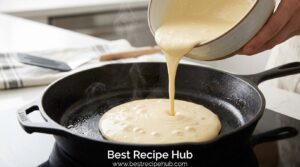
Pouring the batter onto a medium‑hot skillet — bubbles and set edges signal it’s time to flip.
Expert Tips for Extra‑Fluffy Pancakes
Small adjustments separate good pancakes from great ones.
Use Room‑Temperature Ingredients
Cold milk and eggs stiffen the butter and slow the leavening reaction. Take the egg and milk out of the fridge 15 minutes before you start. If you forgot, warm the milk in the microwave for 10 seconds and place the egg in a bowl of warm water for a few minutes.
Measure Flour the Right Way
Scooping a measuring cup directly into the flour bag compacts it, adding up to 25% more flour than intended. Instead, fluff the flour with a spoon, then spoon it into the cup and level the top with a knife. This simple step prevents dense, dry pancakes.
Don’t Over‑Flip
Flipping more than once is unnecessary. Each turn deflates some air. A single flip, when the first side is perfectly golden, is all you need.
Keep Batter Lumpy
A smooth batter is a tough pancake. Those small lumps are pockets of unhydrated flour that will steam during cooking, contributing to a tender texture. Stirring until the batter is “smooth” is the most common mistake.
Common Pancake Mistakes (and How to Fix Them)
Even experienced cooks run into these issues. Here’s how to troubleshoot.
| Mistake | Cause | Fix |
|---|---|---|
| Pancakes are flat | Old baking powder, overmixing, or batter sat too long | Test baking powder in hot water — it should fizz vigorously. Mix just until combined. Cook within 10 minutes of mixing. |
| Pancakes are tough | Overmixed gluten | Next time, stop stirring earlier. For this batch, serve with extra syrup to hide the chewiness. |
| Burnt outside, raw inside | Pan too hot | Lower the heat to medium‑low and let the pan cool slightly before the next batch. |
| Pale, dense pancakes | Pan not hot enough | Increase heat to medium and wait until a water drop sizzles. |
| Pancakes stick to the pan | Insufficient grease or old non‑stick coating | Use a pat of butter and wipe the pan between batches. For a reliable skillet, consider a cast iron griddle. |
Delicious Pancake Variations
Once you’ve mastered the base recipe, these variations add new flavours with minimal effort.
Blueberry Pancakes
Gently fold 1 cup of fresh or frozen (do not thaw) blueberries into the batter just before cooking. The berries burst and create jammy pockets.
Chocolate Chip Pancakes
Stir in ½ cup of mini chocolate chips. For even distribution, toss the chips in a teaspoon of flour before adding.
Banana Pancakes
Mash one very ripe banana and whisk it into the wet ingredients. Reduce the milk to 1 cup to compensate for the extra moisture. The banana adds natural sweetness and a tender crumb.
Cinnamon Roll Pancakes
Add 1 teaspoon of ground cinnamon to the dry ingredients. After pouring the batter onto the pan, drizzle a thin swirl of brown sugar butter (2 tablespoons softened butter + 2 tablespoons brown sugar) on top before flipping.
High‑Protein Pancakes
Replace ¼ cup of flour with unflavoured or vanilla protein powder. The batter will be slightly thicker, so add an extra tablespoon of milk. This works well for a post‑workout breakfast — pair it with our balanced meal prep ideas for the week.
Best Toppings for Homemade Pancakes
Toppings can take the stack from simple to spectacular. Here are a few combinations to try.
Classic Diner
A pat of salted butter melting into a pool of warm maple syrup. That’s all you need.
Berry Bliss
Fresh strawberries, blueberries, and raspberries with a dollop of whipped cream and a drizzle of honey.
Sweet & Savoury
Sautéed apples with cinnamon, crumbled crispy bacon, and a drizzle of salted caramel.
Healthy & Hearty
Greek yogurt, sliced banana, a sprinkle of chia seeds, and a light dusting of cinnamon.
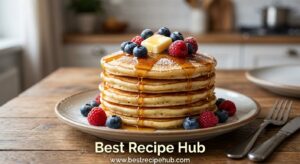
A finished stack with berries, butter, and syrup — the perfect weekend breakfast.
How to Store and Reheat Leftover Pancakes
Made too many? Leftover pancakes keep well, and reheating them properly brings back much of the original texture.
Refrigeration
Place completely cooled pancakes in an airtight container, layered with parchment paper. They’ll stay fresh for up to 4 days.
Freezing
Arrange pancakes in a single layer on a baking sheet and freeze for 1 hour. Transfer to a freezer bag, pressing out excess air. Stack with parchment between each pancake so they don’t stick. Frozen pancakes keep for up to 2 months.
Reheating Options
- Microwave (fastest): 20–30 seconds per pancake on high. The texture will be soft, not crispy.
- Toaster (crisp exterior): Toast on medium setting. Great for on‑the‑go breakfasts.
- Oven (best for large batches): Preheat to 350°F (175°C), spread pancakes on a baking sheet, and bake for 5–8 minutes.
- Skillet (re‑creates the original texture): Warm over medium heat, uncovered, 1–2 minutes per side.
Nutritional Overview
A plain pancake (about 4 inches in diameter, made with ¼ cup of batter) contains approximately:
- Calories: 150–180
- Protein: 4–5 g
- Carbohydrates: 22–26 g
- Fat: 5–7 g (depending on butter used)
- Sugar: 3–4 g (from added sugar and milk)
Values shift with mix‑ins and toppings. Using whole‑wheat flour adds fibre; swapping butter for oil reduces saturated fat. Homemade pancakes give you full control over the nutritional profile — something a boxed mix can’t match.
Frequently Asked Questions
Q1. How do I make pancakes fluffy from scratch?
Use fresh baking powder, mix the batter until just combined (lumps are fine), let it rest for 5 minutes, and cook on medium heat. That’s the entire formula.
Q2. Can I make pancake batter the night before?
You can, but the batter will lose some lift because the baking powder starts reacting as soon as it’s wet. For the fluffiest results, mix the dry and wet ingredients separately the night before, then combine and cook in the morning.
Q3. Why are my pancakes flat even with fresh baking powder?
Flat pancakes often result from overmixing (too much gluten) or a pan that’s too cool. Also check that your milk isn’t too cold — cold ingredients slow the leavening reaction.
Q4. What’s the best pan for pancakes?
A non‑stick skillet or a well‑seasoned cast iron griddle works best. Both distribute heat evenly and release the pancakes easily. Avoid warped or thin pans that create hot spots.
Q5. Can I use buttermilk instead of regular milk?
Yes. Replace the milk with the same amount of buttermilk. The extra acid reacts with the baking powder (and you can add ½ teaspoon of baking soda for even more lift). Buttermilk pancakes are slightly tangier and extra tender.
Q6. How do I know when to flip the pancake?
Look for these signs: the edges look dry and set, bubbles appear on the surface and begin to pop, and the bottom is golden brown when you peek with a spatula. This usually takes 2–3 minutes on medium heat.
Q7. Should I add oil or butter to the pan between batches?
Yes. Wipe the pan clean after each batch, then add a small amount of butter or oil. This prevents sticking and keeps the pancakes evenly browned. Burnt butter residue will darken subsequent pancakes.
Q8. Can I freeze the batter?
No, batter doesn’t freeze well because the leavening loses potency. Freeze the cooked pancakes instead — they reheat beautifully.
Final Thoughts
Making fluffy homemade pancakes from scratch in 20 minutes isn’t a kitchen trick — it’s a straightforward skill that anyone can master. The recipe uses basic ingredients you likely already have, and the technique is forgiving once you understand the principles: fresh leavening, gentle mixing, a brief rest, and medium heat.
Once you’ve enjoyed this stack, try exploring other breakfast favourites from our full collection of recipes, or whip up a batch of overnight oats for a no‑cook option. And if you’re craving something sweet later, our no‑bake desserts are a perfect afternoon treat. For a crunchy topping, candied pecans add a wonderful texture to these pancakes — or to yogurt, oatmeal, and salads.
Master this recipe, and you’ll never reach for a boxed mix again.