Takeout solves a problem you shouldn't have to solve. You're tired, you're hungry, and a few taps on a screen puts food in front of you. But what arrives has already peaked. Delivery containers trap steam, soften crisp edges, and mute the acid that made the dish sing in the first place. The restaurant built that meal for a fifteen-minute journey, not for your table.
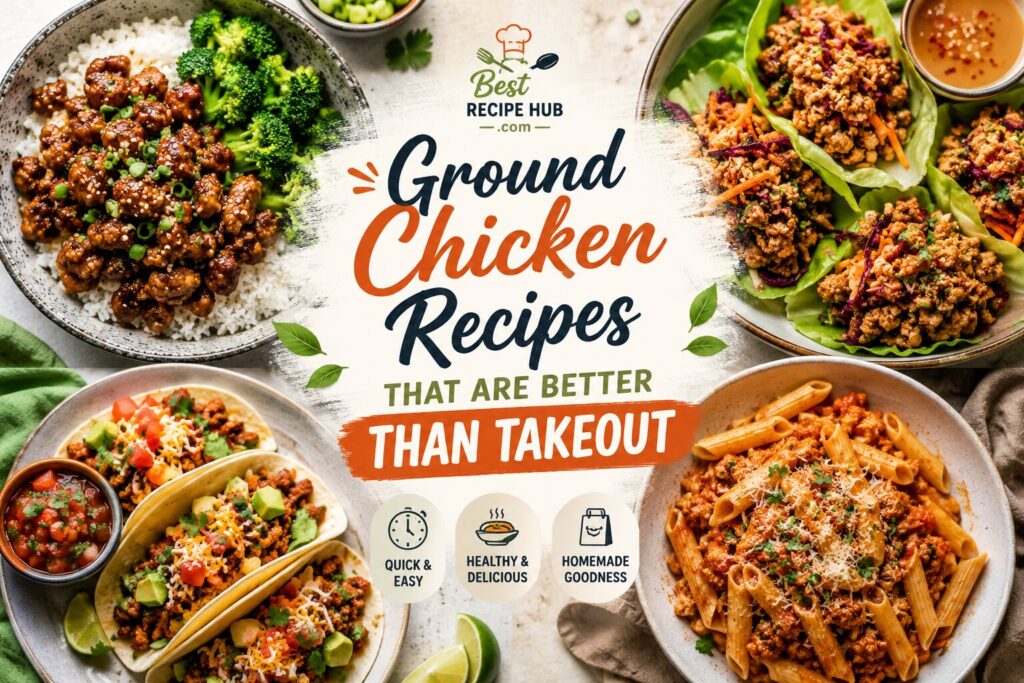
Ground chicken sidesteps the entire compromise. A Korean-style rice bowl, a pile of lettuce wraps, a bowl of chilli-spiked fried rice — each one hits the plate in under twenty-five minutes with brighter aromatics, less sugar, and every layer of flavour still intact. The catch is that ground chicken demands a different approach than ground beef. Less fat means less room for error, and cooking it the same way guarantees a pale, crumbly disappointment. You can also read our guide on recipes with chicken breast.
This guide covers exactly how to buy it, how to keep it moist, which sauces unlock the widest range of dishes, twelve recipes that earn permanent rotation, plus the storage and troubleshooting detail most recipe posts skip entirely.
Why Takeout Falls Short — And How Home Cooking Wins
Commercial kitchens operate under constraints that directly hurt flavour. Understanding them lets you make choices that beat delivery without matching a wok burner. You can also read our guide on mexican cornbread recipe.
Pre-mixed sauces are designed for consistency, not excellence. Most high-volume restaurants use concentrated bases — soy, sugar, thickener, flavour enhancers — diluted to order. The same sauce goes on the chicken, the beef, and the tofu. Your version uses individual aromatics balanced to the specific dish, and it tastes like that dish rather than like everything else on the menu.
Heat matters less than you think. A professional wok burner hits temperatures no domestic hob can reach, which is where wok hei — that smoky, charred aroma — comes from. You will not replicate it. But deep browning, which is what actually drives savoury flavour in ground meat, only requires a heavy pan, a dry surface, and the patience to leave the meat alone for three full minutes. You can also read our guide on cherry tomato recipes.
Timing is the biggest advantage you have. Restaurant food peaks at the pass and declines immediately. Fried coatings go limp, fresh herbs wilt, and the acidity fades as the dish sits. Eating at home means you taste the dish at minute zero instead of minute twenty-five, and that alone is a bigger flavour advantage than any ingredient upgrade.
The takeout dishes that translate best to home cooking are the sauced, aromatic ones — bowls, wraps, stir-fries, ragùs, soups. Deep-fried items are the honest exception; commercial fryers are hard to beat. But for the food people actually order most nights, home cooking wins on flavour, not just cost. You can also read our guide on easy moroccan recipes.
Why Ground Chicken Belongs in Your Weeknight Rotation
Four practical reasons make it the best protein for fast, flavourful dinners.
It cooks in six to eight minutes. No marinating, no resting, no long braise. A pound of crumbles is browned and glazed before the rice finishes steaming.
It absorbs flavour instead of fighting it. Ground chicken is mild, so garlic, ginger, gochujang, cumin, fish sauce, hoisin, and curry paste all come through clearly. Beef pushes back against bold aromatics; chicken amplifies them.
You control the salt, sugar, and fat. A restaurant glaze is built for shelf stability. Yours is three ingredients measured to your taste.
It scales and freezes without fuss. One pound feeds four generously. Two pounds cooked plain can become three different dinners across the week. Raw portions freeze flat for months.
Nutritionally, a 4-ounce serving of 93% lean ground chicken contains roughly 170 calories with 22–23 grams of protein. The same weight of 80/20 ground beef sits closer to 285 calories with significantly more saturated fat. The USDA's MyPlate framework remains the simplest reference for balanced meals: roughly a quarter of the plate protein, half vegetables and fruit, and the rest grains. Most takeout containers invert that ratio entirely — exactly the gap a home-cooked bowl closes.
How to Pick the Right Package at the Store
Two packages labelled "ground chicken" can be radically different products. The fat percentage — not the brand or the price — determines whether your dinner stays moist or turns to sawdust. You can also read our guide on ground chicken recipes.
| Label | Typical fat | Best for | Watch out for |
|---|---|---|---|
| 99% lean (breast only) | 1–2% | Lettuce wraps, wonton filling, soups, dishes with a binder | Dries out fast; needs added fat or a panade |
| 93% lean (mixed) | ~7% | All-purpose: tacos, stir-fries, fried rice, bowls | The safest default — buy this if unsure |
| 85% lean (thigh-heavy) | ~15% | Burgers, meatballs, patties, ragù | Can weep fat in a covered pan |
| "Ground chicken" with skin | Up to 20% | Deep browning, smash-style patties | Reads as greasy in delicate broths |
Three things to look for at the shop:
Judge colour through the film. Pale pink and almost paste-like means breast-dominant. Rosier, coarser, faintly marbled means thigh is in the mix. Decide your moisture strategy at the shop, not at the stove.
It spoils faster than beef. The fine grind creates enormous surface area. Buy it the day you plan to cook or freeze it immediately.
The sell-by date is not a cook-by date. Trust smell and colour. Anything tacky, grey-toned, or faintly sour goes in the bin.
Grinding Your Own Is Worth the Extra Step
Boneless skinless thighs, cut into 1-inch cubes and chilled until very firm, then pulsed 8–10 times in a food processor in two small batches, give a coarser, juicier texture than any pre-packaged grind. Work cold — warm fat smears instead of cutting, and smeared fat makes the grind pasty. Expect roughly 15% fat, which is ideal for burgers and meatballs.
If you prefer whole-muscle poultry some nights, quick weeknight chicken dinners offer the same speed without the grind. For nights when you want zero stovetop involvement, sheet-pan baked thighs handle the protein with one pan to wash. You can also read our guide on pink salt recipe.
Food Safety Numbers You Actually Need
Ground poultry is held to a stricter standard than whole-muscle meat because surface bacteria get distributed throughout the grind. These are stable, current guidelines that remain unchanged.
Cook to 165°F (74°C), measured at the thickest point of a patty or meatball. For crumbles, cook until no pink remains and juices run clear. The USDA Food Safety and Inspection Service is the authoritative source for poultry handling and temperature guidance.
Raw, refrigerated: 1–2 days. Store on the bottom shelf on a rimmed plate to catch drips.
Raw, frozen: 3–4 months for best quality, in a flat freezer bag with the air pressed out.
Cooked leftovers: 3–4 days refrigerated, or 2–3 months frozen.
Thaw in the fridge overnight, never on the counter. In a hurry, a sealed bag submerged in cold water takes roughly 30 minutes per pound — change the water halfway.
Reheat until steaming hot, ideally in a skillet with a splash of water or broth rather than a dry microwave blast.
A common mistake: holding cooked chicken warm in the hot skillet while the rice finishes. Carryover heat pushes it past 165°F towards dry. Transfer it to a bowl, cover loosely, and let the pan cool off the burner.
Six Techniques That Keep Ground Chicken Juicy
These are the techniques that separate a memorable dish from a forgettable one, ordered by how much difference each one makes.
1. Add a panade. For every pound of meat, mash 2 tablespoons of milk or buttermilk into ¼ cup of panko until it forms a loose paste, then fold it in with your fingertips. The starch gelatinises and traps moisture that would otherwise squeeze out as the proteins tighten. This single step is the difference between a tender meatball and a rubber one.
2. Put fat back in. One tablespoon of olive oil, mayonnaise, or finely grated frozen butter per pound transforms 99% lean meat. Mayonnaise works brilliantly in burgers — it is already an emulsion, so it disperses evenly instead of pooling.
3. Sear in two batches. Crowding is the number one cause of grey, steamed mince. Use a 12-inch skillet over medium-high heat, spread the meat in a single layer, and leave the first side completely undisturbed for a full 3 minutes before breaking it up. Browning needs dry surface contact; a wet, crowded pan can only steam.
4. Break it coarse, not fine. Chasing mince around with a spoon produces sandy, dry bits. Press it flat, let it crust, then chop it into craggy, irregular pieces. Bigger pieces hold more juice and catch more glaze.
5. Salt early for patties, late for crumbles. Salting a patty mix 15 minutes ahead dissolves surface proteins and improves binding. Salting crumbles too early makes them tighten and weep water into the pan — season them as they finish browning instead.
6. Pull it at temperature, not by the clock. An instant-read thermometer is the single best small upgrade for poultry cooking. Ground chicken goes from perfect to dry in well under 90 seconds.
The Sauce Toolkit That Powers Everything
Every recipe below builds from the same short pantry list. Whisk one of these together while the meat browns and the dish is essentially finished.
| Sauce | Formula (per 1 lb chicken) |
|---|---|
| Korean-style glaze | 3 Tbsp soy sauce, 1 Tbsp gochujang, 1 Tbsp brown sugar, 2 tsp sesame oil, 1 Tbsp rice vinegar |
| Lettuce-wrap sauce | 2 Tbsp hoisin, 1 Tbsp soy sauce, 1 tsp sriracha, 1 tsp sesame oil, 1 tsp grated ginger |
| Basil stir-fry (larb-adjacent) | 2 Tbsp fish sauce, 1 Tbsp lime juice, 1 tsp sugar, sliced chillies, torn basil off-heat |
| Teriyaki-style | 4 Tbsp soy sauce, 2 Tbsp mirin, 1 Tbsp honey, 1 tsp cornstarch slurry |
| Taco seasoning | 2 tsp cumin, 2 tsp chilli powder, 1 tsp smoked paprika, ½ tsp oregano, ¼ cup water |
| Peanut-sesame | 2 Tbsp peanut butter, 2 Tbsp soy, 1 Tbsp rice vinegar, 1 tsp honey, warm water to loosen |
| Coconut curry | 2 Tbsp red curry paste, ½ cup coconut milk, 1 tsp fish sauce, squeeze of lime |
Stock these once and they last for months: soy sauce, rice vinegar, toasted sesame oil, hoisin, gochujang, fish sauce, mirin, cornstarch, plus fresh ginger and garlic.
Two habits worth adopting. Mix sauces at double strength and keep the surplus in a jar in the fridge — it turns a 25-minute dinner into a 12-minute one. And taste the sauce cold before it goes in; if it is not slightly too intense on a spoon, it will disappear once it meets a pound of meat and rice.
12 Ground Chicken Recipes That Beat Delivery
1. Korean-Style Ground Chicken Bowl (20 minutes)
Brown 1 pound of 93% lean chicken in a hot skillet, breaking it into coarse, craggy pieces rather than fine grains. Add 4 cloves of minced garlic and 1 tablespoon of grated ginger for 30 seconds — no longer, or the garlic turns bitter — then pour in the Korean-style glaze and simmer 2 minutes until it lacquers the meat and the pan is nearly dry.
Serve over short-grain rice with a fried egg, quick-pickled cucumber, and toasted sesame seeds. The pickle is what makes it taste restaurant-finished: thin-sliced cucumber, 2 tablespoons rice vinegar, a pinch each of sugar and salt, 10 minutes on the counter while everything else cooks. Skip the acid and the bowl reads flat. For more heat, add the gochujang in two stages — half in the glaze, half stirred through at the end so it keeps its edge.
2. Chicken Lettuce Wraps (25 minutes)
The dish most people order out and almost never make at home, despite being one of the easiest on this list. Cook 1 pound of chicken with a finely diced shallot until browned, then stir in ½ cup of chopped water chestnuts, 4 sliced scallions, and the hoisin sauce mixture. Simmer 2 minutes until glossy.
The water chestnuts are non-negotiable. They supply the cold, wet crunch that carries the entire plate, and nothing substitutes cleanly except finely diced jicama or celery heart. Spoon into butter lettuce or chilled iceberg cups — chill the leaves in iced water for ten minutes and they stay rigid instead of collapsing.
For a lower-sodium version, cut the hoisin to 1 tablespoon and add a teaspoon of rice vinegar plus extra ginger to replace the missing depth. Serve with crushed peanuts and a lime wedge.
3. Thai-Style Basil Chicken (15 minutes)
The fastest recipe here and the one that most rewards a properly preheated pan. Get a heavy skillet genuinely hot, add a tablespoon of neutral oil, then 1 pound chicken, 3 crushed garlic cloves, and 2 chopped Thai chillies. Leave it alone for three minutes to crust, break it up, then add the fish sauce mixture and let it reduce to a glaze.
Kill the heat and fold in a large handful of Thai or Italian basil so it wilts from residual warmth rather than stewing into sludge. Serve with jasmine rice, a lime wedge, and a crispy fried egg — the runny yolk acts as a second sauce.
A note on fish sauce: it smells aggressive in the bottle and disappears into savoury depth in the pan. If you have never used it, start at 1½ tablespoons and taste before adding more.
4. Ground Chicken Meatballs (35 minutes)
Combine 1 pound chicken, a panade (¼ cup panko + 2 tablespoons milk), 1 egg, ⅓ cup grated Parmesan, 2 cloves minced garlic, chopped parsley, and 1 teaspoon salt. Mix with your fingertips only until uniform — a stand mixer or heavy hand builds a springy, rubbery texture. Roll into 16 balls with lightly wet hands.
Bake at 425°F for 15–17 minutes, then finish 5 minutes in simmering tomato sauce so they absorb liquid rather than shed it. Meatballs added to sauce raw will cook fine but stay looser and paler.
The standard binder ratios for meatballs are worth reviewing before improvising. These freeze beautifully raw: space them on a sheet tray until solid, bag them, and bake from frozen with 4–5 minutes added.
5. Spicy Ground Chicken Tacos (20 minutes)
Bloom the taco seasoning in the rendered fat for 30 seconds before adding the water. That single step is the difference between dusty and deep — many spice compounds are fat-soluble and need heat and oil to release properly. Simmer 3 minutes until the liquid reduces to a glaze that clings to every crumble instead of pooling in the pan.
Serve in charred corn tortillas with avocado, quick cabbage slaw, cotija, and plenty of lime. A spoonful of minced chipotle in adobo adds smoke without much extra heat, and a teaspoon of tomato paste fried with the spices deepens the colour.
Char tortillas directly over a gas flame for 15 seconds a side, or in a dry skillet. Cold, floppy tortillas are the most common reason home tacos feel like a downgrade.
6. Better-Than-Delivery Chicken Fried Rice (20 minutes)
Cold, day-old rice is mandatory. Fresh rice has too much surface moisture and collapses into porridge the moment it hits the pan.
Brown the chicken hard, push it to one side, scramble two eggs in the cleared space, then add 3 cups of cold rice and press it flat against the metal for a full minute to crisp the bottom before tossing. Repeat that press once more. Finish with peas, diced carrot, scallions, 2 tablespoons of soy sauce, and 1 teaspoon of sesame oil stirred in off the heat.
Two upgrades that cost nothing: season the eggs separately with a pinch of salt, and add the soy sauce around the edge of the pan so it sizzles and caramelises rather than steaming the rice.
7. Juicy Chicken Burgers (25 minutes)
Use 85% lean, add 2 tablespoons of mayonnaise per pound, ½ teaspoon each of onion and garlic powder, and considerably more black pepper than feels reasonable. Form patties slightly wider than the bun with a thumbprint dimple in the centre so they do not dome as they cook.
Cook 4–5 minutes per side to a verified 165°F. Chill the formed patties for 15 minutes first and they will hold together on grill grates instead of falling through — this is the step people skip and then blame the meat.
Toast the buns in the pan fat. Chicken burgers lack beef's rendered richness, so the bun, a slice of melting cheese, and a sharp sauce do more of the work than they would with beef.
8. Ground Chicken and Vegetable Stir-Fry (20 minutes)
The most flexible dish on the list and the best use of whatever is wilting in the crisper drawer. Sear the chicken, remove it to a bowl, then stir-fry hard vegetables first — carrot, broccoli, green beans — and soft ones last — peppers, snap peas, spinach. Return the meat, add the teriyaki-style sauce with its cornstarch slurry, and toss for 1 minute until it thickens and coats.
Cut everything to roughly the same size so it cooks evenly, and keep total vegetable volume to about what fits in the pan in a single layer. Overloading drops the pan temperature and everything steams.
If you prefer to let another appliance handle the vegetables, crisp produce from the air-fryer basket runs in the same 20-minute window with nothing extra to watch.
9. Ground Chicken Wonton Soup (30 minutes)
Mix ½ pound chicken with 1 tablespoon grated ginger, 2 minced scallions, 1 teaspoon sesame oil, a splash of soy, and a generous pinch of white pepper. Rest the filling 10 minutes so it firms slightly.
Spoon a rounded teaspoon into each wrapper, wet two edges with a fingertip, and seal while pressing out every trace of trapped air. Simmer — never boil hard — for 4–5 minutes in good chicken broth with bok choy and a few slices of ginger. Leaky wontons are almost always an air-pocket problem, not a sealing problem.
For anyone wanting to go further, making thin flour sheets from scratch gives a silkier, chewier result than shop-bought stacks. Freeze uncooked wontons on a tray, then bag them and cook straight from frozen with two extra minutes.
10. Chicken Ragù with Pasta (35 minutes)
The comfort option, and the recipe that most convinces sceptics that ground chicken can carry a slow-simmered dish. Brown 1 pound of chicken with a soffritto of onion, carrot, and celery. Add 2 tablespoons of tomato paste and cook until it turns brick-red and smells sweet rather than sharp — about 2 minutes — then add a 28-ounce can of crushed tomatoes and a Parmesan rind. Simmer 20 minutes, uncovered, until it thickens.
Finish with a knob of butter off the heat for gloss. Serve over rigatoni or over tiny rice-shaped pasta for something that behaves more like a risotto.
To save washing up, cook the pasta directly in the sauce with extra liquid — minimal-cleanup noodle dishes use exactly this method.
11. Chicken Keema (30 minutes)
The Indian-style answer to bolognese, excellent over rice, in wraps, or with a fried egg for breakfast. Brown the chicken with finely diced onion, ginger, and garlic until the onion is genuinely soft, then add 1 teaspoon each of cumin, coriander, and garam masala plus ½ teaspoon turmeric. Fry the spices for a full minute in the fat.
Add a cup of crushed tomato and ½ cup of peas, then simmer 15 minutes until thick enough to hold a spoon trail. Serve with naan or basmati and a spoonful of yoghurt to soften the heat.
12. Air Fryer Chicken Meatballs (18 minutes)
The same mixture as recipe 4, rolled slightly smaller — about 1¼ inches. Air fry at 380°F for 10–12 minutes, shaking the basket once at the halfway mark. They brown more evenly than in the oven and lose less moisture simply because the total cook time is shorter.
Leave space between them; a packed basket produces the same grey, steamed result as a crowded skillet. Check one with a thermometer before serving the batch.
Serve in sauce, in a sub roll, or skewered with tzatziki. If the basket has become your default tool, fast air-fryer chicken options build on the same technique. There is a wider spread of speedy appliance-based meals for the nights chicken is not the answer.
Sides That Finish the Plate
A bowl of sauced mince over rice is dinner. Three small additions turn it into something that feels ordered rather than assembled.
Something acidic. Quick-pickled cucumber, red onion in lime juice, or a vinegary slaw. Acid resets the palate between bites and is the single most-skipped element in home cooking.
Something crunchy. Toasted sesame seeds, crushed peanuts, fried shallots, or raw cabbage ribbons.
Something green. A fast sauté of garlicky greens takes four minutes in the pan you just emptied. Tender leaves suit the ragù and keema especially well.
For drinks, a plain green or barley tea cuts through richer glazes better than anything sweet. The basics of a proper steep apply directly whether you use leaves or bags.
Global Flavour Variations From One Base
Once plain browned chicken is in the pan, the destination is a decision rather than a recipe.
| Style | Add | Serve with |
|---|---|---|
| Larb (Laos/Thailand) | Fish sauce, lime, toasted rice powder, mint, shallot | Cabbage leaves, sticky rice |
| Picadillo (Latin America) | Cumin, olives, raisins, tomato, oregano | Rice and black beans |
| Bibimbap-style (Korea) | Soy, sesame, gochujang | Rice, seasoned spinach, carrot, egg |
| Mapo-adjacent (Sichuan) | Doubanjiang, Sichuan pepper, soft tofu | Steamed rice |
| Greek-style | Oregano, lemon zest, dill, feta | Pita, tzatziki, tomato salad |
| Moroccan-spiced | Cumin, cinnamon, paprika, preserved lemon | Couscous or flatbread |
| Filipino-style adobo | Soy, vinegar, garlic, bay, black pepper | Garlic rice, fried egg |
Each variation uses the same pound of meat and the same six minutes of browning. The only real skill is deciding early — dry spices go into hot fat, while fresh herbs and citrus belong off the heat at the very end.
Homemade vs Takeout: An Honest Comparison
| Factor | Homemade ground chicken meal | Typical takeout equivalent |
|---|---|---|
| Active time | 15–30 minutes | 30–50 minutes door to table |
| Cost per serving | Low — one pound feeds four | Meaningfully higher, plus fees and tip |
| Sodium | Fully controlled by you | Often a large share of a day's intake in one dish |
| Added sugar | Optional and measurable | Frequently high in glazes and sauces |
| Vegetable content | As much as you want | Usually minimal |
| Leftovers | Purpose-built for lunch | Texture degrades badly |
| Texture ceiling | Excellent for sauced dishes | Still unbeaten for deep-fried |
The honest trade-off: takeout wins on deep-fried textures, on genuine wok heat, and on nights when you have zero capacity to stand at a stove. Nobody replicates a commercial wok burner on a domestic hob.
But for the sauced, aromatic, garlic-forward category — bowls, wraps, tacos, stir-fries, soups, ragùs — home cooking is genuinely better, not merely cheaper. Fresher aromatics, less sugar, more vegetables, and zero transit time.
Pick two recipes now and put one pound of 93% lean chicken on this week's list. A Korean-style bowl on Monday and taco night on Wednesday will teach you the pan behaviour that carries every other dish here.
Meal Prep: One Pound, Three Dinners
Ground chicken is the ideal meal-prep protein precisely because the browned base is neutral. A practical plan:
Cook 2 pounds plain with salt, pepper, and a little oil, in two batches so it browns rather than steams. Cool quickly on a wide tray, then divide into three containers.
Container one → Monday: Korean glaze over rice with cucumber pickle.
Container two → Wednesday: taco seasoning into tortillas or over a greens-and-avocado bowl.
Container three → Friday: ragù or wonton soup, depending on the weather.
Two rules learned the hard way. First, sauce on the day you eat, not on prep day — pre-sauced meat turns gummy and aromatics flatten within 24 hours. Second, cook grains separately. Rice freezes well in flat portions and reheats in the microwave with a splash of water; rice stored sitting in sauce turns to paste.
For rounding out the week without more stovetop work, the full recipe archive has plenty of make-ahead options. A high-protein lunch built around quick wrap fillings covers the days you do not want another rice bowl, and a fast fish option gives you a break from poultry entirely.
Reheating Leftovers Without Ruining Them
Reheating is where good ground chicken most often dies. Microwaving it dry drives out whatever moisture the panade held onto.
Best method: A skillet over medium heat with 1–2 tablespoons of water, broth, or leftover sauce per portion. Cover for 90 seconds, uncover, toss, and it comes back almost fully.
Microwave, done properly: Add a tablespoon of liquid, cover with a damp paper towel, and heat in 45-second bursts, stirring between. Stop the moment it steams — every extra 30 seconds costs texture.
Rice and mince together: Reheat separately if you can. Rice wants steam; meat wants gentle heat. Combining them means one is always overdone.
Meatballs: Reheat submerged in sauce over low heat for 8 minutes rather than blasting them. They absorb liquid instead of losing it.
Cooked ground chicken keeps 3–4 days refrigerated. Beyond that, freeze it in flat portions rather than gambling.
Adapting for Different Needs
Gluten-free. Swap soy sauce for tamari, use a certified gluten-free hoisin (or a mix of tamari, honey, and rice vinegar), and replace panko in meatballs with crushed pork rinds, gluten-free breadcrumbs, or almond flour.
Lower sodium. Use low-sodium soy sauce, then rebuild intensity with acid and aromatics instead of salt — extra ginger, garlic, chilli, and a final squeeze of lime. Doubling the aromatics lets you cut soy sauce by roughly a third without anyone noticing.
Low-carb. Serve over cauliflower rice or in lettuce cups. The sauces need only the sugar reduced, not removed; a small amount of sweetness balances the salt and vinegar.
Dairy-free. Use water or unsweetened oat milk in the panade and skip the Parmesan, adding a teaspoon of miso or nutritional yeast for savoury depth.
Kids. Dial the chilli to zero, keep the sauce on the side, and lean on the meatballs, ragù, and tacos. Finely grated carrot or courgette folded into the meatball mix disappears completely. Ending the meal with something familiar — a soft yeasted sweet roll or a bowl of cinnamon-dusted fruit — makes an unfamiliar main easier to sell.
Troubleshooting: Common Ground Chicken Problems
| Problem | Cause | Fix |
|---|---|---|
| Dry, chalky texture | Cooked past 165°F, or 99% lean with no added fat | Pull at temperature; add a panade or 1 Tbsp oil per pound |
| Grey instead of browned | Pan too cool or overcrowded | Two batches, medium-high heat, 3 minutes undisturbed |
| Patties fall apart | No binder, mix too wet, meat too warm | Egg plus panko, then chill 15 minutes before cooking |
| Bland even with sauce | Salt added only at the end; aromatics never bloomed | Season in layers; fry spices and tomato paste in fat first |
| Watery skillet | Meat not fully thawed, or a lid was used | Thaw completely, cook uncovered, drain before saucing |
| Rubbery meatballs | Overmixed | Combine with fingertips until just uniform, then stop |
| Sauce will not cling | Too thin, or no starch | 1 tsp cornstarch in 1 Tbsp cold water, simmer 30 seconds |
| Tastes flat despite salt | Missing acid | Finish with lime, rice vinegar, or lemon off the heat |
| Garlic tastes burnt | Added too early to a hot dry pan | Add aromatics after the meat browns, 30 seconds only |
| Meat sticks and shreds | Moved too soon | Leave it alone; it releases when a crust forms |
Equipment That Actually Matters
You do not need much, but four items genuinely earn their place.
Instant-read thermometer. The only reliable way to hit 165°F without overshooting. Ground chicken's window between perfect and dry is measured in seconds.
12-inch stainless or carbon-steel skillet. Nonstick coatings cannot safely hold the heat these dishes want and will not build a proper fond. Carbon steel is the best value upgrade in most home kitchens.
Flat-edged wooden spoon or potato masher. Breaks mince into even pieces in seconds instead of chasing clumps around the pan.
Microplane. Grated garlic and ginger dissolve into the sauce rather than sitting in chunks that scorch. It also handles Parmesan, citrus zest, and nutmeg.
Optional but useful: a fine-mesh spider for wontons and a digital scale if you portion for the freezer.
Frequently Asked Questions
Is ground chicken healthier than ground beef? Usually yes — 93% lean ground chicken has less saturated fat and fewer calories than 80/20 beef at the same weight, with comparable protein. But "ground chicken" spans roughly 1% to 20% fat depending on whether skin and thigh are included, so read the label rather than assuming.
What internal temperature does ground chicken need? 165°F (74°C), verified with a thermometer at the thickest point. Ground poultry has no safe pink-in-the-middle window the way whole-muscle beef does.
How long does raw ground chicken last in the fridge? One to two days. If you will not cook it inside that window, freeze it flat in a sealed bag for 3–4 months of good quality.
Can I substitute ground chicken for ground beef one-for-one? By weight, yes — but adjust technique: add a tablespoon of fat per pound, use a hotter pan, and expect a shorter cook time. In tomato sauces, tacos, and chilli the swap is seamless.
Why is my ground chicken always dry? Two causes: cooking past 165°F, and using 99% lean breast meat without adding moisture. A panade solves the second; a thermometer solves the first.
Can I make these recipes with ground turkey? Yes. Ground turkey behaves almost identically — match the fat percentage, keep the same 165°F target, and expect a slightly more assertive flavour.
What vegetables work best with ground chicken? Cabbage, broccoli, bell peppers, carrots, snap peas, courgette, spinach, mushrooms, and water chestnuts. Add watery vegetables like courgette late so they do not dilute the sauce.
How do I make ground chicken taste less bland? Season in layers: salt as it browns, bloom garlic, ginger, and dry spices in hot fat, and finish with acid — lime, rice vinegar, or lemon.
Can I cook ground chicken from frozen? You can, in a covered skillet over medium heat, but it steams rather than browns and the texture suffers. If browning matters — and it does in every recipe here — thaw it first.
How do I stop meatballs sticking to my hands? Keep a bowl of cold water beside you and wet your palms between each ball. Warm, dry hands make the mix smear.
Can I double these recipes for a crowd? Yes, with one caveat: never double the meat in a single pan. Brown in batches of no more than a pound at a time, combine, then add the sauce.
Does ground chicken freeze after cooking? Very well — 2–3 months in flat, sealed portions. Freeze it unsauced for the best texture and add the glaze when you reheat.
The Bottom Line
Ground chicken is the most underrated weeknight protein: inexpensive, fast, high in protein, and endlessly adaptable to the exact flavours people order out for. The technique that separates memorable from forgettable is straightforward — buy the right leanness, add fat or a panade when the meat is very lean, brown it hard in an uncrowded pan, finish with acid, and stop cooking at 165°F.
Start with two dishes rather than twelve. Make the Korean-style bowl on a Monday and the lettuce wraps midweek. Between them you will learn the pan behaviour, the sauce ratios, and the timing that carry every other recipe here — and the delivery app stops feeling inevitable on the nights it used to.
Bookmark this page, choose your two recipes, and add one pound of 93% lean chicken plus a jar of gochujang to this week's shopping list. That is the entire barrier to entry, and you will clear it before the rice finishes steaming.