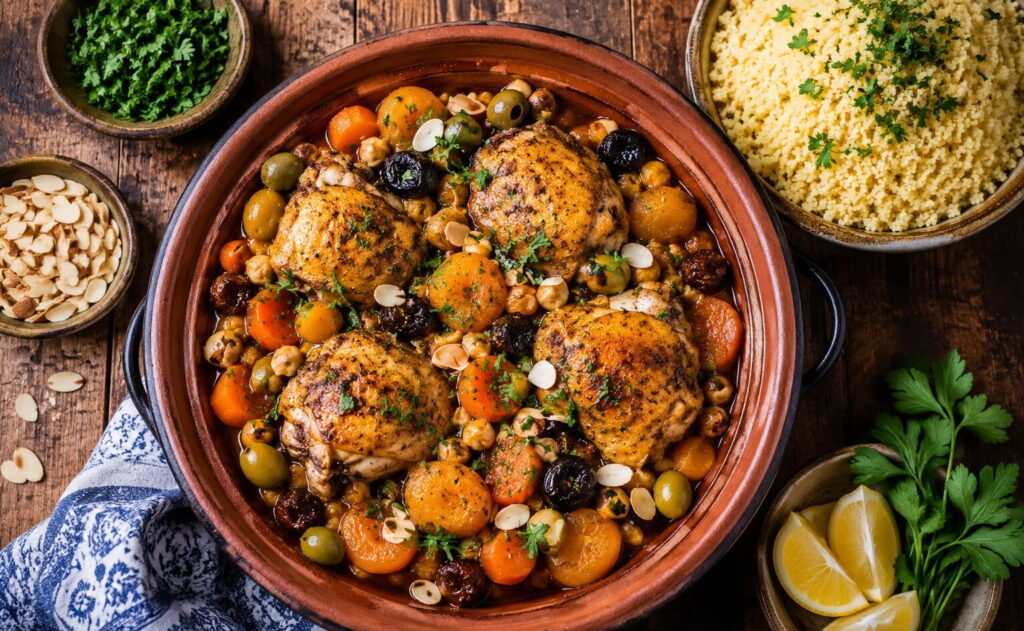
If you have ever caught the scent of cinnamon, cumin, and slow-cooked lamb drifting from a Moroccan restaurant, you already know how magnetic this cuisine can be. What many home cooks do not realize is that easy Moroccan recipes at home are not only achievable—they are often simpler than a weeknight pasta dish once you understand a few foundational principles.
Moroccan cooking has earned a reputation for being intricate: layered spice blends, hours of simmering, and specialty clay pots called tagines. While traditional methods certainly reward patience, the truth is that the flavor profile defines Moroccan food, not the equipment or the cooking time. This article will walk you through exactly what you need to know to bring those warm, aromatic flavors into your own kitchen without the intimidation factor. You can also read our guide on easy weeknight dinners.
Why Moroccan Food Feels Intimidating (But Really Is Not)
Moroccan cuisine sits at the crossroads of Berber, Arab, Andalusian, and French culinary traditions. That rich history is precisely why the flavors feel so layered—sweet and savory combinations like apricots with lamb, or cinnamon in a beef stew, are not accidents. They are the result of centuries of trade, migration, and cultural blending across North Africa.
Home cooks tend to assume three things about Moroccan food, and all three are misconceptions:
Myth 1: You need a tagine pot. A Dutch oven or any heavy, lidded pot works just as well for weeknight cooking. The cone-shaped lid of a traditional tagine traps steam, but a covered heavy pot achieves nearly the same moisture retention.
Myth 2: The spice list is endless. In reality, most dishes rely on the same five to seven spices, used in different ratios. Once you stock those, you are set for dozens of recipes.
Myth 3: Everything takes hours to cook. Many dishes, like roasted vegetables or a quick carrot salad, take 30 minutes or less. Even braised tagines need only about 45 minutes of simmering when made in a standard pot.
The good news for home cooks is that most of that perceived complexity lives in the spice blend, not the technique. Once you understand the core flavor building blocks, you can apply them to simple, familiar cooking methods you already use.
Regional Variations Worth Knowing
Morocco is a large and geographically diverse country, and its food changes noticeably from region to region. Understanding this helps explain why two "authentic" recipes can look completely different:
Coastal cities (Essaouira, Casablanca): These areas lean heavily on seafood, often paired with chermoula, a garlicky herb-and-spice marinade made with cilantro, parsley, cumin, and paprika.
Inland cities (Fez, Marrakech): Known for richer tagines, slow-cooked lamb, and more elaborate spice blends like ras el hanout. This is the style most commonly represented in Western cookbooks.
Atlas Mountain regions: Simpler, heartier dishes built around lentils, barley, and preserved dairy like smen (fermented butter). The cooking here is less spiced and more focused on wholesome ingredients.
You do not need to master every regional style. Most home-cook recipes in the United States borrow from the Fez and Marrakech tradition, which is why tagines and spiced stews are the most common starting point for beginners.
The Real Secret: It Is the Spice Pantry, Not the Skill Level
After testing dozens of Moroccan-inspired dishes in a standard home kitchen (not a professional one), the pattern becomes obvious: nearly every recipe pulls from the same core spice list. Once that pantry is stocked, authentic Moroccan cooking becomes as easy as any other one-pot dinner you already make.
Core Moroccan pantry spices:
| Spice | Role in Moroccan Cooking |
|---|---|
| Ground cumin | Earthy, warm, used in nearly every savory dish |
| Ground cinnamon | Adds warmth to meats and stews, not just desserts |
| Ground ginger | Brightens and balances rich, slow-cooked dishes |
| Sweet paprika | Adds color and mild sweetness |
| Turmeric | Earthy color and flavor, often paired with saffron |
| Cayenne or harissa paste | For those who want heat |
| Saffron threads | Optional but transformative in tagines |
| Preserved lemon | Optional but iconic in classic dishes |
If you have five of these eight items in your cabinet right now, you are closer to making easy Moroccan recipes at home than you think.
The Building Blocks of Authentic Moroccan Flavor
Before diving into recipes, it helps to understand why Moroccan food tastes the way it does. This is the difference between following a recipe blindly and actually understanding the cuisine—which lets you improvise confidently later.
1. Ras el Hanout: The Master Spice Blend
Ras el hanout translates to "head of the shop," meaning the best spices a merchant has to offer. It typically includes a mix of cumin and coriander, cinnamon and ginger, and allspice or nutmeg, with occasional rose petals or lavender for floral depth. Some premium blends contain thirty or more ingredients.
You do not need to make your own blend from scratch. Most grocery stores now carry pre-made ras el hanout in the international foods aisle, and it is an instant flavor shortcut for stews, roasted vegetables, and grilled meats. If you prefer to make your own, toast whole cumin seeds, coriander seeds, and peppercorns in a dry pan for two minutes, then grind them with ground cinnamon, ginger, and nutmeg.
2. Sweet Meets Savory
Moroccan cooking regularly combines fruit with meat. This is not a garnish—it is a core technique that separates Moroccan stews from generic braises. Common pairings include:
- Lamb with dried apricots or prunes
- Chicken with green olives and preserved lemon
- Beef with raisins and cinnamon
- Vegetable tagines with dates and almonds
The natural sugars in the fruit caramelize during slow cooking and balance the warmth of the spices, creating that signature sweet-savory contrast. A common mistake home cooks make is leaving out the fruit, which results in a dish that tastes flat or one-dimensional.
3. Preserved Lemon: The Flavor You Cannot Fake
Preserved lemons—lemons cured in salt and their own juices for several weeks—bring a briny, floral sourness that regular lemon juice simply cannot replicate. They are a signature ingredient in dishes like chicken tagine and are widely considered non-negotiable for authentic flavor.
Beginner tips for using preserved lemon:
- Rinse it briefly before use to control saltiness.
- Discard or keep the pulp depending on your recipe (the rind carries most of the flavor and is what you typically use).
- Buy it pre-made at Middle Eastern grocery stores or online to skip the multi-week curing process.
- Store opened jars in the refrigerator, where they will keep for several months.
4. Fresh Herbs at the End, Not the Beginning
Cilantro and parsley are usually stirred in after cooking, not during. This keeps their flavor bright and fresh rather than muted by long simmer times. As a rule of thumb:
- Add dried spices at the beginning, with the aromatics.
- Add fresh herbs in the final five minutes of cooking, or as a garnish just before serving.
This simple timing difference can transform a dish from tasting muddled to tasting vibrant.
Easy Moroccan Recipes at Home: Where to Start
Now for the practical part. These recipes are organized from simplest to slightly more involved, so you can build confidence before tackling a full tagine.
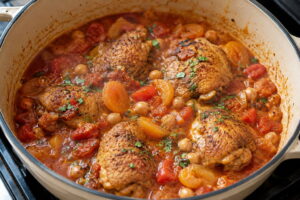 This one-pot Moroccan chicken captures the cuisine's hallmark sweet-savory balance with minimal cleanup.
1. One-Pan Moroccan Chicken
This is the recipe to make first. It requires no special equipment and comes together in under an hour, making it one of the easiest easy Moroccan recipes at home.
What you will need:
- 4 bone-in chicken thighs
- 2 tablespoons ras el hanout (or a mix of cumin, paprika, cinnamon, and ginger)
- 1 onion, diced
- 3 garlic cloves, minced
- 1 can (14 oz) diced tomatoes
- 1 can (14 oz) chickpeas, drained
- ½ cup chicken broth
- ⅓ cup dried apricots or golden raisins
Method:
- Pat the chicken dry and season with salt. Sear skin-side down in a deep skillet over medium-high heat until golden, about 5 minutes. Remove and set aside.
- In the same pan, sauté the onions and garlic until softened, about 3 minutes.
- Add the spices, tomatoes, broth, chickpeas, and dried fruit. Stir to combine.
- Nestle the chicken back into the pan, skin-side up, and bring to a gentle simmer.
- Cover and cook for 30–35 minutes until the chicken is tender and cooked through.
- Finish with a squeeze of lemon and fresh cilantro.
This single dish demonstrates nearly every core Moroccan technique—spice layering, fruit-meat pairing, and slow simmering—without requiring a tagine or an all-day cook time.
2. Moroccan-Spiced Roasted Vegetables
For a plant-based introduction to the cuisine, this is the easiest possible entry point. It uses a standard sheet pan and takes about 30 minutes total.
Method:
- Toss diced carrots, cauliflower florets, and chickpeas in olive oil, cumin, paprika, cinnamon, and a pinch of cayenne.
- Spread in a single layer on a sheet pan.
- Roast at 425°F for 25–30 minutes, stirring once halfway through.
- Finish with a drizzle of honey, chopped mint, and a squeeze of lemon.
The honey and lemon at the end mimic the sweet-savory-tart balance found in traditional Moroccan cooking, even though the technique is just a standard sheet-pan roast. This dish pairs well with couscous for a full meal.
3. Simplified Chicken Tagine (No Tagine Pot Needed)
A tagine refers to both the North African clay cooking vessel and the slow-braised stew made inside it. The cone-shaped lid traps steam and returns moisture to the dish—but a Dutch oven or a heavy lidded pot achieves nearly the same result.
Key ingredients:
- 4 chicken thighs
- 1 preserved lemon, rinsed and chopped
- ½ cup green olives
- 1 onion, sliced
- 3 garlic cloves, minced
- 1 teaspoon ground ginger
- Pinch of saffron threads
- Fresh cilantro and parsley
Method:
- Brown the chicken thighs on both sides in a Dutch oven, then set aside.
- Sauté the onion, garlic, and ginger until fragrant, about 3 minutes.
- Add the saffron and a splash of broth, scraping up any browned bits from the bottom.
- Return the chicken to the pot, cover, and simmer on low for 45 minutes.
- Stir in preserved lemon and olives during the final 10 minutes so they do not turn bitter.
Pro tip: A heavy Dutch oven with a tight-fitting lid replicates the moisture retention of a traditional tagine almost perfectly. If your lid is loose, place a sheet of foil over the pot before covering.
4. Moroccan Harira Soup
Harira is a tomato-based soup traditionally eaten to break the fast during Ramadan, but it works year-round as a hearty, protein-packed meal. It is naturally vegan and freezes exceptionally well.
Base ingredients:
- ½ cup brown lentils, rinsed
- 1 can (14 oz) chickpeas, drained
- 1 can (14 oz) crushed tomatoes
- 1 onion, diced
- 2 celery stalks, diced
- ½ cup chopped cilantro
- 1 teaspoon cinnamon
- 1 teaspoon turmeric
- 1 teaspoon ginger
- Lemon wedges for serving
Why it works for beginners:
- It is naturally vegan and easy to scale up for meal prep.
- It freezes well for up to three months in airtight containers.
- It is forgiving—a great "clean out the pantry" recipe once you understand the flavor formula.
5. Moroccan Carrot Salad (Zaalouk-Style Side)
Not every Moroccan dish requires simmering. This raw salad takes 10 minutes and works as a bright counterpoint to richer stews.
Method:
- Grate or thinly slice 4 large carrots.
- Toss with 2 tablespoons olive oil, the juice of ½ lemon, 1 teaspoon cumin, and a pinch of cinnamon.
- Add a handful of golden raisins for sweetness.
- Let it sit for 15 minutes before serving so the flavors meld.
This salad keeps well in the refrigerator for up to three days and actually improves in flavor overnight.
Common Mistakes Home Cooks Make (And How to Avoid Them)
Based on repeated recipe testing in home kitchens, these are the errors that most often make a "Moroccan" dish taste flat or generic:
- Skipping the fruit. Leaving out apricots, raisins, or dates removes the signature sweet-savory contrast that defines the cuisine.
- Adding fresh herbs too early. Cilantro and parsley lose their brightness if simmered for too long. Add them at the very end.
- Using stale spices. Ground cumin and cinnamon lose potency after about a year. If your spices smell faint, the dish will too.
- Over-salting instead of using acid. A squeeze of lemon often fixes a "flat" dish better than more salt does.
- Rushing the onions. Many Moroccan stews start with slowly softened onions, which build a sweet base flavor. Rushing this step with high heat skips that foundation.
- Overcooking the olives or preserved lemon. Both should be added near the end of cooking to preserve their texture and prevent bitterness.
Building a Moroccan Pantry That Lasts
One of the most practical steps toward making easy Moroccan recipes at home a regular habit is stocking a pantry that does not require a grocery run every time.
Shelf-stable staples worth keeping on hand:
- Ras el hanout or a homemade spice blend
- Canned chickpeas
- Dried apricots and golden raisins
- Preserved lemons (they last for months once opened, refrigerated)
- Green or Moroccan-style olives
- Harissa paste (in a jar or tube)
With these six items alone, you can build a Moroccan-inspired dinner using whatever protein or vegetables are already in the fridge. For more weeknight inspiration, browse our collection of quick one-pot dinners that work with similar flavor principles.
Where to shop for authentic ingredients:
- Middle Eastern or international grocery stores typically carry preserved lemon, harissa, and ras el hanout at lower prices than specialty stores.
- Most major U.S. grocery chains now stock ras el hanout and harissa in their international or spice aisles.
- Online retailers are a reliable backup if local stores do not carry specific items like saffron or preserved lemon.
Equipment that helps (but is not required):
- A heavy-bottomed Dutch oven for braising and simmering
- A sheet pan for roasted vegetable dishes
- A fine grater or microplane for citrus zest and ginger
- A spice grinder or mortar and pestle, if you prefer toasting and grinding whole spices for maximum freshness
None of these are Moroccan-specific tools—they are standard kitchen equipment most home cooks already own. This reinforces the earlier point: the cuisine is defined by flavor, not gear.
Adapting Moroccan Recipes for Dietary Needs
Moroccan cuisine is naturally flexible, which makes it easier to adapt than many people expect.
- Vegetarian/vegan: Swap meat for chickpeas or lentils in tagines and stews—the spice blend carries the dish regardless of protein. Many of our plant-based protein recipes can be adapted with Moroccan spices.
- Gluten-free: Most Moroccan stews, tagines, and salads are naturally gluten-free. Serve with rice instead of couscous, since couscous is a wheat product.
- Low-sodium: Reduce added salt and rely more heavily on lemon, preserved lemon (rinsed first), and fresh herbs for flavor.
- Meal prep-friendly: Stews and soups like harira and chicken tagine both freeze and reheat exceptionally well, making them ideal for batch cooking.
- Nut-free: Almonds are a common garnish in Moroccan cooking but are easy to omit or replace with toasted sesame seeds.
Pairing and Serving Suggestions
Traditional Moroccan meals are often served family-style, with several small dishes alongside a main stew.
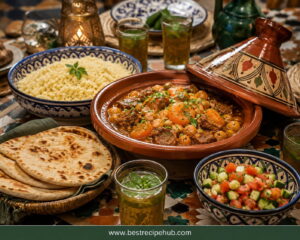 A traditional Moroccan table features multiple small dishes alongside the main stew, encouraging shared eating.
Simple pairing ideas:
- Warm flatbread or pita for scooping
- Fluffy couscous as a neutral base
- A simple cucumber-tomato salad for freshness
- Mint tea, Morocco's signature beverage, served sweet and hot
Building a complete meal, step by step:
- Choose one main dish (chicken tagine, harira soup, or the one-pan chicken).
- Add one starch (couscous, rice, or flatbread).
- Add one fresh side (cucumber-tomato salad or the carrot salad above).
- Finish with mint tea or a simple citrus dessert.
You do not need all four elements for a weeknight meal—even one starch and one fresh side rounds out the plate. For more ideas on building balanced meals, our ground chicken recipes offer another versatile protein option that pairs well with Moroccan spices.
Final Thoughts: Confidence Over Complexity
The biggest shift in thinking that makes Moroccan cooking approachable is this: authenticity comes from understanding flavor principles, not from owning specialty equipment. Once the spice pantry is stocked and the sweet-savory-tart balance clicks, nearly any protein or vegetable can become a Moroccan-inspired dish.
According to the USDA's dietary guidelines, incorporating diverse spice blends like those found in Moroccan cuisine can help reduce added salt and sugar in home cooking while increasing vegetable consumption. The Moroccan approach to cooking is fundamentally aligned with building flavor through spices rather than fat or sodium.
A simple path forward:
- Start with the one-pan chicken recipe above. It is forgiving, fast, and requires no special equipment.
- Once that feels comfortable, move to the simplified tagine with preserved lemon and olives.
- Add harira soup and the carrot salad into your weekly rotation for variety.
- Experiment with your own fruit-and-spice pairings once the basics feel intuitive.
Within a few tries, the spice ratios will start to feel intuitive rather than intimidating—and that is when Moroccan cooking becomes a genuine weeknight option instead of an occasional splurge. Your next step is simple: pick one recipe, stock the basic spices, and cook it this week.
Frequently Asked Questions
What is the easiest Moroccan dish to make at home?
One-pan Moroccan chicken with chickpeas and dried apricots is typically the easiest starting point. It uses a single skillet, common pantry spices, and takes under an hour from start to finish.
Do I need a tagine pot to cook Moroccan food?
No. A Dutch oven or any heavy pot with a tight-fitting lid works well for braised Moroccan dishes. The tagine's cone-shaped lid helps retain moisture, but a covered pot achieves a very similar effect.
What spices are essential for Moroccan cooking?
The core spices are cumin, cinnamon, ginger, paprika, and turmeric. Ras el hanout, a pre-mixed blend of these and other spices, is a convenient shortcut for most recipes.
Is Moroccan food spicy?
Not typically. Moroccan cuisine is more warmly spiced than hot, relying on cinnamon, cumin, and ginger rather than chili heat. Heat can be added separately with harissa paste for those who prefer it.
Can Moroccan recipes be made vegetarian or vegan?
Yes. Chickpeas and lentils are common substitutes for meat in tagines and stews, and the same spice blends apply regardless of the protein used. For more ideas, try our collection of cherry tomato recipes that can be adapted with Moroccan spices.
What can I substitute for preserved lemon?
A mix of fresh lemon zest, a squeeze of lemon juice, and a small pinch of salt can approximate the flavor in a pinch, though it will not fully replicate the fermented depth of true preserved lemon.
What is the difference between a tagine and a stew?
A tagine specifically refers to food cooked in the traditional cone-lidded clay pot, which produces a very tender, moisture-retentive result. Functionally, though, most tagine recipes are a type of slow-braised stew and can be made in a Dutch oven with similar results.
What should I serve with Moroccan chicken or tagine?
Couscous, warm flatbread, or rice are traditional bases. A simple cucumber-tomato salad and mint tea round out a full, authentic-feeling meal.