

Let’s be honest: most cinnamon roll recipes lie to you. They promise “easy” and then demand an overnight rise, a stand mixer, and the patience of a monastery baker.
I’ve been baking for over a decade, and I created this recipe on a Sunday morning when I wanted warm cinnamon rolls now, not in four hours. This is the easy homemade cinnamon roll recipe for people who want bakery-quality results without the bakery-level effort.
No yeast-proofing anxiety. No stand mixer required. Just one bowl, one pan, and rolls on the table in under 45 minutes.
Why This Recipe Actually Works (And Others Don’t)
Most “quick” cinnamon roll recipes still rely on traditional yeast dough, which simply needs time to rise – there’s no shortcut around biology.
This recipe sidesteps that problem entirely by using a baking powder-based dough (similar to biscuit dough) instead of yeast. The benefits:
- No proofing time – mix, roll, bake
- Soft, tender texture that rivals yeasted versions
- Forgiving for beginners – hard to overwork this dough
- One bowl cleanup – because dishes are nobody’s favorite hobby
I’ve tested this recipe more than 20 times, adjusting butter ratios and baking temperatures until the texture matched the gooey, pillowy rolls I grew up eating at my grandmother’s house – minus her three-hour process.
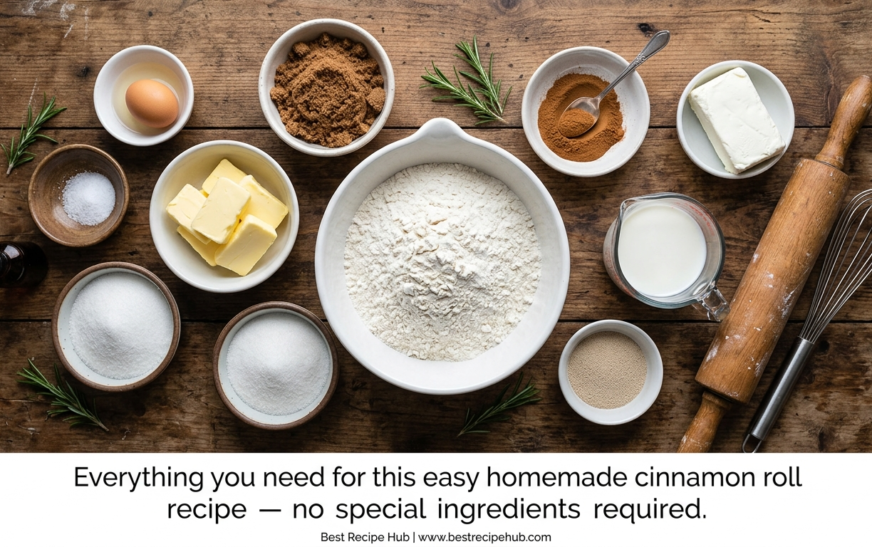
Ingredients You’ll Need
For the Dough
- 3 cups all-purpose flour
- 1/4 cup granulated sugar
- 4 teaspoons baking powder
- 1/2 teaspoon salt
- 1 cup milk (whole milk works best, but 2% is fine)
- 1/3 cup melted butter
For the Cinnamon Filling
- 1/2 cup softened butter (not melted)
- 3/4 cup brown sugar
- 2 tablespoons ground cinnamon
For the Cream Cheese Glaze
- 4 oz cream cheese, softened
- 1 cup powdered sugar
- 2-3 tablespoons milk
- 1/2 teaspoon vanilla extract
Pro tip: Room-temperature cream cheese is non-negotiable. Cold cream cheese creates lumpy glaze, no matter how hard you whisk.

Step-by-Step Instructions
Step 1: Make the Dough
- In a large bowl, whisk together the flour, sugar, baking powder, and salt.
- Add the milk and melted butter.
- Stir until a soft dough forms – it should be slightly sticky but manageable.
Don’t overmix. This is the #1 mistake people make. Overmixing activates gluten and makes rolls tough instead of tender. Stir just until combined, about 30 seconds.
Step 2: Roll It Out
- Lightly flour your countertop.
- Turn the dough out and pat (don’t aggressively knead) it into a rectangle roughly 12×9 inches.
- If the dough sticks, dust with a little more flour – but go easy. Too much flour dries out the final texture.
Step 3: Add the Filling
- Spread the softened butter evenly across the dough using a spatula or even the back of a spoon.
- In a small bowl, mix the brown sugar and cinnamon together.
- Sprinkle this mixture evenly over the buttered dough, pressing it down gently so it sticks.
Step 4: Roll and Cut
- Starting from one long edge, roll the dough tightly into a log.
- Using a sharp knife or unflavored dental floss (a baker’s trick for clean cuts), slice the log into 8-10 equal pieces.
Step 5: Bake
- Arrange the rolls in a greased 9-inch round or square pan, leaving a little space between each for expansion.
- Bake at 375°F (190°C) for 20-25 minutes, until golden brown on top and cooked through in the center.
Step 6: Glaze While Warm
- While the rolls bake, whisk together the cream cheese, powdered sugar, milk, and vanilla until smooth.
- Let the rolls cool for about 5 minutes after baking.
- Spread the glaze over the rolls while they’re still warm – this allows it to melt slightly into the layers, creating that signature gooey finish.
Common Mistakes (And How I Learned to Avoid Them)
After dozens of test batches, here’s what separates good cinnamon rolls from great ones:
- Using melted butter for the filling instead of softened: Melted butter runs out during baking, leaving dry spots. Softened butter stays put and creates those gooey swirls.
- Cutting the rolls too thin: Anything under 1 inch thick bakes too fast and dries out. Aim for 1-1.5 inches per roll.
- Skipping the rest before glazing: Glazing rolls that are too hot melts the glaze into a thin puddle instead of a thick coating. Wait 5 minutes.
- Not greasing the pan generously: These rolls expand and can stick stubbornly. Butter or non-stick spray, every edge.
Make-Ahead and Storage Tips
This recipe is designed for speed, but it’s also flexible:
- Make-ahead dough: Prepare the dough and filling up to a day in advance; store covered in the fridge, then roll and bake fresh.
- Storing leftovers: Keep baked rolls in an airtight container at room temperature for up to 2 days, or refrigerate for up to 5 days.
- Reheating: Microwave individual rolls for 15-20 seconds for that fresh-baked warmth again.
- Freezing: Freeze unbaked, cut rolls on a tray, then transfer to a freezer bag. Bake straight from frozen, adding 5-7 extra minutes.
Customization Ideas
Once you’ve mastered the base recipe, try these variations:
- Apple cinnamon rolls: Add 1/2 cup finely diced apple to the filling.
- Nutty crunch: Sprinkle chopped pecans or walnuts over the cinnamon-sugar layer.
- Orange glaze twist: Replace milk in the glaze with fresh orange juice for a citrus kick.
- Pumpkin spice version: Swap cinnamon for pumpkin pie spice in both the filling and dough.
Final Thoughts
This easy homemade cinnamon roll recipe proves that “homemade” doesn’t have to mean “hours of effort.” With one bowl, basic pantry staples, and under an hour, you get warm, gooey, glazed cinnamon rolls that taste like you spent all morning on them.
Whether it’s a lazy Sunday or a last-minute craving, this recipe delivers comfort food without the commitment.
Frequently Asked Questions
Q: Can I make cinnamon rolls without yeast?
eliminates rising time while still producing soft, fluffy rolls.
Q: How long do homemade cinnamon rolls take to bake?
A: At 375°F (190°C), cinnamon rolls typically bake in 20-25 minutes, or until golden brown on top.
Q: Why are my cinnamon rolls dry?
A: Dry rolls usually result from overmixing the dough, adding too much flour, or overbaking. Stick to the recommended baking time and check at the 20-minute mark.
Q: Can I prepare cinnamon roll dough the night before?
A: Yes. Cover the dough tightly and refrigerate for up to 24 hours, then roll, fill, and bake when ready.
Q: What can I use instead of cream cheese glaze?
A: A simple powdered sugar and milk glaze (without cream cheese) works well if you prefer a lighter, sweeter topping.
Q: Can I freeze unbaked cinnamon rolls?
A: Yes. Cut and arrange the rolls on a tray, freeze until solid, then transfer to a freezer bag. Bake from frozen, adding 5-7 extra minutes.
Q: Do I need a stand mixer for this recipe?
A: No. This dough comes together easily by hand with just a bowl and a spoon.
Q: How do I keep cinnamon rolls soft after baking?
A: Store them in an airtight container at room temperature, and reheat individual rolls in the microwave for 15-20 seconds before serving.





1 Comment
[…] Here’s why home bakers love this recipe: […]