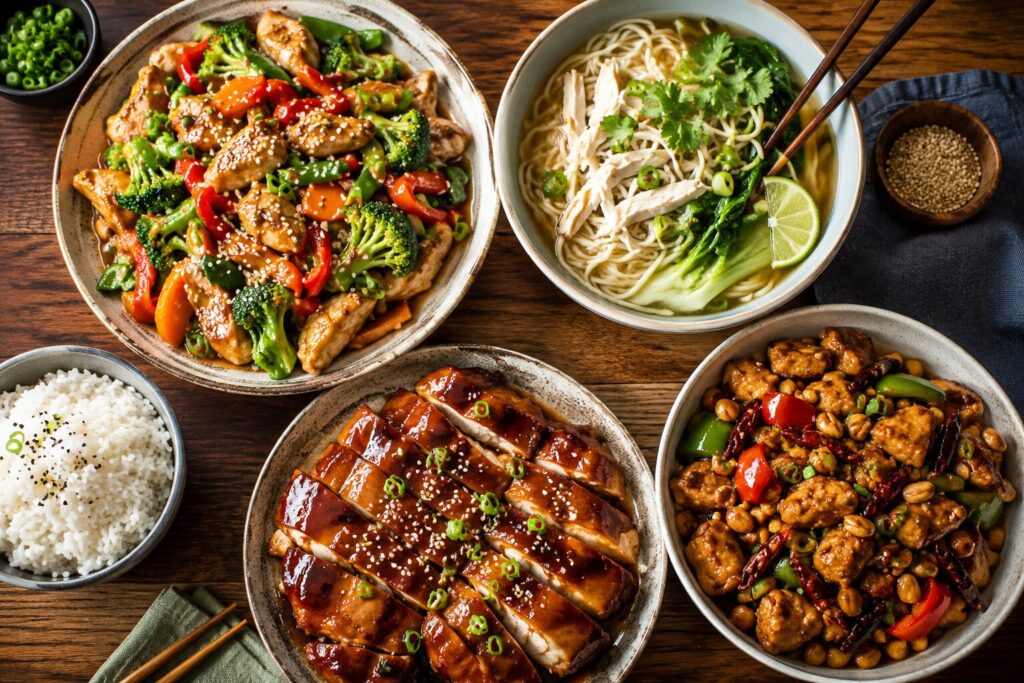
If you’ve ever stared at a pack of chicken at 6 PM wondering how to turn it into something worth eating, you’re not alone. Asian chicken recipes are the weeknight hero you need: they come together fast, rely on pantry-friendly ingredients like soy sauce, garlic, and ginger, and deliver bold, layered flavor without demanding hours of simmering or exotic shopping trips.
Over years of testing stir-fries, marinades, braises, and the occasional burnt garlic mishap, I’ve learned that the real secret to a restaurant-quality Asian chicken dish isn’t a hard‑to‑find spice—it’s technique. Knowing when to velvet meat, how high to crank the heat, and why thighs beat breasts in many preparations makes all the difference. You can also read our guide on healthy rotisserie chicken recipes.
This guide breaks down 15 tried‑and‑true Asian chicken recipes organized by cooking method, so you can pick the perfect dish for tonight’s schedule and skill level. Whether you’re craving spicy, sweet, crispy, or brothy, there’s something here that will earn a permanent spot in your rotation.
Why Asian Chicken Recipes Belong in Your Weekly Rotation
Chicken is the most versatile protein in the American kitchen, and Asian cooking techniques let you do more with it in less time. Here’s why these dishes outperform typical weeknight staples:
| Benefit | How It Plays Out |
|---|---|
| Speed | Most stir‑fries and skillet dishes cook in under 20 minutes. |
| Affordability | Chicken thighs, breasts, and drumsticks are budget‑friendly and stretch across multiple meals. |
| Flavor depth | Soy sauce, fish sauce, sesame oil, and fresh aromatics build complex flavor fast. |
| Flexibility | Nearly every recipe adapts to gluten‑free, low‑sodium, or spice‑averse preferences with small swaps. |
| Family appeal | Sweet‑savory sauces and familiar textures make these dishes easy sells, even for picky eaters. |
Because the cooking methods themselves are straightforward—stir‑fry, bake, simmer, grill—you can build confidence quickly. Start with the method that matches your available time, and you’ll soon have a repertoire of reliable, flavor‑packed dinners. You can also read our guide on air fryer corn on the cob.
Getting Started: Essential Techniques for Asian Chicken Cooking
Before diving into the recipes, a few foundational moves will elevate every dish you make.
Velveting for Silky Texture
Velveting is the simple trick that gives Chinese takeout chicken its signature tender, almost slippery texture. Coat bite‑sized pieces in a mixture of cornstarch, a splash of water (or egg white), and a pinch of salt. Let it rest for 10–15 minutes, then briefly blanch in boiling water or oil before stir‑frying. The starch barrier locks in moisture and prevents the meat from drying out during high‑heat cooking.
Marinating with Intention
Even 15–20 minutes of marinating improves flavor penetration. But lean cuts like chicken breast can turn mushy if left too long in acidic marinades (think vinegar or citrus). For breasts, limit marinating to 30 minutes. Thighs, with their higher fat content, can soak for several hours without issue.
Stir‑Fry Basics
- High heat, hot pan. The wok or skillet must be smoking before you add oil. If the pan isn’t hot enough, the chicken steams instead of sears.
- Don’t overcrowd. Cook in batches if needed. Crowding lowers the temperature and leads to grey, rubbery meat.
- Prep everything first. Asian cooking moves fast once the heat is on. Have your sauce mixed, veggies chopped, and aromatics minced before you start.
Safe Internal Temperature
For food safety, cook chicken to an internal temperature of 165°F (74°C) as measured by an instant‑read thermometer. This is especially important for thighs and drumsticks, which can appear done before reaching a safe temp. The USDA Food Safety and Inspection Service provides thorough guidelines on handling and cooking poultry.
The 15 Recipes: Organized by Cooking Method
Each recipe below includes a brief description and a practical tip drawn from real kitchen experience. Choose the method that fits your evening, then follow the specific recipe linked in the description.
Quick & Easy Stir‑Fry Chicken Recipes
Stir‑frying is the fastest route to a flavor‑packed dinner. The key is high heat, a hot pan, and having every ingredient prepped before you begin.

The high heat creates a quick sear that locks in moisture and builds a caramelized finish.
- Classic Chicken and Broccoli Stir‑Fry – This is the gateway dish. Bite‑sized thighs seared until golden, then tossed with steamed broccoli in a glossy garlic‑soy sauce. Pro tip: Velvet the chicken for that silky restaurant texture.
- Kung Pao Chicken – A Sichuan favourite built on sweet, savory, and spicy notes with roasted peanuts and dried chilies. Swap peanuts for cashews if you prefer a milder crunch.
- Cashew Chicken – Milder than Kung Pao but equally satisfying. Tender chicken, crunchy vegetables, and toasted cashews in a light savory sauce. A great entry point for anyone new to bolder Asian flavors.
- Thai Basil Chicken (Pad Krapow Gai) – One of Thailand’s most popular street foods. Ground chicken is stir‑fried with garlic, chilies, and fresh Thai basil, then served over rice with a fried egg. Why it works: The basil goes in at the very end, preserving its peppery aroma instead of cooking it into mush. For more ideas using ground poultry, explore our ground chicken variations.
- Sesame Chicken – Crispy fried chicken pieces coated in a sticky‑sweet sesame glaze. It’s a takeout classic that’s surprisingly simple to recreate at home—and healthier when baked instead of deep‑fried.
Baked and Roasted Asian Chicken Recipes
When you want hands‑off cooking that still delivers deep flavor, the oven does the work while you prep sides or relax.
- Honey Garlic Baked Chicken Thighs – Bone‑in, skin‑on thighs marinated in a honey‑garlic‑soy blend, then roasted until the skin crisps and the sauce caramelizes. One of the easiest recipes for beginners since it requires almost no active time.
- Korean Gochujang Chicken – Gochujang, Korea’s fermented chili paste, brings smoky heat and umami depth. Combined with brown sugar, garlic, and sesame oil for a sticky glaze. Works beautifully baked or grilled.
- Teriyaki Chicken – Perhaps the most recognized Asian chicken dish in the U.S. A simple balance of soy sauce, mirin, and sugar creates a sweet‑savory glaze. Bake it, grill it, or pan‑sear it—the sauce does the work. For a quick weeknight option, consider using leftover rotisserie chicken as the base.
- Five‑Spice Roasted Chicken – Chinese five‑spice powder blends cinnamon, star anise, cloves, fennel, and Sichuan pepper. Rubbed over a whole chicken or bone‑in pieces, it gives a warm, aromatic complexity completely different from typical American seasoning.
Comforting Asian Chicken Soups and Noodle Dishes
When the weather cools or you need something soothing, these dishes deliver warmth in every bowl.
- Chicken Pho – Vietnam’s beloved noodle soup relies on a fragrant broth simmered with charred ginger, onion, star anise, and cinnamon. First‑hand tip: Char your aromatics under the broiler for 10 minutes before simmering. This single step transforms a flat broth into something deeply aromatic.
- Chicken Ramen – You don’t need days of bone broth to taste authentic. A quick chicken‑based broth, soft‑boiled eggs, scallions, and noodles create a comforting bowl in under an hour.
- Hainanese Chicken Rice – A Singaporean staple built on poached chicken served over rice cooked in the poaching liquid. Paired with ginger‑scallion sauce and chili oil, it’s simple, elegant, and deeply flavorful despite minimal ingredients.
- Thai Coconut Chicken Soup (Tom Kha Gai) – Creamy coconut milk, lemongrass, galangal, and lime leaves create a soup that’s simultaneously rich, tangy, and spicy. One of the most frequently requested Thai chicken recipes for good reason.
Grilled and Skewered Asian Chicken Recipes
Perfect for warm‑weather cooking or an indoor grill pan, these recipes bring char and smokiness into the mix.
- Chicken Satay with Peanut Sauce – Skewered, marinated chicken grilled until slightly charred, then dipped into a creamy peanut sauce. A guaranteed crowd‑pleaser at cookouts.
- Yakitori (Japanese Grilled Chicken Skewers) – Simple, salty, and smoky. Just chicken thigh, scallions, and a tare sauce made from soy sauce, mirin, and sugar. Grill over high heat for crispy edges and juicy centers.
Pantry Staples for Asian Chicken Recipes
Stocking a few key ingredients makes these recipes dramatically easier to execute on a weeknight. Keep these on hand, and you’re always a few steps away from a flavorful dinner.

Staples you can find at most supermarkets—no specialty shop required.
| Ingredient | Purpose | Substitution Tip |
|---|---|---|
| Light soy sauce | Saltiness and color | Tamari for gluten‑free |
| Dark soy sauce | Deeper color, slight sweetness | More light soy + a touch of molasses |
| Sesame oil | Nutty aroma (add at end) | Toasted sesame oil is ideal |
| Fresh ginger & garlic | Flavor foundation | Pre‑minced jars in a pinch, but fresh is far better |
| Rice vinegar | Brightness and balance | Apple cider vinegar (diluted) |
| Fish sauce | Umami depth in Thai/Viet dishes | Soy sauce + lime juice (different but works) |
| Cornstarch | Velveting and thickening | Potato starch or arrowroot |
| Gochujang | Korean heat and umami | Sriracha + miso paste |
| Coconut milk | Creamy soups and curries | Light coconut milk for fewer calories |
| Mirin | Sweetness and depth | Dry sherry + a pinch of sugar |
Pairing Suggestions: Sides, Rice, and Drinks
A great chicken dish becomes a complete meal with the right accompaniments.
- Rice: Steamed jasmine rice is the default for most stir‑fries and curries. For something more substantial, try coconut rice or garlic fried rice.
- Noodles: Thin rice noodles work with soups; thick udon or lo mein noodles pair well with saucy stir‑fries.
- Vegetable sides: Quick‑pickled cucumbers, a simple Asian slaw, or sautéed greens like bok choy. If you have cherry tomatoes on hand, they add a fresh burst when tossed with a light sesame dressing (our cherry tomato recipes offer several easy ideas).
- Beverages: A cold beer, iced green tea, or a classic Thai iced tea complement the sweet‑savory profile without overpowering the dish.
Common Mistakes to Avoid
Even experienced cooks make these errors. Here’s how to sidestep them:
- Overcrowding the pan. The most common culprit behind soggy stir‑fry. Cook in batches and let the pan come back up to temperature between batches.
- Adding sesame oil too early. Its delicate flavor dissipates under high heat. Drizzle it over the finished dish just before serving.
- Skipping the rest period. Grilled or roasted chicken needs 5 minutes off the heat before slicing. Cutting too early sends juices running across the board.
- Using a non‑stick wok on high heat. Most non‑stick coatings can’t withstand the high temperatures needed for proper wok hei. Use carbon steel or cast iron instead.
- Forgetting to taste and adjust. Asian sauces rely on a precise balance of salty, sweet, sour, and spicy. A tablespoon of vinegar or a pinch of sugar can transform a flat sauce into a vibrant one.
Tips for Perfecting Asian Chicken Recipes at Home
Through years of testing, these lessons consistently make the biggest difference:
- Cut chicken uniformly. Even‑sized pieces cook at the same rate, preventing dry edges and undercooked centers.
- Use thighs for forgiveness. Chicken thighs stay juicier than breasts and tolerate longer cooking times, making them ideal for beginners. If you must use breast, reduce cooking time slightly and avoid over‑marinating (especially in acidic blends).
- Prep everything before you turn on the heat. Stir‑frying moves fast—have sauces mixed and vegetables chopped in advance.
- Rest grilled or roasted meat for 5 minutes. This keeps juices locked in rather than spilling out onto the cutting board.
- Taste and adjust sauces before serving. Add a little more sugar if the dish is too salty, or a splash of vinegar if it’s too sweet.
Storage and Reheating Tips for Meal Prep
Many of these dishes taste even better the next day, making them ideal for meal prep.
- Cool before storing. Let dishes reach room temperature before sealing in airtight containers to prevent condensation and sogginess.
- Store sauces separately. For dishes like sesame chicken or satay, keeping the sauce apart preserves crispiness until you’re ready to eat.
- Refrigerate for up to 4 days. Most stir‑fries, baked chicken, and soups hold up well.
- Freeze for longer storage. Teriyaki chicken, five‑spice roasted chicken, and gochujang chicken all freeze well for up to 2 months.
- Reheat gently. Use a skillet over medium heat with a splash of water or broth to revive sauces without drying out the chicken. Microwaving works in a pinch but can toughen the texture.
- Add fresh garnishes after reheating. Herbs like basil, cilantro, and scallions lose their brightness when reheated, so add them fresh right before serving.
Nutritional Considerations and Customizations
Asian chicken recipes are naturally adaptable to various dietary needs:
- Lower sodium: Use reduced‑sodium soy sauce or tamari, and limit added salt. Fish sauce is high in sodium, so use half the amount and adjust from there.
- Gluten‑free: Substitute tamari or certified gluten‑free soy sauce for regular soy sauce (standard soy sauce contains wheat). Many brands now offer gluten‑free versions.
- Keto / low‑carb: Skip the rice and serve stir‑fries over cauliflower rice or salad greens. For fully compliant meals, explore our low‑carb alternatives that fit a keto or paleo pattern.
- Dairy‑free: These recipes are naturally dairy‑free (except butter, which is rarely used). Coconut milk is dairy‑free and safe for most dietary restrictions.
If you’re looking to cut prep time even further, pre‑cooked rotisserie chicken works beautifully in soups, stir‑fries, and noodle dishes—just add it toward the end to warm through rather than cooking from raw.
Frequently Asked Questions
What is the easiest Asian chicken recipe for beginners?
Honey garlic baked chicken thighs are among the easiest. The marinade uses common pantry staples, and baking requires minimal hands‑on effort compared to stir‑frying.
What sauce is most commonly used in Asian chicken dishes?
Soy sauce is the most common base, often combined with garlic, ginger, sesame oil, and a sweetener like honey or sugar to create a balanced savory‑sweet profile.
Is Asian chicken stir‑fry healthy?
Yes, when prepared with lean chicken, plenty of vegetables, and controlled amounts of oil and sodium, stir‑fried chicken is a protein‑rich, nutritious meal option.
Can I use chicken breast instead of chicken thighs?
Yes—chicken breast works in most recipes, though thighs stay juicier during high‑heat cooking or longer marinades. If using breast, reduce cooking time slightly to avoid drying it out.
What can I substitute for fish sauce in Thai chicken recipes?
Soy sauce mixed with a small amount of lime juice is a common substitute, though it will slightly change the depth of umami in dishes like Tom Kha Gai or Thai basil chicken.
How do I make Asian chicken recipes less spicy?
Reduce or omit chili paste, dried chilies, or fresh chilies. Adding a touch more sugar or coconut milk can also help balance residual heat.
What is the best cut of chicken for grilling Asian‑style skewers?
Boneless, skinless chicken thigh is ideal—it stays tender and juicy over high, direct grill heat, unlike leaner cuts that can dry out quickly.
Can these recipes be made gluten‑free?
Yes, by substituting tamari or a certified gluten‑free soy sauce for regular soy sauce. Most other ingredients (rice, coconut milk, fresh aromatics) are naturally gluten‑free.
Conclusion
From speedy stir‑fries that come together in under 20 minutes to slow‑simmered soups that reward a little patience, these 15 Asian chicken recipes offer something for every craving and skill level. The common thread is a set of simple, repeatable techniques—velveting, proper heat control, and balanced sauces—that you can apply to dozens of dishes beyond this list.
Start with the recipe that matches your schedule tonight: a quick Thai basil chicken if you’re short on time, a baked honey garlic batch if you want hands‑off cooking, or a bowl of pho if you’re in the mood for comfort. Once you see how easy it is to bring authentic, layered flavor to your own kitchen, you’ll wonder why you ever relied on takeout.
Pick one of these dishes tonight and give it a try. And if you're hungry for more inspiration, browse our full collection of recipes to find your next weeknight win.