There's something quietly satisfying about watching a pot of water, citrus peels, and cinnamon slowly release their fragrance throughout your home. No synthetic sprays, no plug-in devices that run out at the worst moment—just steam carrying the natural essential oils from ingredients you probably have in your kitchen right now. Simmer pots (also called stovetop potpourri) have been used for generations, and they're making a strong comeback as people look for ways to freshen their space without relying on artificial fragrances.
The beauty of a simmer pot is that it does double duty: it scents your home naturally while also adding moisture to dry indoor air, which is especially welcome during colder months when heating systems suck humidity out of every room. Once you understand the basic method, you can create endless variations using seasonal ingredients, kitchen scraps, and spices from your pantry. You can also read our guide on apple crisp recipe with oats.
What Exactly Is a Simmer Pot?
A simmer pot is exactly what it sounds like—a pot of water kept at a low, gentle simmer on your stove, infused with aromatic ingredients that release their scent through steam. The ingredients can include fruit peels, whole spices, fresh or dried herbs, and sometimes a splash of extract like vanilla. As the water heats, volatile organic compounds (the natural aromatic oils in plants) evaporate and travel through your home.
This technique differs from candles and diffusers in several important ways. Simmer pots use no synthetic fragrance oils, no paraffin wax, and no electricity. They rely entirely on heat and water to carry natural aromas. And unlike an air freshener that simply masks odors, certain simmer pot ingredients can actually help neutralize cooking smells. You can also read our guide on baked chicken thigh recipes.
The method has been around for centuries. Before commercial air fresheners existed, people simmered herbs and spices in water to make their homes smell welcoming. It's one of those old-household tricks that still works perfectly today, and it costs almost nothing once you have the basic ingredients on hand.
The Simple Science Behind Why Simmer Pots Work
Understanding a little of what's happening chemically helps you get better results every time. Citrus peels, cinnamon sticks, cloves, and herbs all contain natural essential oils trapped inside plant cells. These oils are volatile, meaning they evaporate at relatively low temperatures.
When you heat water to a simmer—around 200°F—you're applying enough heat to break down cell walls in the peels and spices, releasing those trapped oils. The steam rising from the pot physically carries the oil molecules upward and outward. As they disperse through the air, your nose detects them, and your brain registers the scent.
This is the same basic principle used in commercial steam distillation to produce essential oils. The key difference is that a simmer pot uses much gentler heat over a longer period, which actually preserves more of the delicate aromatic compounds. A hard rolling boil can degrade some of the finer notes in herbs like lavender or mint, so low and slow is genuinely better.
The practical takeaway: don't rush it. A simmer pot that bubbles lazily for three hours will produce a more complex, layered fragrance than one that boils aggressively for thirty minutes.
Essential Simmer Pot Equipment
You don't need special tools, but a few choices make the process easier and safer.
| Equipment | Recommendation | Why It Matters |
|---|---|---|
| Pot | Medium saucepan (2–3 quart) | Large enough for 4 cups water plus ingredients; small enough to fit comfortably on a burner |
| Lid | Use it partially | Leave a gap for steam to escape; covering fully traps moisture but also traps scent |
| Slow cooker | Optional but recommended | Maintains steady low heat with minimal evaporation; safer for longer simmers |
| Timer | Phone timer or kitchen timer | Reminds you to check water level every 30 minutes |
| Strainer | Fine-mesh strainer | For straining and storing leftover liquid to reheat later |
A common mistake is using a pot that's too wide. A wide skillet causes water to evaporate quickly, requiring constant topping off. A deeper, narrower pot holds heat more efficiently and needs less attention.
The Foolproof Basic Method
Once you memorize this sequence, you can make any simmer pot recipe without referring back to instructions.
Fill your pot with 3–4 cups of water. Use filtered water if your tap has a strong chlorine or mineral smell—it makes a noticeable difference in the final scent.
Add your ingredients. Place whole spices and thicker citrus peels directly in the water. Bruise fresh herbs lightly with your fingers before adding them to release oils faster.
Set the pot on the stove over medium-high heat and bring it to a gentle boil. Watch for the first bubbles to break the surface.
Immediately reduce the heat to the lowest setting that maintains a lazy simmer. You want occasional small bubbles, not a vigorous roll.
Let it simmer uncovered for 1 to 4 hours. Check the water level every 30 minutes and add more water as needed. Never let the pot run dry.
Turn off the heat when you leave the house or go to bed. A simmer pot should never be left unattended.
Optional: Strain the liquid, refrigerate it in a sealed jar, and reheat within two to three days. The second and third reheats often smell even better as flavors continue to meld.
Best Ingredients by Scent Profile
Not all ingredients behave the same way in a simmer pot. Some release their aroma quickly and fade fast; others take longer to open up but last for hours. Knowing which is which helps you build better blends.
Bright top notes (fast release, fade within 1–2 hours):
- Orange peels and slices
- Lemon peels and slices
- Lime wedges
- Fresh mint leaves
- Fresh rosemary
Warm middle notes (steady release, last 2–4 hours):
- Cinnamon sticks
- Whole cloves
- Star anise
- Vanilla extract or split vanilla bean
- Fresh ginger slices
Deep base notes (slow release, last 4+ hours):
- Dried lavender buds
- Bay leaves
- Whole nutmeg
- Allspice berries
- Dried apple slices
Functional additions (odor neutralizers):
- Apple cider vinegar
- Lemon juice
- Bay leaves
In practice, the most successful simmer pots combine one ingredient from each category. For example, orange (bright) plus cinnamon (warm) plus clove (deep) creates a balanced scent that evolves over the course of an afternoon.
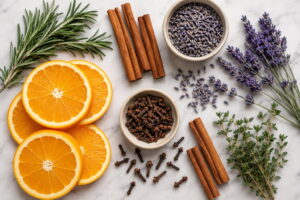
Seasonal Simmer Pot Recipes
These recipes are designed to match the mood and availability of ingredients throughout the year. Each one serves about 3–4 hours of simmering time, with water top-offs every 30 minutes.
Cozy Winter Simmer Pot
This is the classic holiday scent—warm, spicy, and deeply comforting. It smells like mulled cider without any sugar or alcohol.
- 1 orange, sliced into rounds (peel on)
- 3 cinnamon sticks
- 1 tablespoon whole cloves
- 2 star anise pods
- 4 cups water
Combine everything in a saucepan. Bring to a gentle boil, then reduce to lowest simmer. Let it go for up to 3 hours, topping off water as needed. The orange slices will soften and release more oil as they cook, so don't rush this one.
Variation: Add a split vanilla bean for a sweeter, creamier note. This works especially well on cold afternoons when you're stuck inside.
Fresh Spring Simmer Pot
Lighter and greener, this blend cuts through the staleness that builds up after a long winter indoors.
- 1 lemon, sliced
- 3–4 sprigs fresh rosemary
- 1 tablespoon dried lavender buds
- 4 cups water
Bring to a boil, then reduce to a gentle simmer for 2 hours. Start with less lavender if you're unsure about floral scents—you can always add more next time. The rosemary holds up surprisingly well and provides a clean, herbal backbone.
Pro tip: Rub the rosemary sprigs between your palms before adding them to the pot. This cracks the needles and releases the oils immediately rather than waiting for heat to do the work.
Summer Citrus and Mint Simmer Pot
Crisp, cooling, and ideal for counteracting kitchen odors after grilling or frying seafood.
- 1 lime, sliced
- 1 grapefruit peel, torn into strips
- A generous handful of fresh mint leaves
- 4 cups water
Combine and bring to a boil, then reduce to a simmer for 1–2 hours. This blend is best made fresh rather than refrigerated, since mint loses its potency quickly after the first simmer. The grapefruit peel adds a slightly bitter edge that keeps the scent from being too sweet.
When to use this: Right after cooking fish or garlic-heavy dishes. The citrus cuts through lingering grease smells better than most other combinations.
Autumn Apple and Spice Simmer Pot
This is the closest thing to bottled fall—apple pie without turning on the oven.
- 1 apple, sliced (core included)
- 3 cinnamon sticks
- 1 teaspoon whole cloves
- A few gratings of whole nutmeg (or ½ teaspoon ground)
- 4 cups water
Combine everything and bring to a boil. Reduce to a simmer for up to 4 hours. This blend holds up exceptionally well to reheating over several days. The apple slices continue to soften and release more aroma with each reheating.
Why include the core: Apple cores contain pectin and additional aromatic compounds that add complexity. Leave the seeds in—they won't release anything harmful at simmer temperatures.
Odor-Neutralizing Simmer Pot
Not every simmer pot needs to smell like a holiday. Sometimes you just need to reset the air after a heavy cooking session.
- 2 tablespoons apple cider vinegar
- 1 lemon, sliced
- 2 bay leaves
- 4 cups water
Combine and bring to a boil, then reduce to a simmer for 30–45 minutes. The vinegar actively neutralizes certain odor compounds rather than masking them. This is the most functional blend in the rotation—it won't win any beauty contests on its own, but it works when nothing else does.
When to use this: After frying fish, cooking cabbage or broccoli, or anytime the kitchen smells like last night's dinner instead of today's.
Maximizing Your Simmer Pot: Practical Tips
Over years of making these, I've learned a few things that separate a good simmer pot from a great one.
Bruise your herbs. Lightly crushing rosemary, mint, or lavender between your fingers before adding them to the pot releases oils instantly. Tossing them in whole means waiting for heat to do the work slowly.
Add spices before fruit. Cinnamon sticks and whole cloves take longer to release their oils than citrus peels do. If you're layering flavors, put the spices in first and let them simmer for 10–15 minutes before adding the fruit. This creates a more balanced scent profile.
Don't overcrowd. Three to four ingredients is the sweet spot. More than that and the individual notes blur into a vague, muddy scent. You want distinct layers that evolve over time.
Reuse your batch. Strain the liquid through a fine-mesh strainer into a jar, refrigerate, and reheat within two to three days. Many blends actually improve on the second day as flavors continue to develop.
Use filtered water. If your tap water has a strong chlorine or sulfur smell, it will compete with your ingredients. Filtered water lets the citrus and spices shine without background notes of swimming pool or eggs.
Layer strategically. Start with base-note spices. Add bright citrus or fresh herbs in the last hour so those top notes stay fresh and don't cook off completely.
Label your jars. If you refrigerate multiple batches, label them with the date and ingredients. It's surprisingly easy to forget which jar is which once the liquid is strained.
Safety First: What Every Simmer Pot Requires
Simmer pots involve an active burner and a pot of water that can boil dry. A few simple rules keep the experience safe and stress-free.
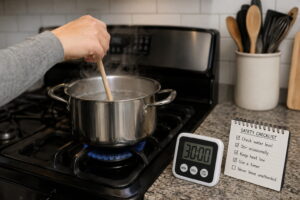
Never leave the stove on when you leave the house or go to sleep. This is non-negotiable. Turn off the burner before walking away for any extended period.
Check water levels every 30 minutes. A dry pot on a lit burner is a fire hazard and can also crack ceramic or glass cookware. Set a timer on your phone as a reminder.
Keep the pot toward the back of the stove. This prevents accidental bumps from passing pets or small children. Turn pot handles inward so they don't stick out over the edge of the stove.
Consider a slow cooker for longer sessions. A slow cooker on low maintains a consistent gentle simmer with much less water evaporation. It's safer than an open stovetop burner and requires less frequent checking.
Keep flammable items away. Dish towels, oven mitts, paper towels, and recipe cards should stay at least a foot away from the burner.
Simmer Pot vs. Candles vs. Diffusers
Each method has its strengths. Here's an honest comparison to help you decide which tool fits your situation.
| Feature | Simmer Pot | Candle | Diffuser |
|---|---|---|---|
| Natural ingredients | Yes (100%) | Depends on wax and fragrance oil | Depends on oil quality |
| Adds humidity | Yes | No | No |
| Fire risk | Moderate (needs monitoring) | Moderate (open flame) | Low |
| Convenience | Low (needs attention) | Medium (light and forget) | High (set and leave) |
| Cost per use | Very low (often free from scraps) | Moderate | Moderate to high |
| Scent intensity | Rich and layered | Consistent | Consistent |
| Best for | Weekend afternoons, special occasions | Dinner parties, ambiance | Weekday mornings, routine |
In practice, most people end up using a mix. Simmer pots shine for lazy weekend afternoons when you're home anyway and want the house to smell amazing. Diffusers are better for busy weekday mornings when you need a quick freshener without any attention required.
For a hands-off alternative to stovetop simmering, a slow cooker set to low works beautifully. You can add ingredients in the morning and let it gently scent the house all day with minimal evaporation or risk.
Frequently Asked Questions
What is a simmer pot?
A simmer pot is a pot of water infused with natural ingredients like citrus peels, spices, and herbs, gently simmered on the stove to release their aromatic oils and naturally scent a home.
How long should you simmer a simmer pot?
Most simmer pots can safely simmer for 1 to 4 hours, as long as you check and top off the water level every 30 to 45 minutes to prevent the pot from running dry. Longer simmers produce deeper, more layered scents.
Are simmer pots safe to leave on the stove?
No. Simmer pots should never be left unattended. Turn off the burner before leaving the house or going to sleep. A slow cooker on low is a safer alternative for longer sessions.
Can you reuse a simmer pot the next day?
Yes. Strain the liquid, refrigerate it in a sealed jar, and reheat within two to three days. The flavor and aroma often deepen on the second reheating.
What are the best ingredients for a simmer pot?
The most reliable combinations include citrus peels (orange, lemon, lime), warm spices (cinnamon, cloves, star anise), and fresh herbs (rosemary, mint, lavender). Stick to three to four ingredients per blend for the best results.
Do simmer pots actually remove bad odors or just cover them?
Some ingredients, particularly apple cider vinegar and citrus, actively neutralize certain odor compounds rather than simply masking them. Vinegar-based blends are especially effective after cooking fish or frying.
Can I make a simmer pot in a slow cooker?
Yes. A slow cooker set to low maintains a consistent gentle heat with minimal evaporation, making it safer and more hands-off than a stovetop simmer pot. This is a popular choice among home cooks who prefer set-and-forget methods.
Do simmer pots help with dry indoor air?
Yes. Because simmer pots release steam continuously, they add moisture to the air. This is a practical benefit during winter months when indoor heating systems dry out the air and can aggravate dry skin or sinuses.
Conclusion
Simmer pots are one of the easiest, most affordable ways to make your home smell wonderful without relying on synthetic fragrances. The technique is simple, the ingredients are flexible, and the results are consistently better than anything you can buy in a can or a jar. Whether you're using leftover citrus peels from breakfast or raiding your spice rack for cinnamon and cloves, you already have everything you need to get started.
If you're new to simmer pots, try the basic orange-and-cinnamon recipe first. It's forgiving, smells amazing, and uses ingredients you almost certainly have on hand. Once you see how well it works, experiment with seasonal variations and build your own signature blends. Your home will smell fresher, your air will be less dry, and you'll never have to wonder what's actually in that plug-in air freshener again.