If you have spent any time scrolling TikTok, Reddit wellness threads, or health blogs, you have probably seen the phrase “pink salt recipe.” The version everyone is talking about is not a dinner dish — it is a drink. It combines warm water, Himalayan pink salt, and lemon juice, and it is often called the “pink salt trick.”
Some people promote it as a weight loss hack. Others call it a detox or a cure for morning sluggishness. The honest version is simpler: it is a low-cost, low-calorie electrolyte drink that can support hydration when used correctly.
What Is the Pink Salt Recipe, Exactly?
The pink salt recipe is not one exact formula. It is a category of wellness drinks built around Himalayan pink salt. The most popular version is a morning tonic made with:
- ¼ teaspoon Himalayan pink salt
- Juice of half a fresh lemon
- 8 ounces warm water
- Optional: a pinch of cayenne or a teaspoon of raw honey
The idea is that your body loses water and electrolytes overnight, and a small amount of salt in warm water can help restore fluid balance quickly. The lemon adds vitamin C and makes the drink taste bright instead of just salty. You can also read our guide on overnight oats recipe.
But the recipe has expanded far beyond one glass of salt water. Today the pink salt recipe includes:
- Sole water, a concentrated saltwater solution taken in small daily doses
- A citrus and honey electrolyte drink for athletes
- A pink salt and honey sleep tonic
- Pink salt used as a finishing seasoning in everyday cooking
That range is part of why the trend keeps growing. It uses simple, recognizable, inexpensive ingredients — the same spirit you will find across our full recipe library.
Why Himalayan Pink Salt?
Himalayan pink salt is mined primarily from the Khewra Salt Mine in Pakistan, one of the oldest and largest salt mines in the world. Its pink color comes from iron oxide, along with small amounts of magnesium, potassium, and calcium.
Unlike highly processed table salt, Himalayan pink salt is not stripped of those trace minerals. It also does not contain anti-caking agents.
That does not mean a serving of pink salt is a major mineral supplement. The amounts are small. The real advantages are its minimal processing and its electrolyte component.
Pink Salt vs. Table Salt
| Type | Processing | Iodine | Notes |
|---|---|---|---|
| Table salt | Heavily processed; often contains anti-caking agents | Usually iodized | Fine texture, very common |
| Himalayan pink salt | Minimally processed; retains trace minerals | Not iodized | Coarse or fine; “Himalayan” is largely a marketing name |
| Sea salt | Minimally processed | Depends on source | Mineral content varies by origin |
The honest comparison is that all salt is roughly the same sodium content by weight. The real difference is processing and trace minerals.
One thing to keep in mind: pink salt is not iodized. If you switch exclusively to pink salt, get iodine from seafood, eggs, dairy, or another iodized source in your diet.
The Most Popular Pink Salt Recipes in the U.S. Right Now
These are the versions you are most likely to see in 2026, from the viral morning drink to the athlete-friendly electrolyte blend.
1. The Morning Pink Salt Water Drink
This is the “pink salt trick” that dominates social media. It is meant to be drunk first thing in the morning, ideally 20 to 30 minutes before breakfast.
Ingredients:
- ¼ teaspoon fine Himalayan pink salt
- Juice of half a fresh lemon
- 8 ounces warm filtered water
- Optional: 1 teaspoon raw honey or a pinch of cayenne
Steps:
- Warm the water to a drinkable temperature — hot enough to dissolve the salt, but not boiling.
- Stir in the pink salt until fully dissolved.
- Squeeze in fresh lemon juice.
- Add the honey or cayenne if using, then stir.
- Drink immediately on an empty stomach.
The morning drink is most useful for people who wake up dehydrated. It is not a meal replacement and it will not cause fat loss by itself. It can, however, reduce that sluggish, dry-mouthed feeling and help you start the day better hydrated.
2. Sole Water
Sole water is a fully saturated saltwater solution with roots in traditional European naturopathic medicine. It is much more concentrated than the morning drink, so it is used in tiny amounts.
How to make it:
- Fill a glass jar about one-quarter full with coarse pink salt crystals.
- Add filtered water until the jar is full.
- Cover with a non-metal lid, because salt water corrodes metal.
- Let it sit overnight, at least 8 hours, until the water is fully saturated.
- In the morning, stir 1 teaspoon of the concentrate into 8 ounces of plain water.
Sole water is sometimes used for hydration, muscle cramps, and digestive support. The evidence for those benefits is limited, and the sodium concentration is strong. If you have high blood pressure or kidney disease, skip this version entirely.
3. Pink Salt Electrolyte Drink for Athletes
This is a homemade alternative to commercial sports drinks. It replaces artificial colors and syrups with real citrus and honey.
Ingredients:
- ¼ teaspoon Himalayan pink salt
- Juice of 1 orange or lemon
- 1 tablespoon raw honey or pure maple syrup
- 16 ounces filtered water
- Optional: ¼ teaspoon cream of tartar for extra potassium
Stir well and drink before, during, or after a workout. The combination of sodium, simple sugar, citrus, and water is a practical, low-cost way to support rehydration. It will not perfectly match a precisely formulated commercial sports drink for long endurance efforts, but it is a solid choice for everyday training.
4. Pink Salt and Honey Sleep Tonic
This lesser-known version uses a tiny amount of salt and honey under the tongue before bed.
Preparation: Mix ⅛ teaspoon pink salt with ½ teaspoon raw honey and a few drops of warm water. Place the paste under your tongue 15 to 20 minutes before bed and let it dissolve slowly.
The theory is that the salt and honey help stabilize overnight blood glucose and support serotonin production. There is no strong clinical evidence for this specific mixture, and it is not a treatment for insomnia. It is, however, a low-risk bedtime ritual if your sodium intake is already normal.
 Four common ways to use the pink salt recipe: a morning tonic, sole water, an electrolyte drink, and a bedtime blend.
What Does Science Actually Say?
The wellness world loves big claims. Here is the evidence-based picture.
What Research Supports
- Sodium is an essential electrolyte. It helps regulate fluid balance, nerve signaling, and muscle function. The National Institutes of Health describes sodium as necessary for normal body function.
- A small amount of salt in warm water can support rehydration. This is especially relevant after sleep or heavy sweating.
- Lemon juice contributes real vitamin C and antioxidants. It also makes the drink flavorful enough to replace sugary morning beverages.
What Science Does Not Support
- No clinical evidence shows that pink salt water directly causes weight loss or fat burning.
- The trace minerals in pink salt are present in tiny amounts. You would need unsafe quantities of salt to get meaningful magnesium or potassium from it.
- “Detox” is not a valid medical concept in this context. Your liver and kidneys handle detoxification; salted water does not meaningfully speed that up.
The bottom line: the pink salt recipe can be a useful hydration habit, not a cure. It works best as part of a day that includes real food, sleep, and movement. If you are building a more nourishing routine, balanced dinner ideas will do more for your long-term health than any single morning drink.
Who Should Try It — and Who Should Skip It
The pink salt recipe is safe for many healthy adults, but it is not for everyone.
It May Help If You:
- Wake up with a dry mouth, headache, or low energy
- Exercise enough to lose noticeable amounts of sweat
- Want to replace sports drinks that contain artificial ingredients
- Tend to have low blood pressure and have been advised to increase sodium
- Prefer whole-food, minimally processed wellness tools
Use Caution or Avoid It If You Have:
- High blood pressure, because extra sodium can raise it further
- Chronic kidney disease, because damaged kidneys may struggle to regulate sodium
- Congestive heart failure or fluid retention
- A doctor-prescribed low-sodium diet
- Adrenal conditions such as Addison’s disease
When in doubt, speak with a healthcare provider before making salted water a daily habit. This is especially important if you take medication for blood pressure or a heart condition.
If you follow a low-carb or keto way of eating, the drink is naturally compatible because it contains no carbohydrates or added sugar. It can simply become part of your low-carb meal plan rather than a separate “protocol.”
Tips for Getting the Most Out of Your Pink Salt Recipe
Small details matter more than most wellness posts suggest.
- Buy food-grade pink salt. Lamp-grade salt, bath salt, and decorative rock salt are not safe to ingest. Look for a label that says food grade or culinary grade.
- Keep the dose reasonable. The standard is ¼ teaspoon per 8-ounce glass, which is roughly 600 mg of sodium. More is not better.
- Use warm, not boiling, water. Boiling water is unnecessary and makes the drink harder to drink. Warm water dissolves the salt quickly.
- Drink it before food. On an empty stomach, absorption is faster and the taste does not interfere with breakfast.
- Give it time. Hydration and digestion changes are gradual. Try it for two to three weeks before judging.
- Track your total sodium. If you also salt your food heavily, the morning drink can push you past recommended limits. The USDA’s dietary guidance emphasizes moderation with sodium for this reason.
In practice, the most common mistake is treating pink salt like a supplement and adding larger scoops. Stick with the quarter teaspoon and let the routine do the work.
And remember: the pink salt drink is not a substitute for food. If you need quick, practical meals for a busy week, batch-friendly protein dishes like plain shredded chicken can be prepped once and used in multiple meals.
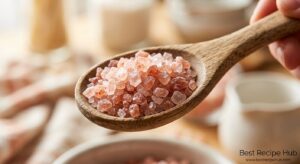 Coarse pink salt crystals are ideal for making sole water; fine pink salt dissolves more quickly in a morning drink.
Why Is Everyone Talking About It?
The pink salt recipe has become bigger than the drink itself. Several forces explain its staying power:
- Mistrust of processed wellness products. More people are tired of expensive supplements and branded health drinks full of ingredients they cannot pronounce.
- The appeal of DIY health. A recipe with three recognizable staples feels honest and controllable.
- Visual aesthetics. Pink salt photographs beautifully. Rose-colored crystals against a white marble background are made for social media.
- Low cost. A bag of food-grade pink salt costs a few dollars and lasts months. This is wellness without a subscription.
- The broader push toward simple cooking. The same appetite for whole, from-scratch food has fueled interest in simple weeknight suppers and shareable party foods alike.
That last point matters. The pink salt recipe is not just a random fad; it is part of a cultural shift toward understanding what goes into our food. The same social-media energy that made savory party dips go viral is now pushing everyday wellness drinks into the spotlight.
Frequently Asked Questions
What is the pink salt recipe for weight loss?
It is the morning drink made with ¼ teaspoon pink salt, half a lemon, and 8 ounces of warm water. It can support hydration and reduce bloating, but there is no evidence it burns fat by itself.
Is it safe to drink pink salt water every day?
For healthy people without high blood pressure or kidney disease, a daily ¼-teaspoon serving is generally safe. Stay within that amount and consult a healthcare provider if you have any medical concerns.
When should I drink the pink salt recipe?
Most people drink it first thing in the morning, 20 to 30 minutes before breakfast. Athletes can also drink a version before or after training.
Does pink salt water help with bloating?
Some people report less morning bloating, likely because proper hydration and electrolyte balance help regulate fluid distribution. Individual results vary.
Is Himalayan pink salt healthier than table salt?
It is less processed and contains trace minerals, but the amounts are small per serving. Table salt is usually iodized, which supports thyroid health. Use either one as part of a balanced diet, and get iodine from other foods if you switch entirely to pink salt.
What is sole water?
Sole water is a fully saturated solution of Himalayan pink salt and water, made by soaking salt crystals overnight. Each morning, 1 teaspoon of the concentrate is diluted in a glass of water. It is much stronger than the standard morning drink and needs extra caution.
Conclusion
The pink salt recipe is a simple, low-cost hydration ritual — not a miracle weight-loss cure. A small amount of Himalayan pink salt in warm water with lemon can help you rehydrate, reduce morning sluggishness, and replace sugary drinks when used sensibly. The key is dose, timing, and context.
Your next step is simple: try the morning version tomorrow. Use ¼ teaspoon of food-grade pink salt, half a fresh lemon, and warm water. Pair the habit with real food instead of expecting the drink to do all the work. If you need inspiration for the rest of your day, our recipe collection is a great place to start.