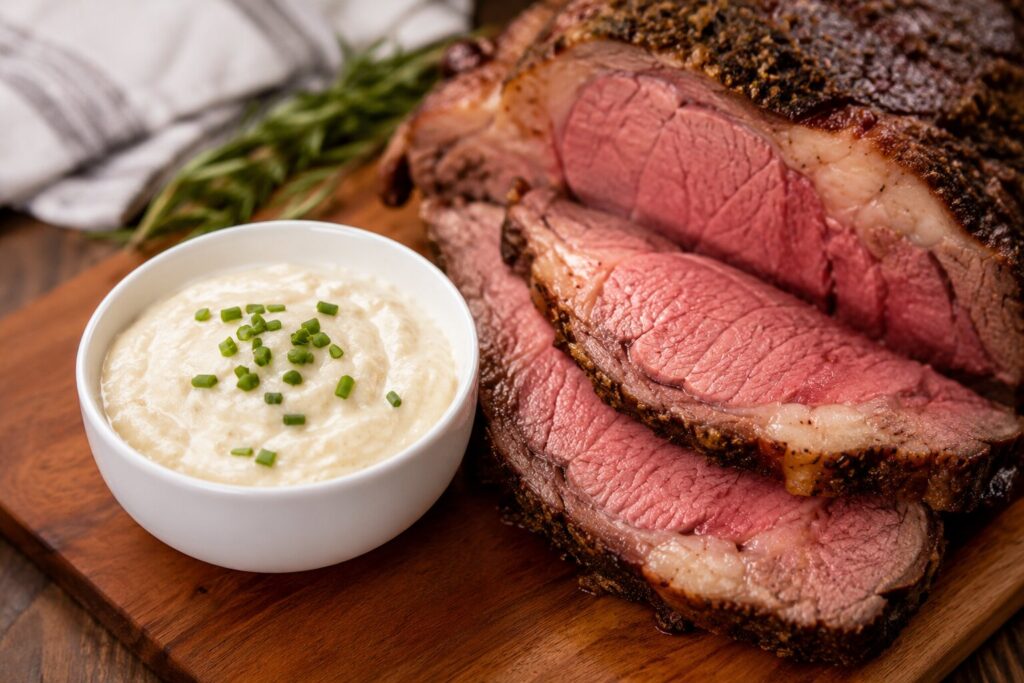
A great prime rib deserves a sauce that does more than sit on the plate. Store-bought horseradish sauce often delivers a watery, one-note sting wrapped in stabilizers and preservatives. The real thing—made fresh in your own kitchen—takes under ten minutes, uses five basic ingredients, and delivers a clean, sharp heat that cuts through rich beef like nothing else.
This isn’t a complicated chef’s trick. It’s a technique home cooks have relied on for generations, and once you taste it, you’ll understand why a jar just can’t compete. You can also read our guide on baked chicken thigh recipes.
Why Homemade Beats Store-Bought Every Time
Horseradish gets its fire from allyl isothiocyanate, a volatile compound released when the root is grated or cut. That compound starts dissipating the moment it hits air—which explains a few things that trip people up:
- Bottled horseradish fades fast. Once opened, its potency drops noticeably within weeks, no matter how well you seal the lid.
- Freshly grated root is dramatically hotter than anything from a jar, even a “fresh” one, because processing and time have already burned off much of the active compound.
- Vinegar controls the burn. Adding acid early slows the chemical reaction, which is why the timing of your ingredients directly affects how sharp the final sauce tastes.
Understanding this chemistry isn’t trivia—it’s the difference between a sauce that’s pleasantly sharp and one that’s either flat or unbearably hot.
The Classic Creamy Horseradish Sauce Recipe
This is the version that belongs next to a slice of prime rib: rich, tangy, and sharp enough to cut through fatty beef without overwhelming it.
Ingredients
| Ingredient | Amount | Notes |
|---|---|---|
| Sour cream (or full-fat Greek yogurt) | 1 cup | Yogurt gives a tangier, slightly thinner sauce |
| Prepared horseradish, drained | ¼ cup | Or 3–4 Tbsp freshly grated |
| Dijon mustard | 1 Tbsp | Smooth, not grainy |
| Apple cider vinegar or fresh lemon juice | 1 tsp | Adds brightness and stabilizes heat |
| Kosher salt | ½ tsp | Fine sea salt works too |
| Cracked black pepper | ¼ tsp | Freshly ground preferred |
| Chopped chives (optional) | 1 tsp | For garnish |
Instructions
- Drain the horseradish thoroughly. Press it through a fine-mesh strainer or squeeze it in a paper towel. Excess liquid waters down the sauce and mutes the flavor.
- Combine the base. In a bowl, whisk together sour cream, drained horseradish, and Dijon mustard until smooth.
- Season and balance. Add vinegar, salt, and pepper. Whisk again, taste, and adjust—more salt if it feels flat, more vinegar if it needs brightness.
- Chill for at least 30 minutes. This rest is not optional. It allows the flavors to meld and mellows any harsh edges. The sauce actually improves overnight.
- Garnish just before serving. Sprinkle chives on top for a fresh finish.
No cooking, no special equipment—just a whisk and a bowl.
The sauce comes together in minutes—just whisk and chill.
A Practical Note from the Kitchen
The single biggest mistake home cooks make: serving this sauce immediately after mixing. Here’s what happens if you skip the rest:
- Fresh off the whisk, the flavors fight each other—sharp horseradish, tangy sour cream, pungent mustard—all disjointed.
- After 30 minutes of chilling, they integrate and mellow into something far more balanced.
- Made up to 3 days ahead, the sauce deepens in flavor, making it perfect for holiday prep.
How Steakhouses Do It
Restaurants that make their own horseradish sauce rely on a few habits that rarely make it into standard recipes:
- Toast the mustard flavor. A pinch of dry mustard powder whisked in alongside the Dijon deepens the tang without adding more acidity.
- Salt in stages. Add a pinch before chilling, then taste and adjust before serving—cold temperatures mute salt perception.
- Use glass or ceramic bowls for storage. Horseradish’s sulfur compounds can react faintly with reactive metals over days, subtly dulling the flavor.
These aren’t dramatic changes, but they’re the kind of small practiced details that separate a good sauce from a forgettable one.
The History Behind Horseradish and Prime Rib
The pairing of horseradish and beef isn’t a modern invention. The root has been used for centuries:
- Origins in Central and Eastern Europe, where horseradish grew wild and was prized for both its pungency and its digestive benefits.
- Brought to the U.S. by German and Central European immigrants in the 19th century, merging with American steakhouse culture.
- Cemented as the default pairing once prime rib became a Sunday dinner and holiday staple in American homes.
The reason the pairing stuck is practical as much as traditional: prime rib is a fatty, rich cut, and horseradish’s sharp, acidic bite is one of the few flavors assertive enough to cut through it without competing with the meat’s flavor. That’s also why regional variations exist—some families lean mustard-forward, others prefer the lighter, whipped-cream steakhouse style.
Choosing the Right Horseradish: Fresh vs. Prepared
Not all horseradish is created equal, and this choice affects your final result more than any other ingredient.
Fresh Horseradish Root
- Must be peeled and grated yourself
- Produces the most intense, immediate heat
- Best for cooks who want full control over potency
- Can be overpowering if not balanced correctly
Prepared Horseradish (Jarred)
- Already grated and mixed with vinegar
- Consistent, milder heat
- More convenient and widely available
- The standard choice for most home recipes
If you’re using fresh root, start with less than the recipe calls for—you can always add more, but you can’t remove heat once it’s blended in.
Horseradish Sauce Variations Worth Trying
Once you’ve mastered the classic version, these variations let you tailor the sauce to different dishes and dietary needs.
- Mayo-Based Horseradish Sauce – Swap the sour cream for mayonnaise. It holds up better on sandwiches and doesn’t thin out as quickly at room temperature, making it ideal for buffet-style serving.
- Whipped Cream Horseradish Sauce – A steakhouse classic. Fold in ¼ cup of lightly whipped heavy cream after mixing the base for a lighter, foam-like texture that mellows the heat.
- Dairy-Free Horseradish Sauce – Replace sour cream with a plain unsweetened cashew or coconut-based yogurt. Add an extra ½ teaspoon of vinegar to balance the natural sweetness.
- Horseradish Cocktail Sauce (for Seafood) – Skip the dairy entirely. Combine ½ cup ketchup, 2–3 tablespoons prepared horseradish, a splash of Worcestershire sauce, and lemon juice. Classic with shrimp cocktail and raw oysters.
What to Serve With Horseradish Sauce
Horseradish sauce recipe searches spike around the holidays for good reason—it’s the definitive pairing for rich roasted meats. But its uses extend well beyond prime rib:
- Prime rib and roast beef – the classic, cutting through fat with acid and heat
- Smoked salmon or gravlax – the horseradish bite balances the richness of the fish
- Deviled eggs – a small dollop replaces traditional mustard for extra kick
- Roast beef sandwiches – spread generously in place of mayo
- Grilled steak – especially fattier cuts like ribeye or strip loin
- Baked or mashed potatoes – a spoonful stirred in adds unexpected depth
- Bloody Marys – a teaspoon whisked into the mix intensifies the classic flavor
If you’re planning a full holiday meal, consider pairing this sauce with a slow-cooked beef dish—our tender ribs from the crock pot are a natural companion. For a lighter option, try it alongside rotisserie chicken recipes that need a flavor punch. And for a true beef lover’s feast, serve it with smoky burnt ends for a game-day spread that wows.

The sauce pairs beautifully with both beef and seafood—versatile enough for any menu.
Storage and Shelf Life
Proper storage keeps your sauce tasting fresh and safe to eat:
- Refrigerator: Store in an airtight container for up to 5–7 days.
- Do not freeze dairy-based versions—the sour cream or mayo will separate and turn grainy upon thawing.
- Watch for spoilage signs: any sour off-smell beyond the expected tang, discoloration, or separation that doesn’t recombine with stirring means it’s time to discard.
- Keep it chilled until serving time. Dairy-based sauces shouldn’t sit at room temperature for more than two hours, per USDA food safety guidelines.
Nutritional Notes and Lighter Alternatives
Horseradish itself is low in calories and has been used historically for its digestive and antimicrobial properties. The sauce’s calorie count depends almost entirely on the base you choose:
- Sour cream base: roughly 40–50 calories per tablespoon, with less fat than mayonnaise
- Mayonnaise base: richer and more calorie-dense, around 90 calories per tablespoon
- Greek yogurt base: the lightest option, with added protein and a tangier finish
- Horseradish root itself: virtually no calories and no fat, making it one of the few genuinely “free” flavor boosters
If you’re serving a crowd with mixed dietary preferences, consider making a half-batch with Greek yogurt and a half-batch with the classic sour cream version. For a completely different flavor profile, you might also enjoy this sauce with a Cornish hen for a poultry twist—or serve it alongside a refreshing white sangria to balance the heat.
Troubleshooting Common Horseradish Sauce Problems
- My sauce isn’t spicy enough. Add prepared horseradish a teaspoon at a time. If using jarred horseradish that’s been open a while, it may have lost potency—buy a fresh jar rather than adding more of a weak one.
- My sauce is too watery. This almost always comes from under-drained horseradish. Press it firmly through a fine-mesh strainer or squeeze it in a paper towel before mixing.
- My sauce tastes flat or one-dimensional. It likely needs more acid or salt, not more horseradish. A small squeeze of lemon juice often fixes this instantly.
- My sauce separated after refrigeration. A quick whisk before serving usually restores the texture. If it’s mayo-based and has separated significantly, whisk in a teaspoon of cold water to re-emulsify.
Final Thoughts
A great horseradish sauce recipe isn’t complicated—it comes down to a few key details:
- Draining your horseradish thoroughly
- Letting the sauce rest before serving
- Balancing acid, salt, and heat rather than just dumping in more root
Once you’ve made it fresh, it’s genuinely hard to go back to the jarred version sitting in most refrigerator doors. Whether you’re plating a holiday prime rib or dressing up a weeknight roast beef sandwich, this five-minute sauce turns an ordinary dish into something people ask about. For a sweet finish after all that savory richness, try a slice of apple crisp with oats—the perfect cap to a prime rib dinner.
Frequently Asked Questions
What is horseradish sauce made of?
Traditional horseradish sauce is made from prepared or fresh horseradish blended with sour cream or mayonnaise, Dijon mustard, vinegar or lemon juice, salt, and pepper. Some variations add whipped cream for a lighter texture.
Is horseradish sauce the same as horseradish cream?
Yes, in most cases. “Horseradish cream” and “horseradish sauce” typically refer to the same dairy-based condiment, though horseradish cream sometimes specifically includes whipped cream for a lighter, fluffier texture.
How long does homemade horseradish sauce last in the fridge?
Homemade horseradish sauce lasts 5 to 7 days when stored in an airtight container in the refrigerator. It should not be frozen, as the dairy base will separate and become grainy upon thawing.
Can you freeze horseradish sauce?
No, dairy-based horseradish sauce should not be frozen. Freezing causes sour cream or mayonnaise to separate, resulting in a grainy, broken texture once thawed.
What can I substitute for horseradish sauce?
Wasabi mixed with sour cream, Dijon mustard, or a spicy brown mustard can all mimic the sharp, pungent bite of horseradish sauce in a pinch, though the flavor profile will differ slightly.
Does horseradish sauce need to be refrigerated?
Yes, because it’s dairy-based, horseradish sauce must be refrigerated and should not sit at room temperature for more than two hours to prevent bacterial growth.
Why is my homemade horseradish sauce not spicy?
Horseradish loses potency quickly once grated or opened, due to evaporation of its active heat compound. If your sauce lacks heat, use fresher prepared horseradish or add more, a teaspoon at a time.
What is the difference between prepared horseradish and horseradish sauce?
Prepared horseradish is just grated horseradish root mixed with vinegar and salt, with no dairy. Horseradish sauce takes prepared horseradish and blends it with sour cream, mayonnaise, or cream to create a milder, creamier condiment.