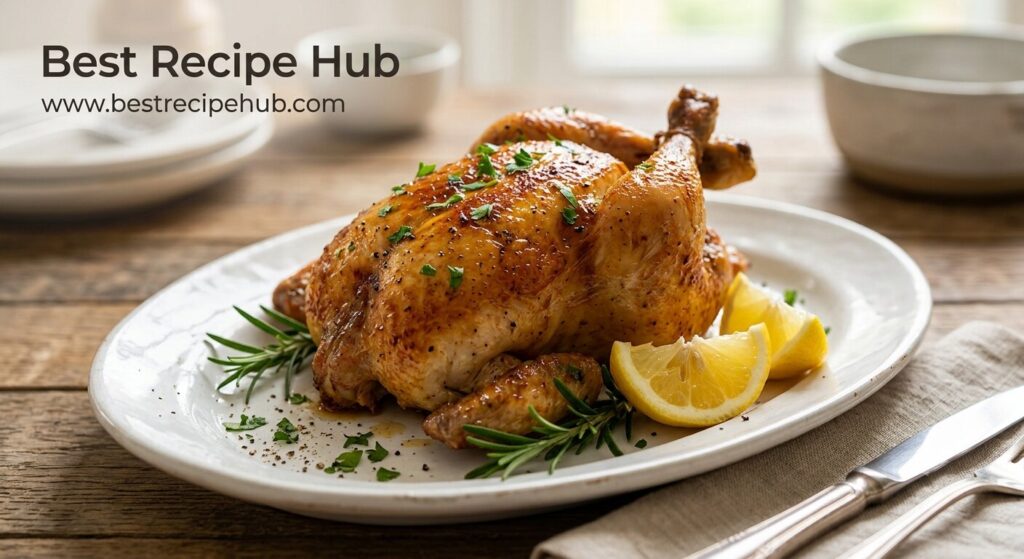
There's a reason Cornish hens appear on restaurant menus and holiday tables far more often than they show up in home kitchens: they look spectacular, cook quickly, and give every diner their own perfectly portioned bird. Yet many home cooks avoid them, assuming a whole roasted bird per person must be complicated or temperamental.
In practice, the opposite is true. A Cornish hen is actually more forgiving than a large chicken or turkey because its small size means faster cooking and less margin for error. With the right technique—high heat, herb butter, and a wire rack—you can produce crispy, golden skin and juicy meat on a Tuesday night with about 15 minutes of hands-on work. You can also read our guide on air fryer chicken breast.
This recipe strips away the fuss and keeps what actually matters: consistent results that look like you spent hours.
What Is a Cornish Hen, Exactly?
A Cornish hen (often labeled Cornish game hen) is not a game bird or a distinct breed. It's a young chicken, typically harvested between 4 and 6 weeks old, weighing 1 to 2 pounds. The USDA classifies it as a young chicken—the "game hen" label is a marketing term that stuck.
Three characteristics make it ideal for elegant dinners:
- Fast cooking time. A whole hen roasts in under an hour, compared with 90 minutes or more for a small chicken.
- Higher skin-to-meat ratio. More surface area means more crispy skin per bite.
- Individual portions. Each bird serves one person, eliminating the need for carving at the table.
Because every guest gets their own bird, the presentation is inherently dramatic. You can serve them whole or split them lengthwise, and either way, the plate looks intentional and refined. You can also read our guide on banana bread recipe.
Why This Recipe Works Every Time
After testing this method across dozens of birds—for anniversaries, Thanksgiving alternatives, and ordinary weeknights—a few consistent principles emerged:
- 425°F from start to finish. High heat renders fat under the skin quickly, creating crispness before the breast meat dries out. Lower temperatures produce tender skin, not crispy skin.
- Butter under the skin, not just on top. Sliding herb butter directly onto the breast meat bastes it from the inside as it melts. This is significantly more effective than brushing butter on the outside, which mostly drips off.
- A wire rack is non-negotiable. Roasting on a flat pan leaves the underside sitting in rendered fat and juices, which steams rather than crisps. A rack lifts the hen and allows 360-degree air circulation.
- Resting for 10 minutes. This single step makes the difference between juicy meat and dry meat. Skip it, and the juices run out onto the cutting board instead of redistributing through the flesh.
Ingredients You'll Need
The ingredient list is intentionally short. A properly roasted Cornish hen needs good butter, fresh herbs, salt, and heat—nothing more.
For the hens:
- 2 Cornish hens (1 to 1.5 pounds each)
- 3 tablespoons unsalted butter, softened
- 2 tablespoons olive oil
- 4 garlic cloves, minced
- 1 tablespoon fresh rosemary, chopped (or 1 teaspoon dried)
- 1 tablespoon fresh thyme, chopped (or 1 teaspoon dried)
- 1 lemon, halved
- Salt and freshly ground black pepper
- 1 small onion, quartered
Optional aromatics for the cavity:
- A few sprigs of fresh parsley
- 1–2 extra garlic cloves, smashed
- A small piece of lemon peel
These items are already in most kitchens. The recipe doesn't call for obscure ingredients or specialty equipment, which is part of why it works as both a quick weeknight option and a special-occasion centerpiece.
Step-by-Step: How to Roast a Cornish Hen
1. Bring the Hens to Room Temperature
Remove the hens from the refrigerator 30 to 40 minutes before cooking. A cold bird going into a hot oven cooks unevenly—the outer meat dries out before the center reaches a safe temperature. Room-temperature hens roast more evenly and predictably.
2. Preheat and Prepare the Pan
Preheat the oven to 425°F (218°C). Place a wire rack inside a rimmed baking sheet or roasting pan. The rack is essential—without it, the underside of the hen will steam in the rendered fat rather than crisping.
3. Make the Herb Butter
In a small bowl, combine:
- 3 tablespoons softened unsalted butter
- 2 tablespoons olive oil
- 4 minced garlic cloves
- 1 tablespoon chopped fresh rosemary
- 1 tablespoon chopped fresh thyme
- A generous pinch of salt and pepper
Mix until evenly combined. The olive oil helps the butter spread more easily and raises the smoke point slightly, preventing the butter from burning.
4. Season Generously, Inside and Out
Pat the hens completely dry with paper towels. This is the most important step for crispy skin—surface moisture is the enemy of browning.
Gently loosen the skin over the breast meat with your fingers, being careful not to tear it. Slide about half the herb butter directly onto the breast meat, spreading it evenly. Rub the remaining herb butter over the outside of the skin.
Season the cavity generously with salt and pepper, then stuff it with a lemon half, onion quarters, and any optional aromatics. Season the outside of the hen with salt and pepper as well—don't be shy, because much of it will end up in the pan drippings.
5. Truss and Position
Tuck the wing tips under the body so they don't burn. Tie the legs together with kitchen twine—this keeps the legs close to the body, promoting even cooking and preventing the leg meat from drying out.
Place the hens breast-side up on the wire rack, spaced at least 2 inches apart to allow heat to circulate freely.
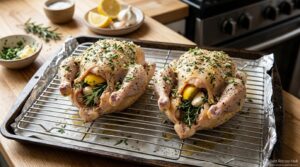 Hen prepared with herb butter and placed on a wire rack just before entering the oven
6. Roast
Roast at 425°F for 45 to 55 minutes, depending on the size of the birds. You're looking for three indicators of doneness:
- Internal temperature at the thickest part of the thigh reaches 165°F (74°C) on a meat thermometer
- Juices run clear, not pink, when you pierce the thigh
- Skin is deeply golden brown and visibly crisp
A meat thermometer is the only reliable method. Color alone can be misleading, especially with darker-skinned birds. The USDA recommends 165°F for all poultry, and because these birds are small, the carry-over heat during resting will add a few degrees.
7. Rest Before Serving
Transfer the hens to a cutting board and let them rest for 10 minutes before serving. During this rest, the juices redistribute throughout the meat. If you slice immediately, those juices run out onto the board, leaving dry meat behind.
Tips for the Most Elegant Presentation
Because Cornish hens are often the centerpiece of a special meal, presentation matters as much as flavor:
- Serve whole or halved. A whole hen per plate looks dramatic; splitting it lengthwise with kitchen shears makes it easier to eat and reveals the juicy interior.
- Garnish with fresh herbs. A few sprigs of rosemary or thyme laid across the plate elevates the visual instantly without extra effort.
- Make a quick pan sauce. After removing the hens, place the roasting pan over medium heat. Add a splash of white wine or chicken stock and scrape up the browned bits. Simmer for 2 minutes, whisk in a tablespoon of cold butter, and drizzle over the hens.
- Choose colorful sides. Roasted root vegetables, bright green asparagus, or wild rice pilaf contrast beautifully with the golden hen.
For a truly elegant table, baked chicken bruschetta uses a similar high-heat approach and shares the same Italian-leaning flavor profile if you want to expand your repertoire.
What to Serve with Cornish Hen
The richness of roasted poultry calls for sides that are bright, starchy, or both. Reliable pairings include:
| Category | Suggestions |
|---|---|
| Starches | Garlic mashed potatoes, herb-roasted fingerlings, wild rice pilaf, orzo with lemon |
| Vegetables | Roasted asparagus, Brussels sprouts, green beans with almonds, roasted carrots |
| Salads | Arugula with lemon vinaigrette, shaved fennel and orange, simple mixed greens |
| Bread | Crusty sourdough or dinner rolls to soak up pan juices |
For wine, a light-bodied red like Pinot Noir or a crisp white like Sauvignon Blanc complements the herb-forward profile without overpowering it.
Flavor Variations to Try
Once you've mastered the base technique, adapting the flavor is straightforward:
- Citrus-herb hen. Replace the lemon with orange and add a splash of orange juice to the herb butter for a sweeter, brighter finish.
- Smoky paprika hen. Add 1 teaspoon smoked paprika and a pinch of cayenne to the butter mixture for warm, subtle heat and deeper color.
- Mediterranean hen. Swap rosemary and thyme for oregano. Stuff the cavity with crumbled feta and chopped olives for a bolder, tangier profile.
- Maple-mustard glaze. Brush the hens with a mixture of maple syrup and Dijon mustard during the last 10 minutes of roasting for a glossy, slightly sweet crust.
- Garlic-white wine variation. Add a splash of dry white wine to the roasting pan halfway through cooking. Use the resulting liquid as the base for your pan sauce.
All these variations use the same core method—dry skin, high heat, rack roasting, and resting—so you can experiment with confidence.
Common Mistakes to Avoid
Even experienced home cooks make these errors, and they consistently produce disappointing results:
- Skipping the dry-patting step. This is the number one cause of rubbery, non-crisp skin. Take 30 seconds to pat thoroughly with paper towels.
- Overcrowding the pan. Hens need space around them. Crowding traps steam and prevents browning.
- Cooking straight from the fridge. A cold bird cooks unevenly, leaving dry outer meat and an undercooked center.
- Guessing doneness by color. The only reliable method is a meat thermometer. Color varies by bird and oven.
- Slicing immediately after roasting. Let the hen rest for a full 10 minutes. The difference between rested and unrested poultry is night and day.
Avoiding these five mistakes alone will elevate your results from acceptable to genuinely impressive. For similar principles applied to other proteins, air fryer pork chops also benefits from preheating and proper resting.
A Quick Note on Nutrition
Cornish hen is naturally a lean, high-protein option. A typical half-hen serving provides substantial protein, iron, and B vitamins, with relatively moderate fat content compared with larger, older birds.
If you're watching richness:
- Reduce the butter to 1 tablespoon and rely more on olive oil
- Remove the skin before eating (though you lose the crispiness)
- Balance the plate with lighter sides like a green salad rather than heavy starches
How to Store and Reheat Leftovers
Leftover Cornish hen keeps better than most poultry because the small size means less moisture loss during reheating:
- Refrigerate in an airtight container for up to 4 days
- Freeze cooked meat off the bone for up to 3 months
- Reheat in a 350°F oven, loosely covered with foil, for 10–15 minutes
Avoid the microwave, which turns crispy skin rubbery and dries out lean meat. The oven preserves both texture and moisture far more effectively.
Frequently Asked Questions
What is the difference between a Cornish hen and a regular chicken?
A Cornish hen is simply a young chicken harvested at 4–6 weeks old, weighing 1–2 pounds. It has a higher skin-to-meat ratio and cooks much faster than a mature whole chicken, which can weigh 4–7 pounds and requires significantly longer roasting times.
How long does it take to roast a Cornish hen?
At 425°F, a 1- to 1.5-pound hen takes 45 to 55 minutes. Always verify doneness with a meat thermometer inserted into the thickest part of the thigh.
Do you need to truss a Cornish hen?
Trussing isn't strictly required, but it's recommended. Tying the legs together keeps them close to the body, promoting even cooking and preventing the leg meat from drying out before the breast is done.
What temperature should Cornish hen be cooked to?
165°F (74°C) at the thickest part of the thigh, measured with a reliable meat thermometer. This is the USDA-recommended safe temperature for all poultry.
Can you cook Cornish hen from frozen?
No. Thaw completely in the refrigerator for 24–48 hours before roasting. Cooking from frozen produces uneven results and makes it difficult to verify safe internal temperature.
Is one Cornish hen enough for one person?
Yes. A 1- to 1.5-pound hen is sized as a single dinner portion. Hearty eaters may want a full hen; lighter eaters may be happy with half.
Why is my Cornish hen skin not crispy?
The most common causes are surface moisture (skip the paper towel step), low oven temperature, or overcrowding the pan. Pat the skin completely dry, roast at 425°F, and use a wire rack.
What's the best way to season a Cornish hen?
A simple herb butter made with garlic, rosemary, thyme, salt, and pepper, rubbed both under and over the skin, delivers the most flavor. It seasons the meat directly while helping the skin brown evenly.
Conclusion
Roasted Cornish hen is one of the easiest ways to make dinner feel like an event without requiring advanced technique or hours in the kitchen. The recipe is simple enough for a Tuesday and impressive enough for a holiday table. The key is trusting the method: dry the skin, use high heat, elevate the bird on a rack, and let it rest before serving.
If you've been intimidated by whole roasted birds, start here. The skills you develop—trussing, making compound butter, using a meat thermometer—transfer directly to larger poultry and many other roasted dishes.
Your next step: Try this recipe for your next date night or small gathering. Once you see how straightforward it is, you'll find yourself reaching for Cornish hens far more often than a whole chicken.