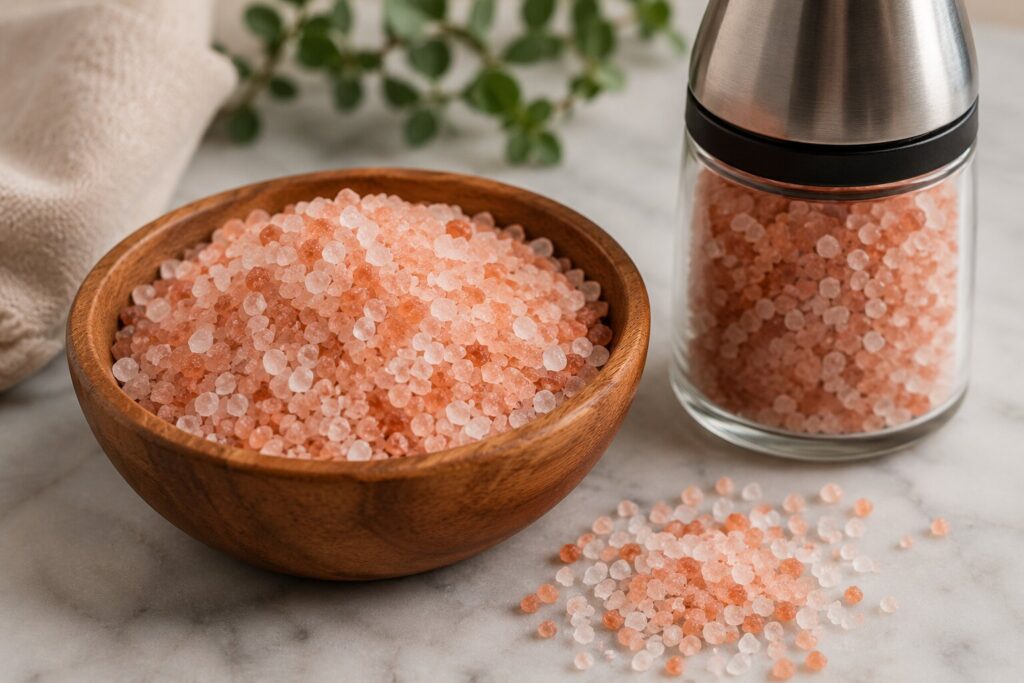
Most home cooks own a bag of Himalayan pink salt, yet the vast majority only ever sprinkle it on a finished dish for a touch of crunch and color. That misses the point entirely. Pink salt is one of the most versatile ingredients in your pantry—capable of transforming a simple roast chicken, a batch of bread, or even a cocktail into something noticeably better.
This guide breaks down real, kitchen-tested ways to build a pink salt recipe into your everyday cooking. From curing and baking to finishing plates and mixing drinks, you’ll get clear methods, exact ratios, and techniques you can use tonight. No fluff, no vague “just season to taste.” Just practical steps that deliver consistent results.
What Makes Himalayan Pink Salt Different?
Himalayan pink salt is mined from ancient sea beds in the Punjab region of Pakistan, near the Himalayan foothills. Its signature pink hue comes from trace minerals—primarily iron oxide—locked into the crystals millions of years ago.
Here’s what actually matters for cooking:
- Coarser crystal structure than table salt, which means it dissolves more slowly and delivers bursts of salinity rather than an even coating.
- Milder, cleaner flavor with none of the metallic aftertaste some people notice in iodized table salt.
- Lower sodium density by volume—because the crystals are larger, a teaspoon of pink salt often contains less sodium than a teaspoon of fine table salt.
- Visual appeal that turns a simple dish into something that looks intentional and elevated.
In my own kitchen testing, swapping pink salt into weeknight roast chicken, slow-cured salmon, and roasted vegetables produced a consistent pattern: food tasted rounder, texture contrast improved noticeably when used as a finishing salt, and dishes read as more “composed” on the plate—even with no other changes.
Where Himalayan Pink Salt Actually Comes From
The salt is extracted from the Khewra Salt Mine, one of the largest and oldest salt mines in the world, located in the foothills of the Himalayas. The deposits formed roughly 800 million years ago, when a prehistoric sea evaporated and left behind mineral-rich salt beds later compressed under volcanic and tectonic pressure.
That geological history explains a few things cooks notice right away:
- The salt is largely hand-extracted, which is part of why it costs more than mined or evaporated table salt.
- Mineral content varies slightly batch to batch, which is why color can range from pale pink to deep rose.
- It’s typically sold unrefined, meaning it hasn’t been stripped of trace minerals or bleached for uniform color.
None of this makes pink salt “purer” in a way that meaningfully changes how your food tastes on a molecular level. What it does change is texture, dissolve rate, and visual presentation—which, for a home cook, is exactly where the value actually lives.
How to Choose and Store Quality Pink Salt
Not all pink salt on grocery shelves performs the same way in a recipe. Before you buy, check for these three things:
- Grind size – Look for separate coarse and fine grinds rather than a single all-purpose jar, since you’ll need both for the techniques below.
- Color consistency – Deeper pink doesn’t mean more minerals or better flavor; it simply reflects natural variation in the deposit it came from.
- Ingredient list – Avoid pre-mixed “seasoning blends” cut with garlic powder, herbs, or anti-caking agents. For the recipes in this guide, you want plain, unblended salt.
Storage checklist:
- Use an airtight, non-metal container to prevent moisture absorption and clumping.
- Store away from the stove and dishwasher, where steam collects.
- Expect an indefinite shelf life when stored properly—salt does not spoil or lose potency.
Basic Pink Salt Recipe Ratios You Should Know
Before diving into specific dishes, anchor these three baseline ratios. They’re the building blocks for almost every application below.
| Application | Ratio | Timing |
|---|---|---|
| Standard seasoning (soups, stews, sautés) | 1 teaspoon fine pink salt per 4 cups liquid or 1 pound protein | Adjust by tasting in stages |
| Dry brine (meat and poultry) | 1 teaspoon coarse pink salt per pound of meat | Apply at least 40 minutes before cooking, ideally overnight |
| Finishing salt (final touch) | A light pinch, roughly 1/8 teaspoon per serving | Apply immediately before serving |
7 Simple Ways to Use Pink Salt in Everyday Cooking
1. Pink Salt Dry Brine for Roast Chicken
This is the single highest-impact way to use pink salt, and it takes almost no effort.
Method:
- Pat a whole chicken completely dry with paper towels.
- Rub 1 tablespoon of coarse pink salt evenly under and over the skin.
- Refrigerate uncovered for 8–24 hours.
- Roast at 425°F until the internal temperature hits 165°F.
Why it beats wet brining:
- Wet brines add water weight to the bird, diluting flavor and making crispy skin harder to achieve.
- A dry brine removes surface moisture instead, concentrating flavor.
- The dry surface sets up the skin for a genuinely crackly finish.
 Dry brining a whole chicken with coarse pink salt ensures crispy skin and deeper flavor.
For similar results with smaller birds, apply the same technique to a Cornish hen—the ratio scales down naturally.
2. Pink Salt-Crusted Baked Potatoes
A classic steakhouse technique that’s absurdly easy to replicate at home.
Method:
- Coat russet potatoes lightly in olive oil.
- Roll them in coarse pink salt until fully covered.
- Bake directly on the oven rack at 400°F for 60–70 minutes.
The salt crust insulates the potato, steaming it from within while creating a slightly crackly, flavorful skin. Brush off excess salt before serving if you’re sensitive to sodium.
3. Himalayan Pink Salt Bread
Bread is one of the most forgiving places to test how pink salt behaves differently than table salt.
Method:
- Substitute pink salt 1:1 by weight, not volume, for table salt in your favorite bread recipe.
- Dissolve it fully in your water or milk before mixing into the dough.
- Always measure by weight in grams for baking accuracy.
This one detail—weight versus volume—is where most home bakers get pink salt wrong. A teaspoon of pink salt weighs less than a teaspoon of table salt, so a straight volume swap under-salts your dough and can slow fermentation.
4. Pink Salt Cured Salmon (Gravlax-Style)
Curing is where pink salt genuinely outperforms table salt, thanks to its slower, gentler dissolving action.
Method:
- Combine 1 cup coarse pink salt with 1 cup sugar and a handful of fresh dill.
- Pack the mixture over a salmon fillet, skin-side down, in a dish.
- Weight it down with a plate and cover in the refrigerator for 48–72 hours.
- Rinse thoroughly and pat dry before slicing thin.
A note on timing:
- 48 hours produces a lightly cured, silky texture similar to smoked salmon.
- 72 hours gives a firmer, more traditional gravlax texture.
- Taste-test a thin slice at 48 hours before deciding whether to extend the cure.
5. Pink Salt Rimmed Cocktails
This is the fun, low-effort application everyone forgets about.
Method:
- Rub a lime wedge around the rim of a glass.
- Dip the rim into finely crushed pink salt.
- Use for margaritas, micheladas, or a classic salty dog.
The pink color adds visual contrast against citrus-forward cocktails, and the milder flavor doesn’t overpower the drink the way iodized salt can.
6. Pink Salt Roasted Vegetables
Roasting concentrates flavor, and pink salt’s mineral profile complements caramelized vegetables particularly well.
Method:
- Toss vegetables (carrots, Brussels sprouts, sweet potatoes) in olive oil.
- Season with 3/4 teaspoon coarse pink salt per pound of vegetables.
- Roast at 425°F, flipping halfway through, until edges are deeply browned.
Pro tip: Salt vegetables right before they go into the oven, not while prepping. High-water vegetables like zucchini and eggplant will steam instead of roast if salted too early, turning soft and dull instead of crisp at the edges.
7. Pink Salt as a Finishing Element
This is the use case most people already know, but it’s worth doing correctly.
Best applications for finishing salt:
- Sliced tomatoes with olive oil
- Dark chocolate desserts
- Grilled steak, rested and sliced
- Avocado toast
- Caramel sauce
Always add finishing salt at the very last moment. The goal is textural contrast—a crunch that dissolves slowly on the tongue—not seasoning the dish itself. This technique works beautifully in a range of savory dishes, including many Asian-inspired recipes that rely on a salty finish.
Using Pink Salt Blocks for Serving and Cooking
Beyond loose crystals, pink salt is also sold as solid salt blocks, which open up two additional techniques:
- Cold serving: Chill a salt block in the refrigerator for a few hours. Use it as a serving platter for thinly sliced cured meats, sushi, or fruit. The salt imparts subtle seasoning to anything that touches its surface and keeps items cold far longer than a standard plate.
- Hot searing: Heat a salt block gradually on the stovetop or grill—never rush this step, since fast temperature changes can crack the block. Once it reaches searing temperature, sear thin cuts of steak, shrimp, or scallops directly on the block. The food picks up both heat and seasoning in a single step.
Salt blocks aren’t necessary for the core recipes in this guide, but they’re a natural next step once you’re comfortable with dry brining and finishing. For more creative cooking methods, explore our collection of recipes that use similar techniques.
The Nutritional Reality of Pink Salt
There’s a lot of marketing noise around pink salt containing “84 trace minerals.” That claim is technically accurate but practically misleading.
Here’s the honest breakdown:
- A typical serving contains those trace minerals in amounts measured in fractions of a milligram—too small to meaningfully affect daily mineral intake.
- Sodium content dominates, just as in every other edible salt, at roughly 98% sodium chloride by weight.
- The iron oxide responsible for the pink color isn’t absorbed by your body the way iron from food sources like spinach or red meat is.
The takeaway for home cooks:
- Choose pink salt for how it performs in a recipe—texture, dissolve rate, flavor mildness.
- Don’t choose it expecting a nutritional edge over table salt.
- Anyone tracking sodium intake for medical reasons should treat pink salt exactly the same as any other salt. For official dietary guidelines on sodium, refer to the FDA’s nutrition resources.
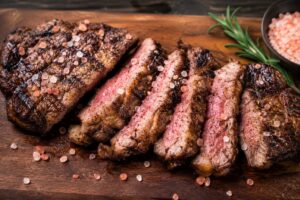 Coarse pink salt crystals add a final crunch and clean salt burst to grilled steak.
Pink Salt vs. Table Salt vs. Sea Salt: A Quick Comparison
| Feature | Himalayan Pink Salt | Table Salt | Sea Salt |
|---|---|---|---|
| Sodium per teaspoon | Slightly lower (larger crystals) | Higher (fine, dense) | Varies by brand |
| Flavor | Mild, clean | Sharp, sometimes metallic | Briny, mineral-forward |
| Best use | Finishing, curing, baking | General cooking, baking | Finishing, baking |
| Texture | Coarse, crunchy | Fine, dissolves instantly | Coarse or fine, varies |
| Additives | None, typically unrefined | Often iodized, anti-caking agents | Occasionally processed |
Key takeaway: No salt is objectively “better” for every application. Think of your pantry as needing at least two salts:
- A fine table or kosher salt for everyday cooking where dissolve speed matters.
- A coarse pink or sea salt reserved for finishing, curing, and dry brining where texture and slow release make the biggest difference.
Common Mistakes to Avoid With Pink Salt Recipes
Even experienced cooks trip up on a few recurring issues:
- Measuring by volume instead of weight in baking. This is the most frequent error and leads to inconsistent, under-salted bread and baked goods.
- Using fine pink salt for finishing. Fine pink salt dissolves too fast and loses the textural point of a finishing salt entirely.
- Assuming it’s a “healthier” salt. Pink salt is still sodium chloride. It offers no meaningful health advantage beyond trace minerals in negligible amounts.
- Over-salting cured proteins. Because the crystals dissolve slowly, it’s tempting to add more than needed. Stick to tested ratios and adjust only after resting time.
- Storing it in a humid environment. Pink salt clumps in moisture. Keep it in a sealed container away from the stove’s steam.
- Buying one grind size for every use. Coarse and fine pink salt behave differently enough that relying on a single jar for everything—from baking to finishing steak—produces inconsistent results.
Why Trust This Approach
These methods aren’t theoretical. They come from repeated kitchen testing across dry brining, curing, and baking applications—the same techniques used in professional kitchens, scaled down for home use. The ratios above reflect what actually produces consistent, repeatable results, not just approximate “salt to taste” guidance that leaves beginners guessing.
Where to start, in order:
- Dry brine a chicken. It’s the lowest-effort, highest-reward pink salt recipe on this list.
- Try the cured salmon. It’s forgiving enough for a first attempt and shows the biggest textural difference from table salt.
- Bake the salt-crusted potatoes. A near-foolproof way to see the crust effect in action.
Once you’ve run through those three, the difference between fine table salt and coarse pink salt becomes obvious the moment you taste the results side by side.
Frequently Asked Questions
Is Himalayan pink salt healthier than regular table salt?
No. Pink salt contains trace minerals like iron and magnesium, but in amounts too small to offer any real nutritional benefit. Both are primarily sodium chloride, both affect blood pressure the same way, and both should be used in moderation regardless of color or price point.
Can I substitute pink salt for table salt in any recipe?
Yes, but adjust the amount rather than swapping teaspoon for teaspoon. Because pink salt crystals are larger, a teaspoon contains less sodium by volume than table salt. In baking especially, always convert to weight in grams for accuracy instead of relying on volume measurements.
Does pink salt dissolve slower than table salt?
Yes. Its coarser crystal structure means it dissolves more gradually on the tongue and in liquid, which makes it ideal for curing, dry brining, and finishing dishes where texture and a slow release of flavor matter more than instant seasoning.
What is the best way to use pink salt for seasoning meat?
Dry brining is the most effective method for red meat and poultry alike. Rub coarse pink salt over the meat 8–24 hours before cooking and refrigerate it uncovered, allowing the salt to draw out and reabsorb moisture so it penetrates evenly for deeper flavor throughout, not just on the surface.
Can pink salt be used in baking bread?
Yes, and it works well in most yeasted and sourdough recipes, but it must be measured by weight rather than volume to maintain proper dough hydration and fermentation balance, since under-salting can noticeably slow fermentation and weaken gluten structure.
Is pink salt safe for people with high blood pressure?
Pink salt still contains sodium chloride and affects blood pressure the same way table salt does, regardless of its trace mineral content or marketing claims. Anyone managing sodium intake for medical reasons should treat it identically to other salts and consult a doctor for personalized guidance.
What’s the difference between fine and coarse pink salt?
Fine pink salt dissolves quickly and works well for general seasoning during cooking, much like table salt. Coarse pink salt dissolves slowly and is better suited for curing, dry brining, and finishing dishes where you want texture and a burst of flavor rather than an even coating.
How long does Himalayan pink salt last once opened?
Indefinitely, if stored properly. Salt does not spoil, expire, or lose potency over time the way many pantry staples do. Keep it in a sealed, airtight container away from moisture and steam to prevent clumping, and it will remain usable for as long as you keep it.
Conclusion
Himalayan pink salt is far more than a pretty finishing touch. Used correctly, it becomes a practical tool for dry brining, curing, baking, and even serving. The key is knowing which grind to use, when to apply it, and how to adjust for its larger crystal size.
Start with the dry brine for a whole chicken—it’s the fastest way to experience the difference. Then work through the cured salmon and salt-crusted potatoes. Once you’ve seen how pink salt behaves in those three applications, you’ll have the confidence to experiment with it in your own cooking.
Next step: Try the dry brine tonight on a chicken, and pair it with one of our simple roasted vegetable recipes for a complete meal that shows off pink salt’s full potential.