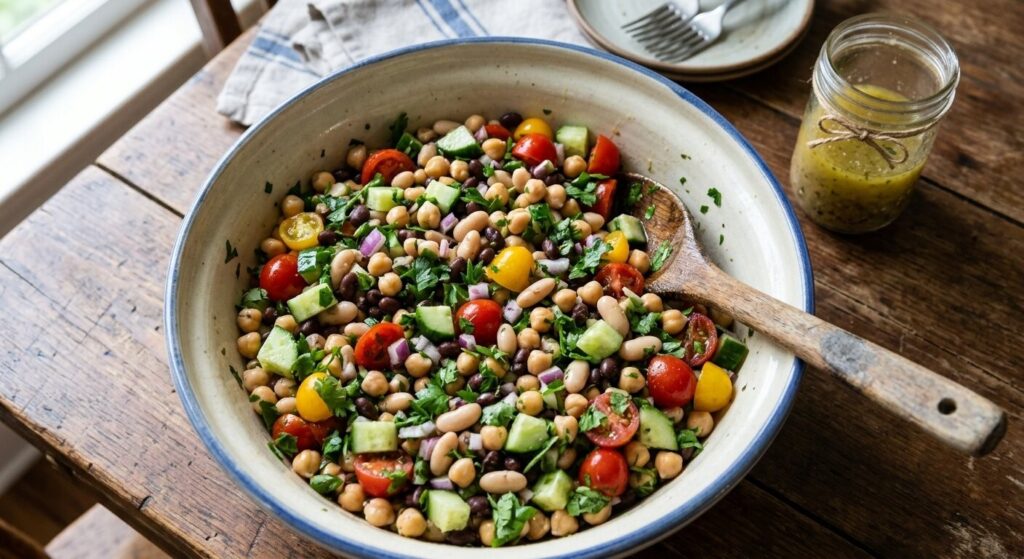
If your lunch routine has fallen into a rut of wilted greens and overpriced grab-and-go boxes, there’s a smarter solution that has quietly become a meal-prep powerhouse. The dense bean salad is a protein-rich, fiber-packed main dish that actually improves in flavor after a few days in the fridge. It takes about 20 minutes of active work, requires no reheating, and keeps you full for hours.
This guide walks you through the exact recipe, the science of why it works so well for weekly prep, and how to customize it so you never get bored. Whether you’re new to meal prepping or looking to refresh your rotation, this easy dense bean salad recipe will become a staple in your kitchen. You can also read our guide on orzo recipes.
What Is a Dense Bean Salad?
A dense bean salad is a hearty, nutrient-dense dish built from multiple bean varieties, chopped vegetables, fresh herbs, and a bold vinaigrette — with little to no lettuce. The term “dense” refers to the concentration of protein, fiber, and flavor in every bite, not to heaviness.
Unlike a leafy green salad that deflates after a day, a dense bean salad stays firm and satisfying. Its origins trace back to Mediterranean and Middle Eastern bean salads, which have been used for centuries as a make-ahead, no-cook meal. The modern viral version, popularized in 2023–2024, simply refined the formula for maximum convenience and taste.
How It Differs From a Standard Bean Salad
| Traditional bean salad | Dense bean salad | |
|---|---|---|
| Role | Side dish | Main course |
| Bean varieties | Usually one | Two or three |
| Texture | Soft, uniform | Crunchy from vegetables, herbs, cheese |
| Dressing | Light, often sweet | Bold, acidic, oil-rich |
| Portion size | Small | Large, meal-sized |
The dense version is engineered to be a complete, self-contained lunch that doesn’t need a sidekick.
Why This Recipe Is Perfect for Weekly Meal Prep
After testing dozens of meal-prep strategies, this one stands out because it solves real problems:
- No sogginess. Without lettuce, the beans and firm vegetables absorb the dressing gradually, becoming more flavorful rather than mushy.
- Nutritionally complete. Beans provide protein and complex carbs, olive oil delivers healthy fats, and vegetables add vitamins and crunch. A single bowl covers your macros.
- Scales effortlessly. Need food for five days? Double the recipe. Technique stays identical.
- Temperature flexible. Eat it cold straight from the fridge, at room temperature, or even warmed slightly — it works any way.
- Travel friendly. No separate dressing container needed. Pack it in a sealed container and grab it on the go.
The result is a lunch that tastes better on Wednesday than it did on Sunday — a rare feat in meal prep.
The Dense Bean Salad Recipe
This is my go-to version, refined over many batches for balance, longevity, and ease. The full recipe yields 4–5 servings, each about 1.5 cups.
Ingredients
For the salad:
- 1 can (15 oz) chickpeas, drained and rinsed
- 1 can (15 oz) cannellini beans, drained and rinsed
- 1 can (15 oz) black beans, drained and rinsed
- 1 cup cherry tomatoes, halved
- 1 cup cucumber, diced small (about ½-inch pieces)
- ½ cup red onion, finely diced
- ½ cup roasted red peppers, chopped
- ½ cup crumbled feta cheese (optional; omit for vegan)
- ⅓ cup fresh parsley, chopped
- 2 tbsp fresh dill or basil, chopped
For the dressing:
- ⅓ cup extra-virgin olive oil
- 3 tbsp red wine vinegar
- 1 tbsp lemon juice
- 1 tsp Dijon mustard
- 1 garlic clove, minced or grated
- ½ tsp dried oregano
- ½ tsp sea salt
- ¼ tsp black pepper
- Pinch of red pepper flakes (optional)
Step-by-Step Instructions
Rinse the beans thoroughly. Leftover canning liquid contains starch and a tinny flavor that will dilute your dressing. Rinse under cold water until the water runs clear, then let them drain well.
Make the dressing first. Whisk olive oil, vinegar, lemon juice, mustard, garlic, oregano, salt, and pepper in a small bowl, or shake in a sealed jar. Allowing the dressing to sit while you prep the vegetables lets the garlic mellow and the flavors meld.
Chop vegetables uniformly. Dice the cucumber, onion, and peppers into small, similar-sized pieces — about ½ inch. Uniformity ensures every forkful has a balanced texture.
Combine everything in a large bowl. Add the beans, tomatoes, cucumber, onion, roasted peppers, feta, and herbs.
Pour the dressing over and toss well. Use a large spoon or spatula to fold gently but thoroughly, coating every bean and vegetable.
Let it rest uncovered for 20 minutes at room temperature. This step is critical — skipping it yields a flat, under-seasoned salad. The rest time allows the beans to absorb the vinaigrette.
Taste and adjust. Beans are naturally mild. If the salad tastes flat, add more lemon juice or vinegar, then a pinch of salt. Stir and rest another 5 minutes before serving.
 Dressing coats each bean for deeper flavor over time.
Pro Tips From Experience
Small adjustments make a big difference. Here’s what I’ve learned firsthand:
- Use at least two bean varieties. A single bean type creates a monotonous texture. Combining chickpeas (firm), cannellini (creamy), and black beans (tender) gives complexity in every bite.
- Don’t skimp on acid. If the salad tastes bland, it’s almost always low on vinegar or lemon juice. Increase acid before adding more salt.
- Salt the vegetables directly. Sprinkle a pinch of salt over the diced cucumber and onion before mixing — it draws out moisture and intensifies their flavor.
- Add crunchy toppings just before serving. Nuts, seeds, or crispy chickpeas soften after a day in the fridge. Store them separately if prepping a large batch.
- Rinse beans with warm water. Warm water slightly primes the beans to absorb the vinaigrette faster, especially if you’re short on marinating time.
How to Store and Meal Prep Dense Bean Salad
This salad is designed for the refrigerator. Proper storage maintains quality for up to five days.
Storage Basics
- Container: Airtight glass or BPA-free plastic containers. Glass is best for avoiding tomato stains.
- Temperature: Refrigerate promptly at 40°F (4°C) or below.
- Shelf life: 4–5 days. Flavor peaks on day two and three.
- Dairy tip: If using feta, the salad holds well within that window. Dairy-free versions last slightly longer (up to 6 days).
Batch Prep Strategy
For a full week of lunches:
- Double the recipe on Sunday.
- Divide into individual portions immediately after the 20-minute rest.
- Label each container with the date to track freshness.
- Keep garnishes (avocado, fresh herbs added at the end) in a separate small container and add daily.
Can You Freeze It?
Freezing is not recommended. Vegetables lose their crunch and become watery upon thawing, and beans can develop a grainy texture. This salad is best made fresh for a five-day window, not frozen for later.
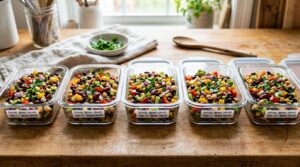 Portioning into individual containers keeps lunches ready all week.
Customizing Your Dense Bean Salad
Once you understand the formula — beans + crunchy vegetables + herbs + bold dressing — the possibilities are endless. Here are three proven variations.
Mediterranean Style
Add ¼ cup Kalamata olives, ½ cup chopped artichoke hearts (drained), and extra oregano. Use white beans (cannellini or great northern) as the base. This version pairs beautifully with a side of warm pita.
Southwest Style
Replace the dressing with lime juice, olive oil, and cumin. Use black beans and pinto beans, add ½ cup corn kernels (fresh or thawed frozen), and swap parsley for cilantro. Finish with a sprinkle of smoked paprika. For a quick side, try a batch of quick air-fried corn alongside.
Italian Style
Use white beans, sun-dried tomatoes (oil-packed, drained), fresh basil, and shaved Parmesan instead of feta. Red wine vinegar and a touch of balsamic work well. This variation is also excellent when you want to add shredded rotisserie chicken for extra protein.
Dietary Adjustments
- Vegan: Omit feta or use a plant-based crumble. The dressing is already vegan.
- Lower sodium: Choose no-salt-added canned beans and reduce the salt in the dressing. Fresh herbs provide flavor without sodium.
- Low-carb / keto: Reduce the bean quantity to 1 can total and bulk up with extra cucumber, roasted peppers, and avocado. For more keto-friendly bean alternatives, look to lupini beans or edamame.
- Grain bowl hybrid: Add 1 cup cooked quinoa to the mix for extra fiber and a heartier texture.
Nutritional Snapshot
A typical 1.5-cup serving of this dense bean salad recipe provides approximately:
| Nutrient | Amount | % Daily Value* |
|---|---|---|
| Protein | 16–18 g | 32–36% |
| Fiber | 11–13 g | 39–46% |
| Fat (mostly monounsaturated) | 14–16 g | 18–20% |
| Iron | 4–5 mg | 22–28% |
| Potassium | 600–700 mg | 13–15% |
*Percentages based on a 2,000-calorie diet.
The combination of protein and fiber is what makes this salad so satiating. According to the USDA’s Dietary Guidelines for Americans, beans count as both a protein and a vegetable serving, making this dish a smart way to meet your daily recommendations in one meal.
Common Mistakes to Avoid
- Not rinsing beans well enough. Residual canning liquid leaves a starchy, metallic taste. Rinse until water runs clear.
- Skipping the resting time. A salad eaten immediately after mixing will taste flat. The 20-minute rest is non-negotiable.
- Using pre-shredded or wilted herbs. Fresh herbs are essential for brightness. Dried herbs won’t provide the same lift.
- Overloading with dressing at once. Add about 80% of the dressing, toss, taste, then add more if needed. You can always add, but you can’t remove.
- Cutting vegetables too large. Oversized cucumber chunks create an uneven texture. Aim for bite-sized pieces that fit easily on a fork.
Frequently Asked Questions
What is a dense bean salad?
A dense bean salad is a hearty, protein-rich main dish built from a mix of beans, chopped vegetables, herbs, and a bold vinaigrette, with little to no lettuce. It’s designed to be a filling, make-ahead meal.
How long does dense bean salad last in the fridge?
It lasts 4–5 days in an airtight container. The flavor often improves after the first day as the ingredients marinate.
Can you freeze dense bean salad?
Freezing is not recommended. The vegetables lose crunch and become watery, and beans can turn grainy after thawing.
What beans work best?
Use a combination of two or three varieties for texture contrast. Chickpeas, cannellini beans, and black beans are a classic trio. Kidney beans, navy beans, or pinto beans also work well.
Is dense bean salad healthy?
Yes. It provides significant protein, fiber, healthy fats, and key micronutrients like iron, folate, and potassium. It’s a nutrient-dense, whole-food meal.
Can I make it without dairy?
Yes. Simply omit the feta or use a plant-based alternative. The salad remains flavorful and satisfying.
Why does my bean salad taste bland?
Most likely due to insufficient acid or salt, or not letting it rest. Increase the vinegar, lemon juice, or salt, then let it sit for 20 minutes before tasting again.
What can I serve with dense bean salad?
It works well on its own, but also pairs with grilled chicken, warm pita, or a side of roasted vegetables. For a complete week of balanced weeknight meals, serve it alongside a simple protein like lemon-herb chicken or grilled fish.
Final Thoughts
The dense bean salad earns its reputation honestly. It’s inexpensive, nutrient-dense, endlessly adaptable, and — most importantly — it actually holds up in the fridge. Once you make a batch, you’ll understand why it has become a permanent fixture in so many meal-prep routines. Make a batch this weekend, and you’ll have lunch solved through Friday. And when you’re looking for a treat to round out the week, consider a batch of no-bake dessert options that require the same hands-off approach.