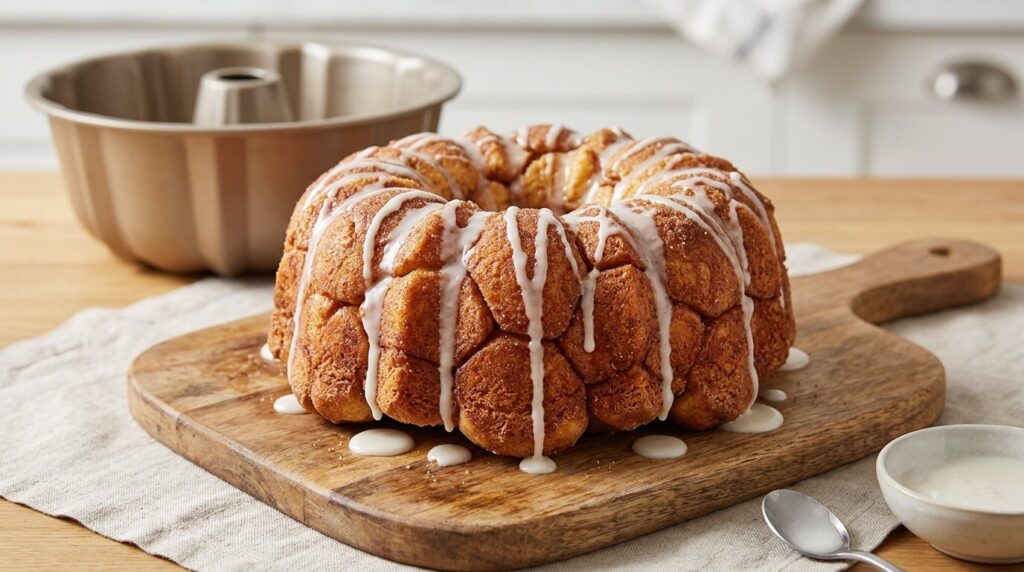
There’s a moment—a holiday morning, a sleepy snow day, or a Sunday brunch—when you crave something warm, sweet, and impossible to eat with a fork. That moment calls for pull-apart monkey bread. This version delivers soft, buttery dough balls coated in aromatic cinnamon sugar, baked in a sticky brown sugar caramel, and finished with a silky vanilla glaze. It’s a recipe that looks impressive but comes together with minimal effort, whether you use homemade dough or a quick shortcut with canned biscuits. Every bite pulls apart into a tender, gooey piece of pure comfort.
In this guide, you’ll get the full recipe with precise steps, pro-level tips, make-ahead strategies, troubleshooting fixes, and creative variations. You’ll also find answers to the most common monkey bread questions—so you can bake with confidence the first time. You can also read our guide on best baked chicken thigh recipes.
What Is Monkey Bread? (And Why It Deserves a Spot at Your Table)
Monkey bread is a soft, pull-apart pastry made from small balls of dough rolled in butter and cinnamon sugar, then baked together in a Bundt pan. The name likely comes from the way you eat it—pulling pieces apart with your fingers, like a monkey. It became a beloved American classic in the mid-20th century and gained a cultural boost when it was reportedly served at the White House during the Reagan years. Today it’s a fixture at holiday breakfasts, potlucks, and lazy weekend mornings.
The beauty of this recipe is its flexibility. You can make it from scratch for a lighter, fluffier texture, or use refrigerated biscuit dough for a 10-minute prep that still tastes incredible. Either way, the result is a caramelized, pull-apart masterpiece that disappears fast.
Ingredients You’ll Need
For the Dough – Homemade Option
- 3 cups all-purpose flour (plus extra for dusting)
- 2¼ tsp active dry yeast (one standard packet)
- ½ cup whole milk, warmed to 110°F
- ¼ cup warm water
- 3 tbsp granulated sugar
- 1 tsp salt
- 2 large eggs
- 4 tbsp unsalted butter, softened
Shortcut Option
- 3 cans (7.5 oz each) refrigerated biscuit dough (like Pillsbury Grands) — cuts prep time in half
For the Cinnamon Sugar Coating
- 1 cup granulated sugar
- 2½ tsp ground cinnamon
- ½ tsp nutmeg (optional, but highly recommended)
- 6 tbsp unsalted butter, melted
The Brown Sugar Butter Sauce
- ¾ cup packed light brown sugar
- ½ cup (1 stick) unsalted butter
- 1 tsp pure vanilla extract
- Pinch of salt
For the Vanilla Glaze
- 1½ cups powdered sugar, sifted
- 3–4 tbsp whole milk
- 1 tsp pure vanilla extract
- Pinch of salt
Step-by-Step Monkey Bread Instructions
Step 1: Prepare Your Dough
If using homemade dough:
- Combine warm milk, warm water, yeast, and 1 tablespoon of sugar in a large bowl. Let sit for 5–10 minutes until foamy — this confirms your yeast is alive. (For a reliable guide on yeast activation, see the yeast baking guide from King Arthur Baking.)
- Mix in the remaining sugar, eggs, salt, and softened butter.
- Gradually add flour and knead (by hand or with a stand mixer dough hook) for 8–10 minutes until smooth and slightly tacky.
- Cover and let rise in a warm spot for 1 to 1½ hours, until doubled in size.
If using canned biscuit dough:
- Open the cans, separate each biscuit, and cut each into quarters. No rise time needed — move straight to Step 2.
Pro tip: Homemade dough gives a fluffier, more bread-like texture. Canned dough is denser but quicker, and kids love helping cut the pieces.
Step 2: Make the Cinnamon Sugar Coating
- In a medium bowl or zip-lock bag, mix the granulated sugar, cinnamon, and nutmeg.
- Melt the butter in a separate shallow bowl.
- Dip each dough ball in melted butter first, then roll generously in the cinnamon sugar mixture to coat all sides.
Don’t skip the butter dip — it’s what makes the coating stick and caramelize beautifully during baking.
Step 3: Layer the Pan
- Grease a 10-cup Bundt pan thoroughly with butter or cooking spray, reaching every crevice.
- Layer the coated dough balls into the pan, filling it about halfway. Add a second layer until the pan is about ¾ full.
The dough will expand significantly as it bakes, so don’t overfill. A poorly greased pan means your monkey bread will stick and won’t release cleanly.
Step 4: Make the Brown Sugar Butter Sauce
- In a small saucepan over medium heat, combine butter, brown sugar, vanilla, and a pinch of salt.
- Stir until the sugar fully dissolves and the mixture is smooth and glossy — about 2 minutes. Do not let it boil vigorously.
- Pour the sauce evenly over the dough balls in the pan.
This sauce sinks down and infuses every layer with deep caramel flavor as it bakes — it’s the secret to that irresistible sticky coating.
Step 5: Second Rise (Homemade Dough Only)
- Cover the pan loosely with plastic wrap.
- Let it rise for another 30–45 minutes at room temperature.
- Skip this step entirely if you used canned biscuit dough.
Step 6: Bake to Golden Perfection
- Preheat your oven to 350°F (175°C).
- Bake for 35–40 minutes, until the top is deep golden brown and caramel bubbles around the edges.
- Let the bread rest in the pan for exactly 5–10 minutes before inverting.
Critical timing: Too soon and it falls apart. Too long and the caramel hardens and glues itself to the pan.
- Place a large plate or serving platter over the Bundt pan.
- Flip in one confident, decisive motion.
- Let it sit inverted for 30 seconds before lifting the pan so all the caramel drips down.
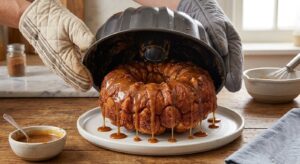 The moment of truth: flipping the warm monkey bread onto a platter.
Step 7: Make and Drizzle the Vanilla Glaze
- Sift the powdered sugar into a medium bowl.
- Add milk (start with 3 tablespoons), vanilla extract, and a pinch of salt.
- Whisk until smooth and pourable — like warm honey. Add milk one teaspoon at a time until you reach your desired drizzle consistency.
- Pour generously over the warm monkey bread, letting it cascade into the crevices.
- Serve immediately while warm and gooey.
Expert Tips for Perfect Monkey Bread Every Time
- Use a light-colored Bundt pan. Dark pans absorb more heat and can overbrown the bottom before the inside is fully cooked.
- Don’t crowd the dough balls too tightly. Leave just enough space for expansion. If the pan looks very full before baking, remove a few pieces.
- Warm ingredients matter for homemade dough. Cold butter or milk will slow or kill your yeast, leading to dense, flat bread.
- Check doneness with a thermometer. The internal temperature should reach 190–200°F for fully baked dough — don’t rely on color alone. The USDA recommends safe internal temperatures for baked goods; follow their safe cooking temperature chart for best practices.
- Double the glaze. Nobody has ever complained about extra vanilla glaze drizzled on monkey bread.
- Use real vanilla extract, not imitation — the glaze is simple, so quality ingredients make a noticeable difference.
- For extra crunch, sprinkle a handful of crunchy candied pecans into the bottom of the greased pan before adding the dough balls. When inverted, the nuts appear on top.
Make-Ahead and Storage Options
This monkey bread recipe is incredibly flexible for planning ahead:
Make-Ahead (Night Before):
- Assemble the entire monkey bread (minus the glaze) the night before.
- Cover tightly with plastic wrap and refrigerate overnight.
- Remove from the fridge 30–45 minutes before baking to take the chill off.
- Bake as directed — ideal for stress-free holiday mornings.
Storing Leftovers:
- Keep covered at room temperature for up to 2 days.
- Reheat individual portions in the microwave for 20–30 seconds to revive the gooey texture.
- A light drizzle of fresh glaze after reheating brings it back to life.
Freezing:
- Freeze the assembled, unbaked monkey bread for up to 1 month.
- Thaw overnight in the refrigerator.
- Let it reach room temperature before baking as directed.
Flavor Variations Worth Trying
Once you’ve mastered the classic, try these popular twists:
- Pumpkin Spice — Add 1 tsp pumpkin pie spice to the cinnamon sugar mixture; perfect for fall entertaining.
- Apple Cinnamon — Tuck small pieces of peeled, diced apple between dough layers before baking.
- Chocolate Chip — Press a mini chocolate chip into each dough ball before coating in cinnamon sugar, or swap in classic M&M cookies for a fun spin.
- Lemon Cream Cheese — Replace the vanilla glaze with a cream cheese glaze and add lemon zest to the dough. For a no-bake cream cheese dessert idea, try this no-bake cheesecake recipe.
- Savory Parmesan Herb — Skip the sugar entirely; use garlic butter, Italian herbs, and grated Parmesan instead. For a completely different savory crowd-pleaser, try a savory dip for game day.
- Pecan Praline — Sprinkle ½ cup of chopped pecans and a handful of toffee bits between layers.
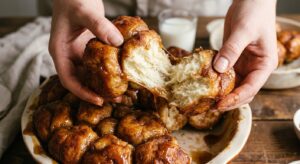 The irresistible pull-apart texture of freshly baked monkey bread.
Serving and Presentation Tips
- Place the monkey bread on a large round platter or a cake stand. The ring shape makes it a centerpiece for any brunch table.
- Serve with small plates or napkins — it’s meant to be pulled apart by hand.
- Pair with fresh fruit, scrambled eggs, and a side of fluffy homemade pancakes for a complete breakfast spread.
- For a fun dessert, drizzle extra glaze over individual pieces and top with a scoop of vanilla ice cream.
Frequently Asked Questions
Q1: Can I make monkey bread without a Bundt pan?
Yes. Use a 9×13-inch baking dish or a 9-inch round cake pan. The shape won’t be the classic ring, but it will taste just as delicious. Reduce baking time slightly and start checking for doneness at 30 minutes.
Q2: Can I use frozen bread dough for monkey bread?
Absolutely. Thaw frozen bread dough in the refrigerator overnight, then let it rest at room temperature for 30 minutes before shaping into balls. It produces a texture very close to homemade dough.
Q3: Why is my monkey bread doughy in the middle?
This is the most common problem. Three causes:
- Dough balls packed too tightly, preventing heat circulation.
- Oven temperature too high, causing the outside to set before the inside cooks.
- Underbaking — always verify with a thermometer; internal temp should reach at least 190°F.
Q4: How do I prevent monkey bread from sticking to the pan?
- Grease every inch of your Bundt pan thoroughly with softened butter or nonstick cooking spray.
- Invert within 10 minutes of baking — caramel hardens quickly as it cools.
Q5: How many people does this recipe serve?
A standard Bundt pan serves 10–12 people as a breakfast or brunch item. For a smaller gathering with generous portions, plan for 6–8 servings.
Q6: Can monkey bread be made ahead the night before?
Yes — and this is one of its greatest strengths. Assemble the pan completely (skip the glaze), cover tightly, and refrigerate overnight. The next morning, remove it from the fridge 30–45 minutes before baking, then bake as directed and glaze right before serving.
Q7: What’s the difference between biscuit dough and homemade dough?
- Biscuit dough (like Pillsbury Grands) produces a denser, slightly flaky texture — quicker and great for beginners.
- Homemade yeasted dough creates a lighter, fluffier, more bread-like interior — worth the extra time for special occasions. Both taste incredible; your choice depends on available time.
Q8: Can I add nuts?
Yes. Chopped pecans or walnuts are a classic addition. Sprinkle about ½ cup of chopped nuts into the bottom of the greased Bundt pan before adding the dough balls. When inverted, the nuts appear on top — adding crunch and a toasty, buttery flavor.
Conclusion
Pull-apart monkey bread with cinnamon sugar and vanilla glaze is more than a recipe — it’s an experience. The joy of pulling apart warm, caramel-coated pieces with friends and family is what makes this dish a timeless favorite. Whether you bake it for a holiday brunch, a weekend treat, or a last-minute dessert, this recipe delivers every time. Now gather your ingredients, preheat your oven, and get ready to create something everyone will pull apart with a smile. For more trusted recipes, explore our full collection of tried-and-true recipes that make home cooking easy and delicious.