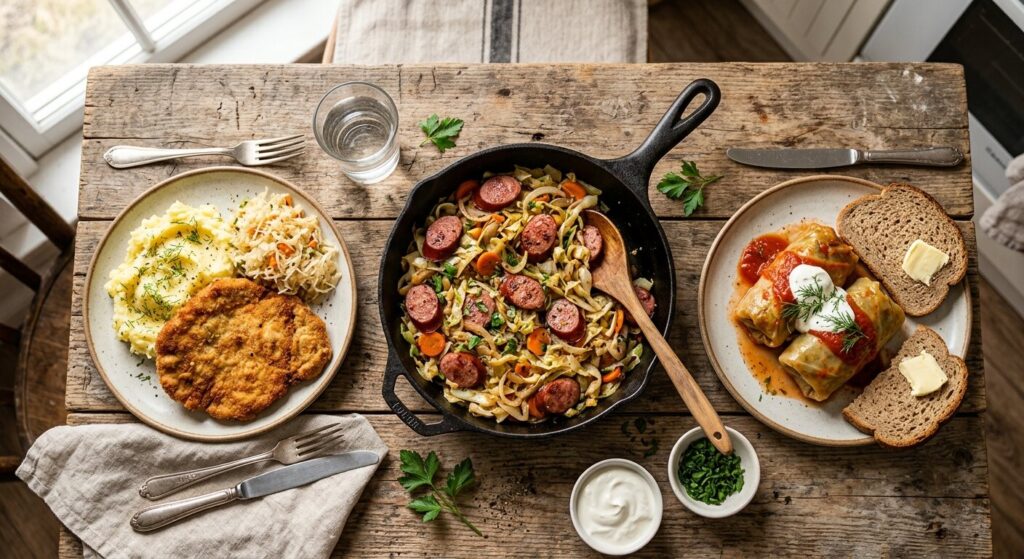
There’s something deeply satisfying about a plate of golden, breaded pork cutlet or a skillet of smoky kielbasa and tender cabbage. It’s the kind of food that fills the kitchen with the scent of dill and paprika, and that makes a Tuesday night feel like a small celebration. The good news? You don’t need a Polish grandmother’s secret recipe or an all-day simmer to get there. Easy Polish recipes at home are closer—and simpler—than most people think.
This guide is built for real home cooks: every recipe has been tested in an ordinary kitchen, not a test lab, and each one delivers authentic Polish flavor in under an hour using ingredients from a regular grocery store. Whether you’re new to Polish cooking or just looking for weeknight-friendly versions of classics, you’ll find practical shortcuts, honest trade-offs, and the kind of first-hand advice that actually works. You can also read our guide on yellow chard recipes.
Why Polish Cooking Fits Your Weeknight Routine
Polish cuisine has a reputation for being labor-intensive—pots of bigos simmering since sunrise, dumplings folded by hand for an hour. That version exists and it’s wonderful for a lazy weekend, but it’s not the whole story.
In practice, the dishes that Polish home cooks return to most often on a busy evening are the one-pan meals. The cooking tradition grew out of a practical farming culture with long winters, so recipes were built around ingredients that stored well—cabbage, root vegetables, cured meats, grains—and methods that stretched a small amount of protein across a large family. That no-waste mindset is exactly what makes these dishes so adaptable for modern quick dinners. You can also read our guide on simmer pot recipes.
The techniques that dominate Polish weeknight cooking are refreshingly straightforward:
- Sautéing and pan-frying – not intricate multi-step methods
- Braising in one pot – forgiving and hands-off
- Pantry-friendly ingredients – cabbage, potatoes, pork, dill, sour cream
- Forgiving cook times – a skillet dish doesn’t demand the precision of a soufflé
Polish cooking splits into two broad categories: “low-and-slow” dishes (stews, roasts, dumplings that build flavor over hours) and “quick and hearty” dishes (skillets, pancakes, cutlets that deliver the same comfort in far less time). This guide focuses entirely on the second category, so you get real Polish flavor without giving up your evening.
If you’ve enjoyed other hearty European comfort food, you’ll recognize the same satisfying principles in our collection of similar Scandinavian one-pan meals. You can also read our guide on chicken dinner ideas.
The Polish Pantry: Ingredients That Do the Work
Once you stock these staples, you can make the majority of dishes in this guide—and many more—without a special shopping trip. Each ingredient plays a specific, flavor-defining role.
| Ingredient | Role | Quick Tip |
|---|---|---|
| Kielbasa | Smoky, garlicky Polish sausage; backbone of countless quick dinners | Look for “Polska kielbasa” in the refrigerated meat case |
| Sauerkraut | Fermented cabbage with tangy bite; adds instant depth | Rinse briefly if you prefer less brine |
| Fresh dill | Signature herb; brightens soups, potatoes, sauces | Dried dill works at about one-third the quantity |
| Marjoram | Earthy, slightly sweet; essential in bigos and meat dishes | Dried marjoram is standard; rub it between your palms to release oils |
| Sour cream (śmietana) | Used generously, not sparingly, to finish soups and sauces | Full-fat gives the best texture; temper before adding to hot liquid |
| Caraway seeds | Warm, peppery note in breads, cabbage, and sausages | Toast briefly in a dry pan to intensify flavor |
| Potatoes | Everyday starch; boiled, mashed, pan-fried, or grated | Starchy (Russet) work best for pancakes; waxy for salads |
| Green cabbage | Raw, braised, or stuffed; Poland’s most-used vegetable | Pre-shredded coleslaw mix saves prep time |
| Breadcrumbs | Crisp coating for kotlet schabowy and more | Panko gives an extra-light crunch |
| Sweet and smoked paprika | Smoked paprika adds rounded, savory warmth | Smoked is essential for bigos; sweet for milder dishes |
| Bay leaves and allspice berries | Quiet duo behind most Polish soups and stews | Add early, remove before serving |
Substitution notes when you’re in a pinch:
- No Polish kielbasa? A good-quality smoked sausage like andouille (with spice level reduced) works.
- No fresh dill? Use dried in a smaller quantity—about a third of the fresh amount.
- No smoked paprika? Sweet paprika plus a tiny pinch of ground cumin gets you close.
- No farmer’s cheese? Strain full-fat cottage cheese through cheesecloth overnight.
Quick-Reference Recipe Comparison
Scan this table to find the recipe that matches your mood and schedule.
| Recipe | Time | Difficulty | Main Ingredient | One-Pan? |
|---|---|---|---|---|
| Kielbasa & Cabbage Skillet | 25 min | Easy | Kielbasa | Yes |
| Kotlet Schabowy (Pork Cutlet) | 35 min | Easy | Pork | No |
| Gołąbki (Stuffed Cabbage Rolls) | 55 min | Medium | Ground pork/beef | No |
| Placki Ziemniaczane (Potato Pancakes) | 30 min | Easy | Potatoes | Yes |
| Quick Bigos (Hunter’s Stew) | 45 min | Easy | Kielbasa & pork | Yes |
| Shortcut Żurek (Sour Rye Soup) | 40 min | Medium | Sausage | Yes |
| Naleśniki (Polish Crepes) | 20 min | Easy | Flour & eggs | Yes |
| Quick Barszcz (Beet Soup) | 35 min | Easy | Beets | Yes |
| No-Bake Sernik (Polish Cheesecake) | 20 min + chill | Easy | Farmer’s cheese | Yes |
The Recipes
Kielbasa and Cabbage Skillet
This is the dish I make when I want Polish comfort food but have almost no time. It’s smoky, slightly sweet from the caramelized cabbage, and needs exactly one pan. You can also read our guide on fig jam recipe.
- Prep: 10 min | Cook: 15 min | Serves: 4 | Difficulty: Easy
Ingredients:
- 1 lb kielbasa, sliced
- Half a green cabbage, shredded
- 1 onion, sliced
- 2 tbsp butter
- 1 tsp caraway seeds
- Salt and pepper
- A splash of apple cider vinegar
Method:
- Brown the kielbasa slices in butter over medium-high heat until the edges crisp. Remove and set aside.
- Add onion to the pan and cook 3–4 minutes until soft.
- Add cabbage and caraway seeds; cook 8–10 minutes, stirring occasionally, until the cabbage softens and browns slightly.
- Return the kielbasa to the pan, splash with vinegar, season, and serve hot.
Make it easier: Buy pre-shredded coleslaw mix instead of shredding cabbage yourself.
Serve with: Crusty rye bread and a dollop of mustard.
For more ways to use smoked sausage in a hurry, check out these simple kielbasa meals.
Kotlet Schabowy (Breaded Pork Cutlet)
Poland’s answer to schnitzel—and the dish most Polish families consider a Sunday staple, yet it comes together fast enough for any weeknight.
- Prep: 15 min | Cook: 20 min | Serves: 4 | Difficulty: Easy
Ingredients:
- 4 boneless pork chops, pounded thin
- 1 cup flour
- 2 eggs, beaten
- 1.5 cups breadcrumbs
- Salt and pepper
- Oil for frying
Method:
- Season the pork chops with salt and pepper.
- Dredge each chop in flour, then egg, then breadcrumbs, pressing gently so the coating sticks.
- Fry in hot oil, 4–5 minutes per side, until golden brown and cooked through.
- Rest on a paper towel-lined plate for 2 minutes before serving.
Make it easier: Ask your butcher to pound the chops thin—it saves the messiest step.
Serve with: Mashed potatoes and a simple cucumber-sour cream salad (mizeria).
Gołąbki (Stuffed Cabbage Rolls)
The most labor-intensive recipe here, but still achievable in under an hour with a few shortcuts. Leftovers taste even better the next day.
- Prep: 25 min | Cook: 30 min | Serves: 6 | Difficulty: Medium
Ingredients:
- 1 large cabbage
- 1 lb ground pork or beef
- 1 cup cooked rice
- 1 onion, diced
- 1 egg
- Salt and pepper
- 2 cups tomato sauce
Method:
- Core the cabbage and microwave it whole for 5–6 minutes to soften the leaves for easy rolling.
- Mix the meat, rice, onion, egg, salt, and pepper.
- Spoon filling onto each leaf, fold in the sides, and roll tightly.
- Arrange rolls in a pot, cover with tomato sauce, and simmer 25–30 minutes.
Make it easier: The whole-cabbage microwave trick softens all leaves at once—no need to separate them one by one.
Serve with: A slice of crusty bread to mop up the sauce.
If you want a leaner filling, a lighter meat option like ground chicken works well here.
Placki Ziemniaczane (Potato Pancakes)
Crispy on the outside, soft in the middle—Poland’s answer to hash browns with more character.
- Prep: 15 min | Cook: 15 min | Serves: 4 | Difficulty: Easy
Ingredients:
- 4 large potatoes, grated
- 1 onion, grated
- 2 eggs
- 3 tbsp flour
- Salt and pepper
- Oil for frying
Method:
- Grate the potatoes and onion, then squeeze out excess liquid using a clean towel.
- Mix with eggs, flour, salt, and pepper.
- Fry spoonfuls in hot oil, flattening slightly, 3–4 minutes per side until golden.
- Drain on paper towels.
Make it easier: Use a food processor’s grating attachment instead of a box grater.
Serve with: Sour cream, or a spoonful of applesauce for a sweet-savory contrast.
Quick Bigos (Hunter’s Stew)
Traditional bigos simmers for days. This version captures the same deep, smoky flavor in under 45 minutes by leaning on kielbasa and sauerkraut for instant depth.
- Prep: 10 min | Cook: 35 min | Serves: 6 | Difficulty: Easy
Ingredients:
- 1 lb kielbasa, sliced
- 1 cup sauerkraut
- 2 cups shredded cabbage
- 1 onion
- 2 bay leaves
- 1 tsp marjoram
- 1 cup chicken or beef broth
Method:
- Brown the kielbasa and onion in a large pot.
- Add cabbage, sauerkraut, bay leaves, marjoram, and broth.
- Simmer uncovered 30 minutes, stirring occasionally, until the liquid reduces and flavors meld.
Make it easier: Jarred sauerkraut is authentic and saves hours—no need to make your own.
Serve with: Boiled potatoes or dark rye bread.
Shortcut Żurek (Sour Rye Soup)
Żurek’s distinct tang comes from fermented rye starter, which typically takes days. This shortcut uses a store-bought sour rye base or a splash of pickle brine to mimic that signature sourness quickly.
- Prep: 10 min | Cook: 30 min | Serves: 4 | Difficulty: Medium
Ingredients:
- 1 lb kielbasa, sliced
- 4 cups chicken broth
- 1 cup sour rye soup base (or 3 tbsp pickle brine + 1 tbsp flour)
- 2 hard-boiled eggs
- 1 tsp marjoram
- Sour cream, to finish
Method:
- Simmer the kielbasa in broth for 15 minutes.
- Whisk in the sour rye base (or brine-flour mixture) and marjoram.
- Simmer another 10 minutes.
- Serve topped with halved hard-boiled eggs and a swirl of sour cream.
Make it easier: Bottled żurek starter is available in the international aisle or online.
Serve with: Crusty bread for dipping.
Naleśniki (Polish Crepes)
Thinner than pancakes, sturdier than French crepes—naleśniki work equally well stuffed with something sweet or savory.
- Prep: 10 min | Cook: 10 min | Serves: 4 | Difficulty: Easy
Ingredients:
- 1 cup flour
- 2 eggs
- 1.25 cups milk
- Pinch of salt
- Butter for frying
Method:
- Whisk flour, eggs, milk, and salt into a smooth, thin batter.
- Pour a thin layer into a buttered hot pan, swirling to coat evenly.
- Cook 1–2 minutes per side until lightly golden.
- Fill with sweetened farmer’s cheese, jam, or savory mushroom filling, and fold or roll.
Make it easier: Let the batter rest 10 minutes for smoother crepes, but don’t worry if you’re short on time—they still work.
Serve with: Powdered sugar for sweet versions, or sour cream for savory ones.
Quick Barszcz (Beet Soup)
Vivid, earthy, and slightly tangy—one of Poland’s most iconic soups. This version uses pre-cooked beets to cut the cooking time dramatically.
- Prep: 10 min | Cook: 25 min | Serves: 4 | Difficulty: Easy
Ingredients:
- 3 cups pre-cooked beets, grated or diced
- 4 cups vegetable or beef broth
- 1 clove garlic
- 1 tbsp vinegar or lemon juice
- Salt and pepper
- Fresh dill, to garnish
Method:
- Simmer beets, broth, and garlic together for 15–20 minutes.
- Blend partially or leave chunky, depending on preference.
- Stir in vinegar or lemon juice, season, and top with fresh dill.
Make it easier: Vacuum-packed pre-cooked beets, found in most produce sections, eliminate the longest step.
Serve with: A small mushroom-filled dumpling on the side, or simply crusty bread.
No-Bake Sernik (Polish Cheesecake)
Traditional sernik bakes for an hour. This no-bake version captures the same creamy, tangy filling using farmer’s cheese.
- Prep: 20 min + 2 hrs chilling | Cook: None | Serves: 8 | Difficulty: Easy
Ingredients:
- 2 cups farmer’s cheese (twaróg) or strained cottage cheese
- 1 cup whipped cream
- 0.5 cup powdered sugar
- 1 tsp vanilla
- 1 pre-made graham or shortbread crust
Method:
- Beat the farmer’s cheese, powdered sugar, and vanilla until smooth.
- Fold in the whipped cream gently.
- Spread into the crust and chill at least 2 hours before serving.
Make it easier: If twaróg isn’t available locally, strain full-fat cottage cheese through cheesecloth overnight for a close substitute.
Serve with: Fresh berries or a light fruit compote.
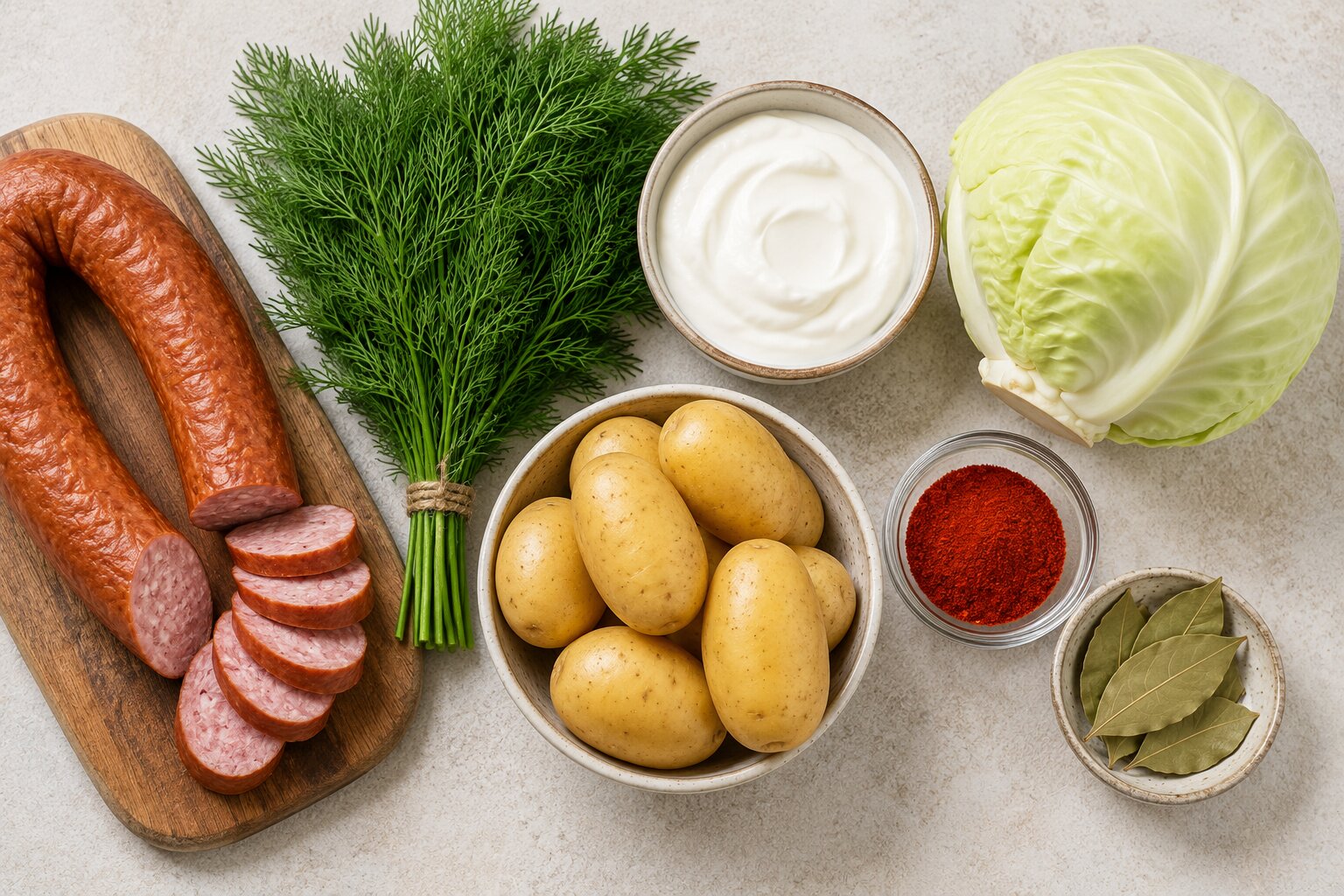
Key ingredients for quick Polish cooking—most are available at any grocery store.
Common Mistakes and How to Fix Them
Even simple recipes can go sideways with a small misstep. Here’s what tends to trip people up—and how to avoid it:
- Over-boiling cabbage rolls. Simmer gently, not at a rolling boil. High heat turns the cabbage mushy and the filling dry.
- Skipping the flour step in kotlet schabowy. The flour layer helps the egg and breadcrumbs adhere. Skip it and the coating slides right off.
- Using sweet paprika where smoked is called for. Smoked paprika brings the deep, savory backbone that many Polish dishes rely on.
- Not salting cabbage or potatoes early enough. Salting early draws out excess moisture, which is the difference between crispy potato pancakes and soggy ones.
- Rushing sour cream into hot soup. Add it off the heat, or temper it first with a bit of hot broth, to prevent curdling.
- Forgetting to rest breaded cutlets before slicing. A two-minute rest on a wire rack keeps the crust crisp.
- Overcrowding the pan. Whether it’s kielbasa, potato pancakes, or pork cutlets, too much in the pan at once causes steaming instead of browning. Cook in batches.
These small adjustments are the difference between a dish that tastes like a shortcut and one that tastes authentic.
Meal-Prep and Storage Tips
Several of these dishes are actually better suited to batch cooking than eating fresh—a detail most recipe guides skip.
- Freezes well: Gołąbki, quick bigos, and uncooked cabbage roll filling can be frozen raw and cooked later.
- Reheats better than it cooks fresh: Bigos and żurek both deepen in flavor overnight.
- Batch-cooking tip: Double the gołąbki filling and freeze half uncooked in rolled form—you’ll have a ready-to-simmer dinner for another week.
- Best for quick reheating: Kielbasa and cabbage skillet reheats in minutes with almost no texture loss.
- Prep components, not just full meals: Grate and freeze potato pancake mix in individual portions, or pre-slice kielbasa for the week.
- Storage note: Most dishes keep 3–4 days in the fridge. Soups often taste richer on day two.
A simple weekly plan to try:
- Sunday: Make a double batch of gołąbki; freeze half.
- Monday: Kielbasa and cabbage skillet (25 minutes).
- Tuesday: Reheat leftover gołąbki.
- Wednesday: Quick bigos using the same kielbasa and cabbage.
- Thursday: Naleśniki using pantry basics.
For safe leftovers, follow USDA food safety guidelines on refrigeration and reheating.
Adapting Polish Recipes for Dietary Needs
Polish home cooking is naturally adaptable. Here’s how to tweak dishes without losing their soul:
- Gluten-free: Use almond flour or gluten-free breadcrumbs for kotlet schabowy. Naleśniki batter works with a 1:1 gluten-free flour blend. Skip breadcrumbs in potato pancakes—they bind with egg and flour alone. For dessert, try a gluten-free crust for the no-bake sernik.
- Dairy-free: Replace sour cream with dairy-free coconut yogurt or cashew cream. Use oil instead of butter in the cabbage skillet. Farmer’s cheese is harder to substitute; silken tofu blended with lemon juice gives a similar tangy base for the sernik.
- Lower-fat: Swap pork for ground chicken or turkey in gołąbki and bigos. Omit the breading on kotlet schabowy and pan-fry with a spice rub instead.
- Lower-carb: Replace rice in gołąbki with cauliflower rice. Skip potatoes entirely in bigos or serve over roasted cabbage.
If you’re looking for lighter takes on classic dishes, many of the techniques here translate directly to healthier versions without sacrificing flavor.
Final Thoughts
None of these dishes demand a special occasion, a stocked spice cabinet, or a free Sunday afternoon. That’s the heart of easy Polish recipes at home—they were built by families who needed dinner on the table, not by chefs chasing complexity.
Choose one dish to start tonight:
- New to Polish food? The kielbasa and cabbage skillet is the most forgiving and fastest recipe here.
- Want something a little more special? Try kotlet schabowy for a Sunday-dinner feel on a weeknight schedule.
- Cooking for a crowd? Gołąbki and bigos both scale up easily and reheat beautifully the next day.
Polish comfort food has stayed beloved for generations because it’s hearty, honest, and genuinely easy to make your own. Once you taste the difference a little dill and smoked paprika makes, you’ll understand exactly why.
Frequently Asked Questions
What is the easiest Polish dish to make at home?
The kielbasa and cabbage skillet is widely considered the best starting point. One pan, 25 minutes, no special technique beyond basic sautéing.
Can I make Polish food without a Dutch oven or specialty pans?
Yes. Every recipe here uses standard kitchen equipment—a regular skillet, a saucepan, and a mixing bowl are enough.
What can I substitute for kielbasa if I can’t find it?
A good-quality smoked sausage such as andouille (with spice level reduced) works well. Look for something smoked rather than fresh.
Is Polish food generally spicy or mild?
Polish cuisine is savory and mild. Flavor comes from smoking, fermentation, and herbs like dill and marjoram—not heat.
What’s a good starter Polish meal for someone who’s never cooked it before?
Kotlet schabowy (breaded pork cutlet) is an excellent entry point because the technique closely resembles schnitzel or fried chicken.
How long does traditional Polish cooking usually take compared to these recipes?
Traditional versions of bigos or żurek can take several hours to a full day. This guide uses smart shortcuts to cut that down to under an hour while keeping core flavors intact.
What herbs and spices define Polish cooking?
Dill, marjoram, caraway seeds, bay leaves, allspice, and both sweet and smoked paprika form the backbone.
Can Polish recipes be made ahead of time?
Yes. Bigos, gołąbki, and żurek often taste better the next day, making them ideal for big-batch cooking and weekly meal prep.
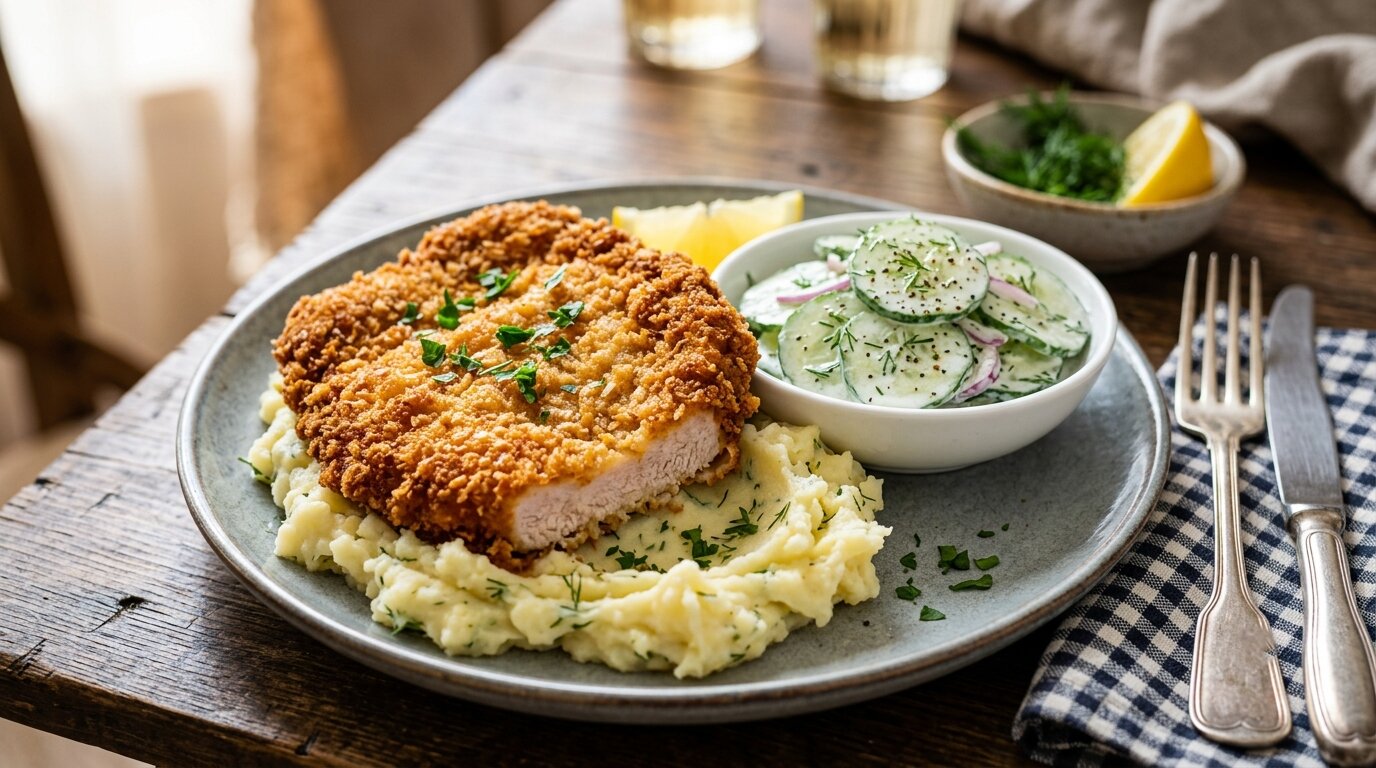
Kotlet schabowy is a Polish Sunday classic that comes together in just 35 minutes. And if you’re hosting a gathering, a simple holiday dessert pairs beautifully with these savory dishes for a complete Polish-inspired menu.
Ready to start cooking? Pick the kielbasa and cabbage skillet for a 25-minute introduction to Polish home cooking tonight—you’ll see exactly why these flavors have been loved for generations.