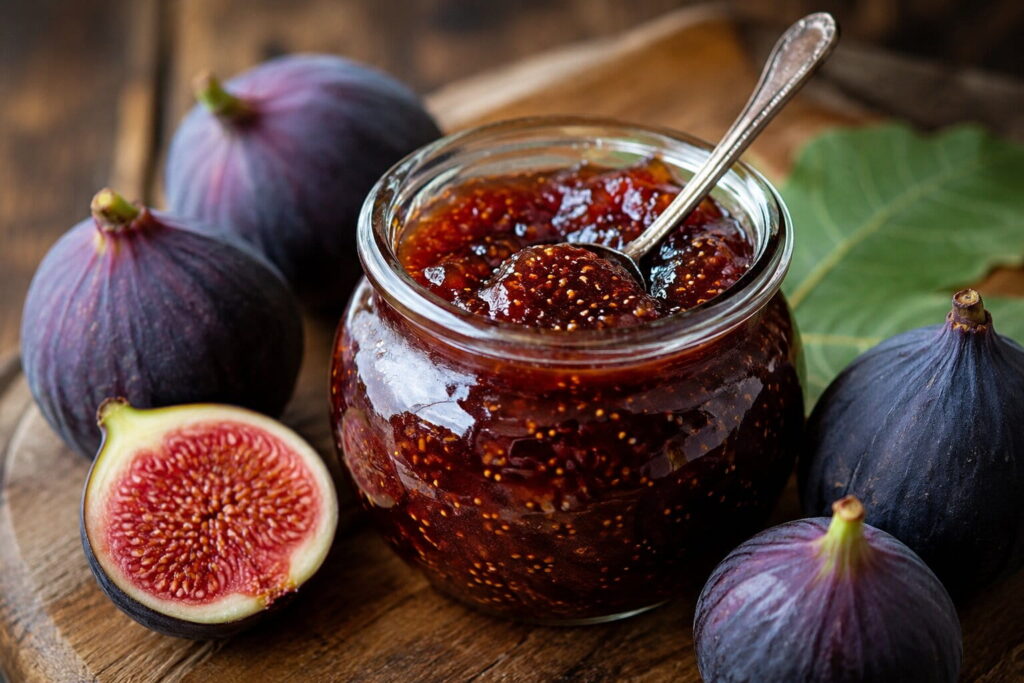
Fresh figs are only around for a few short weeks each year, and if you’ve ever let a basket of them go soft on your counter before you got around to using them, you know the regret. This fig jam recipe solves that problem in the most direct way possible: no canning equipment, no pectin math, no all-day kitchen takeover. Just ripe figs, sugar, lemon, and about 30 minutes between you and a jar of glossy, deeply flavored jam.
I’ve made this small-batch version more times than I can count, usually in late summer when a neighbor’s fig tree produces more fruit than any one household can eat fresh. What I’ve learned through trial, error, and a few scorched pots is that fig jam doesn’t need to be complicated to be genuinely excellent. It just needs the right ratios, the right heat, and a little patience at the stove.
This guide walks through exactly how to make it, why each step matters, and how to troubleshoot the small things that trip people up – like jam that won’t set or tastes flat.
Why This Fig Jam Recipe Works
Most fig jam recipes online are written for large batches meant for canning season: eight pounds of figs, multiple jars, and an hour of processing time. That’s overkill if you just want a small jar of jam for your morning toast or a cheese board this weekend.
This recipe is built around three principles:
- Small batch, big flavor. Using about 1.5 pounds of figs yields roughly one and a half cups of jam – enough to enjoy without wasting fruit.
- No pectin required. Figs are naturally low in pectin, but reducing the mixture on the stove concentrates natural sugars enough to achieve a proper set without added thickeners.
- Refrigerator-friendly. This isn’t a shelf-stable canning recipe. It’s designed to be made, cooled, and stored in the fridge, which cuts out the sterilizing and processing steps that intimidate most home cooks.
The result is a jam that’s honest about what it is: a quick, small-batch preserve for people who want real fig flavor without the full canning project.
What Makes Fig Jam Different From Other Fruit Jams
If you’ve made strawberry or blueberry jam before, fig jam behaves a little differently, and it helps to understand why before you start.
Most berries are high in natural pectin and acid, which is why classic berry jams set up quickly and reliably. Figs are the opposite – they’re naturally low in pectin and mild in acidity. That’s exactly why so many fig jam recipes lean on either commercial pectin or a long, slow reduction to compensate.
This recipe uses the reduction method rather than added pectin, for a few reasons:
- It keeps the ingredient list short and recognizable.
- It concentrates the fig’s natural caramel-like sweetness instead of diluting it.
- It gives you more control – you can stop cooking exactly when the texture looks right, rather than relying on a pectin packet’s instructions.
The tradeoff is that reduction-method jam sets a bit softer than pectin-set jam. That’s intentional here. This isn’t meant to be a stiff, spreadable-like-peanut-butter jam – it’s meant to be glossy, spoonable, and rich, closer to a fruit compote crossed with a preserve.
Ingredients You’ll Need
The beauty of a good fig jam recipe is how few ingredients it actually requires. Here’s what goes into this version:
- 1.5 pounds fresh figs (about 12–15 medium figs), stems removed and quartered
- 3/4 cup granulated sugar (adjust based on how ripe and sweet your figs are)
- 2 tablespoons fresh lemon juice
- 1 teaspoon lemon zest
- Pinch of salt
- Optional: 1/2 teaspoon vanilla extract, a splash of balsamic vinegar, or a cinnamon stick for depth
A Note on Choosing Figs
Not all figs behave the same way in a pot. Ripeness matters more than variety, but here’s how the common types compare:
- Black Mission figs – deep, wine-colored jam with a rich, almost molasses-like sweetness
- Brown Turkey figs – milder and slightly less sweet, giving a more balanced jam
- Kadota or green figs – lighter-colored, honeyed jam
Whichever variety you use, figs should be soft to the touch, with skin that’s starting to split slightly at the base. Underripe figs will taste bland and won’t break down properly, no matter how long you cook them.
Equipment Checklist
You don’t need specialty canning tools for this recipe, but a few basics make the process smoother:
- A medium heavy-bottomed saucepan or pot (this prevents scorching)
- A wooden spoon or silicone spatula
- A potato masher or fork for breaking down the figs
- A small plate, chilled in the freezer, for the set test
- One 8-ounce jar or two 4-ounce jars with lids
A heavy-bottomed pot is worth calling out specifically. Thin aluminum pots heat unevenly and create hot spots where sugar scorches before the rest of the mixture has even started to bubble. If you only have a thin pot, keep the heat lower than you think you need and stir more frequently than feels necessary.
You also don’t need to sterilize jars the way you would for shelf-stable canning. Since this jam is stored in the refrigerator, a clean, dry jar washed in hot soapy water is sufficient.
Step-by-Step: How to Make Fig Jam in 30 Minutes
- Prep the figs. Rinse the figs gently and pat them dry. Trim off the tough stem end, then quarter each fig. There’s no need to peel them – fig skin softens completely during cooking and adds both color and a subtle textural interest to the finished jam.
- Macerate briefly. Toss the quartered figs with the sugar, lemon juice, and salt in the saucepan. Let this sit for 5–10 minutes off the heat. This draws out some of the figs’ natural juice, which helps the sugar dissolve evenly and reduces the risk of scorching once the heat goes on.
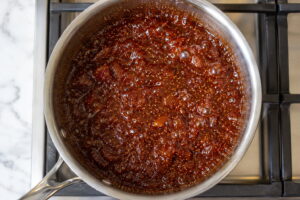
- Cook over medium heat. Place the pot over medium heat. Once it starts to bubble, reduce to medium-low. Stir frequently, using the back of your spoon or a masher to break the fig pieces down as they soften. Cooking low and slow concentrates flavor without burning the sugars. Expect this stage to take 15–20 minutes.
- Watch for the right consistency. As the mixture reduces, it will go from watery to glossy and thick, with large bubbles that pop slowly on the surface. To test for doneness:
- Place a small plate in the freezer at the start of cooking.
- When you think the jam looks ready, spoon a small amount onto the cold plate.
- Let it sit for 30 seconds, then push it with your finger.
- If it wrinkles and holds its shape rather than running back together, it’s done.
- If it’s still runny, cook for another 3–5 minutes and test again.
- Stir in zest and finish. Once the jam reaches the right consistency, remove it from the heat and stir in the lemon zest (and vanilla or balsamic, if using). Adding zest at the end preserves its bright, aromatic oils, which tend to dull if cooked too long.
- Cool and jar. Let the jam cool in the pot for about 10 minutes, then transfer it to a clean jar. It will continue to thicken slightly as it cools. Once at room temperature, cover and refrigerate.
Troubleshooting Common Fig Jam Problems
Even simple recipes have failure points. Here’s what I’ve run into over the years, and how to fix each one:
- My jam won’t set. This almost always comes down to not enough reduction time, or too much liquid from overripe figs. If your jam still seems thin after 20 minutes, keep going – some batches simply need longer. Resist adding pectin unless you plan to can the jam for long-term shelf storage.
- My jam tastes flat. Flat-tasting jam usually needs more acid. A squeeze of extra lemon juice, added at the very end, brightens the whole batch. A pinch of salt also enhances sweetness without making the jam taste salty.
- My jam scorched on the bottom. This happens when the heat is too high or the pot is too thin. If you catch it early, transfer the unburned portion to a clean pot immediately rather than stirring the scorched bits in.
- My jam is too sweet. Reduce the sugar by 2–3 tablespoons next time, especially with very ripe figs. You can also balance sweetness after cooking with extra lemon juice or a small drizzle of balsamic vinegar.
- My jam has a grainy texture. This usually means the sugar didn’t fully dissolve before the mixture reduced. Stir continuously during the first few minutes of cooking so every grain dissolves before the mixture thickens.
- My jam separated or looks watery on top. This can happen if the jam is jarred while still too hot, trapping steam that condenses as it cools. Let the jam cool for a full 10–15 minutes in the pot before transferring it to a jar.
Ingredient Substitutions and Swaps
Not every kitchen has the exact ingredients on hand, and this recipe is flexible enough to accommodate a few practical swaps:
- No fresh lemon juice? Bottled lemon juice works, though fresh has a brighter flavor. In a pinch, apple cider vinegar (start with 1 tablespoon) can substitute for the acidity.
- No granulated sugar? Light brown sugar can replace white sugar in equal amounts, adding a subtle molasses note.
- Dried figs instead of fresh? Rehydrate 1 cup of dried figs in warm water for 20 minutes, then proceed with the recipe, reducing the sugar slightly since dried figs are more concentrated in sweetness.
- Want it less sweet? Reduce sugar to 1/2 cup and add an extra teaspoon of lemon juice to keep the flavor balanced.
Flavor Variations Worth Trying
Once you’ve made the base recipe a time or two, it’s easy to riff on it. Some combinations I keep coming back to:
- Fig and honey jam – swap half the sugar for honey for a floral, slightly caramelized note
- Fig and rosemary jam – add a small sprig of rosemary during cooking, then remove before jarring
- Fig and ginger jam – stir in 1 teaspoon of grated fresh ginger for warmth and a little bite
- Fig and black pepper jam – a few cracks of black pepper turn this into an excellent cheese-board pairing
- Fig and orange jam – replace lemon zest with orange zest for a sweeter, more citrus-forward jam
How to Store Fig Jam
Because this is a small-batch, refrigerator jam rather than a shelf-stable canned preserve, storage matters:
- Refrigerator: Store in an airtight jar for up to 3 weeks.
- Freezer: Freeze in a freezer-safe container, leaving room for expansion, for up to 6 months. Thaw overnight in the fridge before using.
- Shelf-stable canning: If you want to preserve fig jam at room temperature, you’ll need to process it in a proper water bath canner using tested ratios and jar sterilization methods. This recipe, as written, is not intended for shelf storage.
When to Find Fresh Figs in the US
Fresh fig availability is seasonal and regional, which matters if you’re planning to make this recipe with truly ripe, in-season fruit:
- California produces the majority of the US fresh fig crop, with two harvest windows: a smaller early crop (the “breba” crop) in June, and the main crop from August through October.
- Texas, Louisiana, and other Gulf Coast states with backyard fig trees typically see fruit ripen from July through September.
- Farmers markets are usually a more reliable source for ripe, ready-to-use figs than large grocery chains, since figs are delicate and don’t ship or store well once fully ripe.
If you’re buying figs rather than picking them, look for fruit that gives slightly under gentle pressure, similar to a ripe peach. Avoid figs that are rock-hard (underripe) or leaking liquid (overripe and prone to fermentation).
Ways to Use Fig Jam
Fig jam is more versatile than most people expect. Beyond toast, here are ways I regularly use a jar:
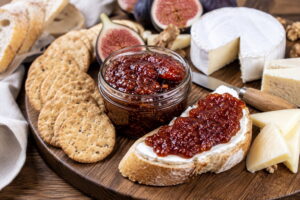
- Cheese board centerpiece – pairs especially well with brie, goat cheese, or aged cheddar
- Glaze for roasted meats – thin with a little balsamic vinegar and brush over pork tenderloin or chicken thighs in the last 10 minutes of roasting
- Sandwich upgrade – spread on a grilled cheese or turkey sandwich for a sweet-savory contrast
- Yogurt or oatmeal topper – a spoonful stirred into plain yogurt adds natural sweetness without refined sugar overload
- Filling for pastries – use in thumbprint cookies, hand pies, or as a layer in a tart
Nutritional Notes
Figs themselves are naturally rich in fiber, potassium, and antioxidants, and have been used in Mediterranean and Middle Eastern cooking for centuries as both a fresh fruit and a preserved staple for the colder months. A few practical notes:
- Once sugar is added and the mixture is reduced, fig jam becomes a concentrated source of natural and added sugars, similar to any traditional fruit preserve.
- It’s best enjoyed as a flavorful topping or accent rather than a health food.
- For a lower-sugar version, reduce the sugar in this recipe by up to a third – the jam will be thinner and have a shorter refrigerator shelf life, since sugar acts as a natural preservative.
- A rough estimate for this recipe, divided into 12 one-tablespoon servings, puts each serving at roughly 35–40 calories, with the majority coming from natural and added sugar rather than fat or protein.
Final Thoughts on Making Fig Jam at Home
What makes this fig jam recipe worth returning to isn’t just the short ingredient list – it’s how forgiving it is. There’s no strict candy thermometer temperature to hit, no commercial pectin packet to measure precisely, and no long canning session required. It’s the kind of recipe you can make on a weeknight with fruit that’s about to turn, and end up with something that tastes like it took far more effort than it did.
If you have access to fresh figs this season, even a small batch is worth the half hour it takes. Once you taste homemade fig jam next to a store-bought jar, the difference in flavor – brighter, less processed, genuinely fruit-forward – is hard to go back from.
Frequently Asked Questions
How long does homemade fig jam last in the fridge?
Homemade fig jam stored in an airtight container in the refrigerator lasts about 3 weeks. For longer storage, freeze it in a freezer-safe container for up to 6 months.
Do I need pectin to make fig jam?
No. Figs contain enough natural sugar and pectin that reducing the mixture on the stove creates a proper set without added pectin, especially in small-batch, refrigerator-style jams like this one.
Can I make fig jam without peeling the figs?
Yes. Fig skins soften completely during cooking and don’t need to be removed. Leaving the skin on also adds color and a small amount of texture to the finished jam.
What’s the best type of fig for jam?
Black Mission figs produce a rich, deeply colored jam, while Brown Turkey figs give a milder, more balanced flavor. Either works well, but the figs should be fully ripe and soft for the best results.
Why is my fig jam runny?
Runny fig jam usually means it needs more time reducing on the stove. Use the cold plate test – if the jam runs back together instead of wrinkling when pushed, it needs a few more minutes of cooking.
Can I can this fig jam recipe for shelf storage?
This recipe is designed as a refrigerator jam, not a shelf-stable canned preserve. To store it at room temperature, you’ll need to process it in a water bath canner using tested canning ratios and proper jar sterilization.
How much sugar can I remove from a fig jam recipe?
You can typically reduce the sugar by up to one-third without ruining the recipe, though the jam will be slightly thinner and won’t keep as long in the refrigerator.
What can I use fig jam for besides toast?
Fig jam works well as a cheese board pairing, a glaze for roasted meats, a topping for yogurt or oatmeal, or a filling for pastries like thumbprint cookies and hand pies.