If you associate Dutch food with little more Gouda and raw herring, you’re overlooking one of Europe’s most quietly satisfying comfort-food traditions. Easy Dutch recipes at home deliver exactly what their name promises: hearty ingredients, minimal technique, and the kind of warmth that comes from generations of cooking to fuel long winters rather than to impress dinner guests.
That practical philosophy makes Dutch home cooking an ideal fit for modern weeknights. There’s no hunting for obscure spices, no multi-day preparations, and no fussy plating. A sturdy pot, a potato masher, and a handful of pantry staples are usually enough to bring authentic Netherlands comfort food to your table in under an hour. You can also read our guide on orzo recipes.
Whether you’re feeding a family on a Tuesday, exploring your own heritage, or simply tired of rotating the same pasta and stir-fry dishes, this guide gives you a genuine starting point: what to stock, what to expect from each dish, and how to make these recipes taste like they came from a Dutch kitchen rather than a recipe website.
Why Dutch Comfort Food Stands Apart
Most food cultures build their reputation around bold seasoning. Dutch cuisine builds its reputation around restraint.
For centuries, the Netherlands was a nation of farmers, fishermen, and labourers who needed calorie-dense, affordable meals made from whatever the land and sea provided. Potatoes, root vegetables, cabbage, and preserved meats weren’t a stylistic choice—they were what was available, durable, and cheap enough to feed a family through a brutal northern European winter. You can also read our guide on yellow chard recipes.
This history explains three qualities that make Dutch food genuinely distinctive:
- The one-pot mash tradition. Dishes like stamppot exist because boiling everything together in a single pot saved fuel, time, and washing-up. What began as a practical necessity became a beloved national dish.
- The minimal-spice philosophy. Dutch cooking lets the ingredient speak. A well-made stamppot doesn’t need six seasonings; it needs good potatoes, good butter, and patience.
- The reliance on smoked and cured proteins. Rookworst (smoked sausage), bacon, and cured meats appear constantly because they were the easiest proteins to preserve through winter without refrigeration.
Compare this to Belgian cuisine just across the border, which leans into rich sauces and beer-based braises, or German cooking, which layers in more pronounced spicing and vinegar-forward flavours. Dutch food sits in its own lane: honest, unpretentious, and startlingly comforting once you understand what it’s trying to do.
That’s also why these recipes translate so well to a modern home kitchen. You’re not trying to replicate a chef’s technique—you’re replicating a grandmother’s shortcut, and that’s a genuinely achievable goal on a weeknight.
The Seasonal Logic of Dutch Cooking
Traditional Dutch meals followed the agricultural calendar rather than any single “cuisine style.” Root vegetables and cabbages dominate autumn and winter menus because they store well through the cold months, while lighter soups and fresh greens appear more in spring and early summer.
This logic still shows up in modern Dutch households:
- Winter: Stamppot, erwtensoep, and other one-pot dishes dominate, since they’re warming and use vegetables that keep well in storage.
- Spring and summer: Lighter soups, open-faced sandwiches, and fresh salads take over, with heavier stamppot dishes appearing less frequently.
- Year-round staples: Baked goods like appeltaart and snacks like bitterballen aren’t seasonal at all—they’re comfort food regardless of the weather.
Understanding this rhythm helps explain why Dutch comfort food feels so intuitive once you start cooking it: it was never meant to be complicated, just responsive to what was actually available.
What You Need Before You Start: A Simple Dutch Pantry One reason easy Dutch recipes at home intimidate people isn’t difficulty—it’s unfamiliar ingredient names. Here’s a starter pantry list, along with practical US-friendly substitutions for anything you can’t find locally.
| Dutch Ingredient | What It’s Used For | US Substitution |
|---|---|---|
| Starchy potatoes (Russet, Yukon Gold) | Backbone of nearly every stamppot recipe | No substitution needed—widely available |
| Kale or curly endive | Traditional stamppot greens | Collard greens or savoy cabbage |
| Rookworst (Dutch smoked sausage) | Protein in stamppot and soups | Kielbasa or smoked pork sausage |
| Gouda or Edam cheese | Snacks, sandwiches, general cooking | Widely available; choose aged gouda for sharper flavour |
| Elstar or Jonagold apples | Appeltaart filling | Granny Smith or Honeycrisp |
| Ground cinnamon and nutmeg | Signature Dutch comfort food spices | No substitution needed |
| Currants or raisins | Baked goods like appeltaart | Golden raisins work as a substitute |
| Real butter | Used liberally throughout Dutch cooking | Do not substitute with oil |
| Rye or dark bread | Open-faced sandwiches (broodjes) | Pumpernickel or dark whole wheat |
Once these staples are in your kitchen, you’re genuinely ready to cook most of the recipes below without a special shopping trip. For other international comfort-food ideas, you might also enjoy exploring the collection of recipes from different cuisines available on the site.
Easy Stamppot Recipes (Dutch Mashed Potato Dishes)
If you only make one type of Dutch dish, make stamppot. It’s the single most iconic Netherlands comfort food, and it’s built specifically to be easy: boil, mash, mix, serve.
Classic Stamppot Boerenkool (Kale and Potato Mash)
This is the dish most Dutch people picture when they think of a cold Tuesday night dinner. Potatoes and kale are boiled together, then mashed into one dense, savoury dish, usually topped with a coin of smoked sausage and a well of gravy in the centre.
Why it works as comfort food: the bitterness of the kale is mellowed by the starchy potato and the smoky, fatty sausage, creating a balance that feels indulgent despite being genuinely simple, vegetable-forward food.
- Time: About 40 minutes
- Difficulty: Beginner-friendly
- Pro tip: Don’t over-mash. A slightly chunky texture is traditional and gives the dish more bite than a smooth American-style mash.
Hutspot (Carrot, Onion, and Potato Mash)
Hutspot swaps the kale for carrots and onions, resulting in a naturally sweeter, brighter-coloured mash. It carries real historical weight in Dutch culture—legend ties its origin to the 1574 Siege of Leiden, making it one of the country’s oldest surviving comfort dishes.
- Time: About 35 minutes
- Difficulty: Beginner-friendly
- Pro tip: Use equal parts carrot and potato for the classic ratio, and don’t skip a generous pat of butter stirred in at the end—it’s what gives hutspot its silky finish.
Zuurkoolstamppot (Sauerkraut Mash)
This version incorporates sauerkraut into the potato mash, giving it a tangy, almost German-adjacent flavour profile while staying distinctly Dutch in preparation. It’s a favourite for people who want something with more acidity to cut through the richness of the sausage.
- Time: About 30 minutes
- Difficulty: Beginner-friendly
- Pro tip: Rinse the sauerkraut briefly if you prefer a milder tang; skip rinsing if you want the full sour punch.
All three stamppot variations share the same core technique, which means once you’ve made one, you’ve essentially learned all of them. That’s the beauty of this category: one skill, three completely different weeknight dinners.
Serving Stamppot the Traditional Way
Presentation matters more than most people expect with stamppot. Follow these steps for an authentic serving style:
- Scoop the finished mash onto the plate in a generous mound.
- Press a small well into the centre using the back of a spoon.
- Pour warm gravy—ideally made from the pan drippings of the sausage—directly into that well.
- Serve immediately, letting each bite be dipped or mixed to taste rather than stirring the gravy in beforehand.
This isn’t just tradition for tradition’s sake. It keeps part of the mash drier and part of it saucier, so every bite can be adjusted to taste. If you’re making stamppot for the first time, resist the urge to stir the gravy in completely; serve it the well-and-pour way and see how much it changes the eating experience.
Easy Dutch Soups for Cold Days
Dutch soups follow the same logic as stamppot—thick, filling, and built to stretch simple ingredients into a full meal.
Erwtensoep (Dutch Split Pea Soup)
Erwtensoep is famous for one specific texture test: it should be thick enough that a spoon can stand upright in it. This isn’t an exaggeration—it’s a genuine point of pride in Dutch kitchens, and a good erwtensoep is closer to a stew than a soup.
- Time: About 1.5 hours (mostly hands-off simmering)
- Difficulty: Beginner-friendly, but requires patience
- What makes it authentic: Smoked sausage or bacon simmered directly in the soup, plus celery root and leeks for depth
Groentesoep (Simple Dutch Vegetable Soup)
A lighter, everyday option built from whatever vegetables are on hand—carrots, celery, leeks, and often small meatballs (balletjes) for protein. It’s the Dutch equivalent of chicken noodle soup: a default comfort meal rather than a special-occasion dish.
- Time: About 45 minutes
- Difficulty: Beginner-friendly
Both soups freeze exceptionally well, which makes them ideal candidates for batch cooking. Erwtensoep in particular tends to thicken further after a night in the fridge, so many Dutch cooks thin it with a splash of water or broth when reheating rather than adjusting the recipe itself.
Easy Dutch Snacks and Fried Comfort Food
No discussion of Dutch comfort food is complete without the snack category, which is arguably the most globally recognised part of Dutch cuisine thanks to bar menus worldwide.
Bitterballen (Crispy Beef Croquette Bites)
Bitterballen are small, breaded, deep-fried balls filled with a thick, savoury ragout—usually beef, though variations exist. The exterior is crisp; the interior is almost molten, held together by a roux-based filling.
- Time: About 1 hour, plus chilling time for the filling
- Difficulty: Intermediate (the filling requires attention, but nothing technically difficult)
- Easy-at-home shortcut: An air fryer produces a genuinely crisp shell with a fraction of the oil, and it’s now a common method even among Dutch home cooks.
Kaassouffle (Dutch Cheese Snack)
A simpler cousin to bitterballen, kaassouffle is a breaded, deep-fried pocket filled with melted cheese. It’s less technical than bitterballen because there’s no ragout to prepare—just a cheese filling wrapped and fried.
- Time: About 30 minutes
- Difficulty: Beginner-friendly
Both snacks can be baked or air-fried instead of deep-fried for a lighter, faster home version, which is exactly how most modern Dutch households actually make them on a weeknight.
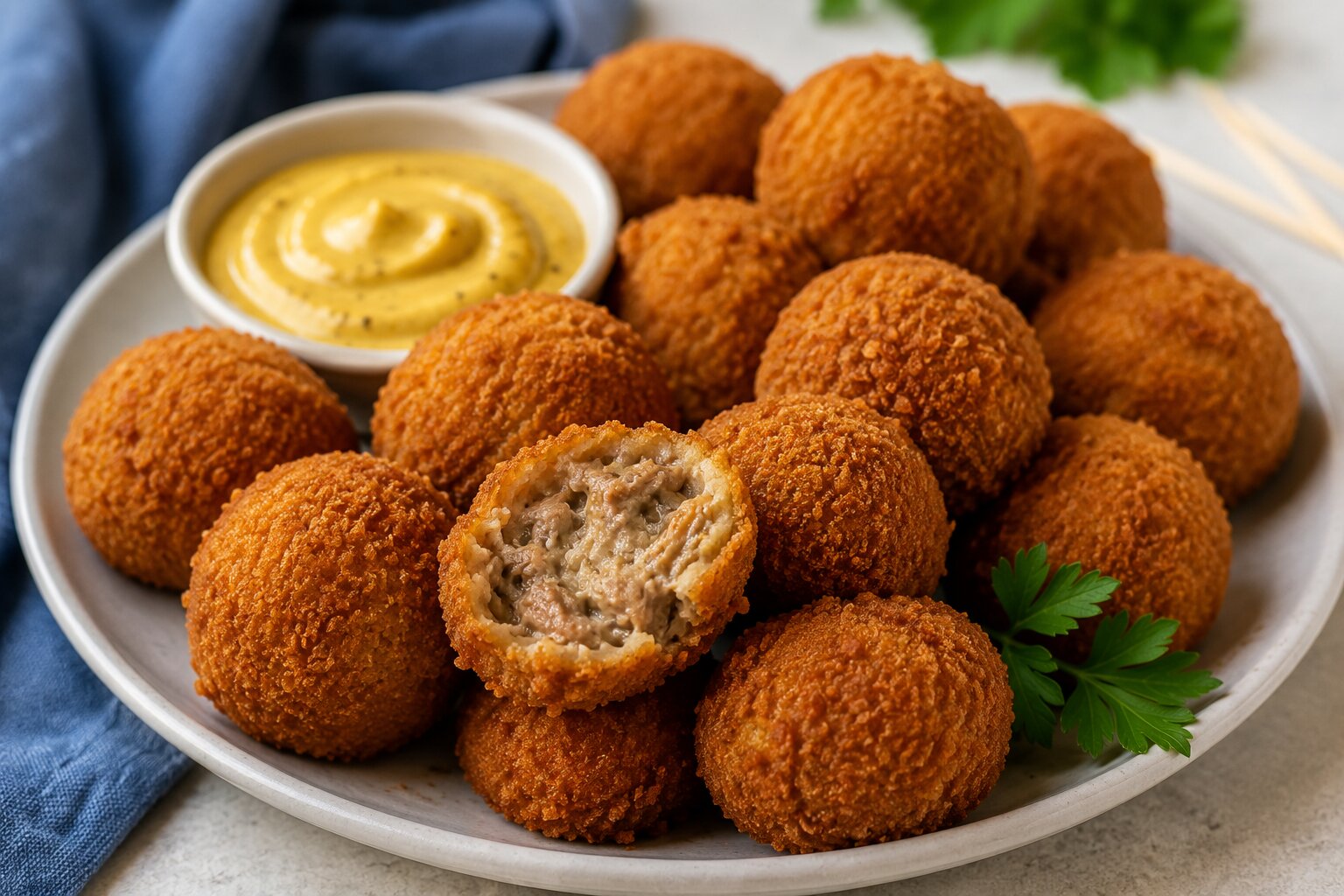 A plate of homemade bitterballen with a side of mustard, the classic Dutch bar snack pairing.
Why These Snacks Dominate Dutch Bar Culture
Bitterballen and kaassouffle didn’t become popular by accident. They’re built around a specific social ritual:
- The “borrel” is a casual after-work drinks gathering where small fried snacks are served alongside beer or jenever (Dutch gin).
- The name “bitterballen” directly references this tradition, tying back to the bitters traditionally served during a borrel.
- These snacks are meant to be shared and eaten standing up, with mustard on the side and a cold drink in hand—not served as a formal starter course at the table.
If you’re hosting, serving a plate of bitterballen alongside drinks before dinner is more authentic than plating them individually as an appetiser course.
Easy Dutch Baked Goods and Sweet Comfort Food
Dutch baking has its own personality—heavier on spice, lighter on sugar, and built around texture contrast.
Appeltaart (Dutch Apple Pie or Tart)
Dutch appeltaart is distinct from American apple pie in a few key ways:
-
It’s taller and more cake-like, typically baked in a springform pan rather than a standard pie dish.
-
The crust is crumblier and more cookie-like than a flaky American pie crust.
-
The filling leans heavily on cinnamon rather than relying on sugar for flavour.
-
A lattice top is traditional, and the filling is often studded with raisins or currants.
-
Time: About 1.5 hours total
-
Difficulty: Intermediate
-
Pro tip: Use a springform pan for the classic tall, cake-like shape rather than a standard pie dish.
Poffertjes (Mini Fluffy Pancakes)
These small, puffy pancakes are made from a yeasted batter and cooked in a special dimpled pan, though a mini pancake pan or griddle works fine at home. Traditionally served with powdered sugar and a pat of butter.
- Time: About 45 minutes, including batter resting time
- Difficulty: Beginner-friendly
Stroopwafels: A Realistic Note
Stroopwafels—thin waffle cookies sandwiched with caramel syrup—are technically possible to make at home but require a specific waffle iron and significant technique to get the wafer thin enough. For most home cooks, buying a good-quality Dutch stroopwafel and pairing it with a homemade meal is the more realistic (and still authentic) choice.
A simple serving trick worth trying: rest a stroopwafel on top of a hot cup of coffee or tea for a minute or two before eating. The steam softens the caramel filling slightly, which is exactly how it’s traditionally enjoyed in the Netherlands.
Tips for Making Dutch Comfort Food Taste Authentic at Home
A few small habits separate a good attempt from something that genuinely tastes Dutch:
- Use nutmeg generously. It’s the signature spice in mashed potato dishes and appears far more often than most non-Dutch cooks assume.
- Resist over-seasoning. Dutch food relies on the quality of the base ingredients, not a heavy hand with spices or sauces.
- Serve with a fried egg or smoked sausage. Adding a fried egg on top of stamppot is a common household variation that adds richness without complicating the recipe.
- Plan for leftovers. Stamppot and erwtensoep both reheat exceptionally well, making them ideal for meal prep—many Dutch households consider these dishes even better the next day.
- Don’t skip the butter. Dutch comfort food is not a low-fat cuisine, and cutting butter for a “healthier” version noticeably changes the texture and flavour.
Common Mistakes to Avoid When Cooking Easy Dutch Recipes at Home
Even simple recipes can go wrong in predictable ways. Here are the most common missteps first-time cooks make with Dutch comfort food, and how to avoid them:
- Using waxy potatoes instead of starchy ones. Waxy potatoes (like red potatoes) hold their shape too well and produce a gluey, dense mash. Stick with Russet or Yukon Gold for the right texture.
- Boiling the potatoes and vegetables separately. Traditional stamppot cooks everything together in one pot, which lets the flavours combine as they cook. Boiling components separately and mixing them afterward produces a noticeably flatter result.
- Under-salting the cooking water. Since Dutch dishes rely on minimal added seasoning later, properly salting the boiling water is one of the few chances you get to build flavour into the base ingredients themselves.
- Rushing erwtensoep. This soup needs time for the split peas to fully break down and thicken naturally. Cutting the simmering time short results in a thin, underdeveloped soup rather than the traditional stand-a-spoon-up consistency.
- Skipping the resting time for poffertjes batter. The batter needs time for the yeast to activate properly; skipping this step produces flatter, denser pancakes instead of the light, fluffy texture that defines the dish.
Building a Simple Dutch-Inspired Meal Plan
If you want to bring more than one recipe into your kitchen, here’s a realistic way to structure a week around Dutch comfort food without repeating the same dish twice:
- Monday: Stamppot boerenkool with smoked sausage
- Tuesday: Groentesoep with crusty bread
- Wednesday: Leftover stamppot, reheated (it genuinely tastes better the next day)
- Thursday: Hutspot with a simple pan-seared protein
- Friday: Bitterballen or kaassouffle as a casual snack-style dinner with a side salad
- Weekend: Appeltaart or poffertjes for a relaxed weekend breakfast or dessert
This kind of rotation reflects how Dutch households actually eat—repeating a small set of reliable, comforting dishes rather than chasing variety for its own sake. It’s also a genuinely budget-friendly way to cook, since most of these dishes rely on inexpensive, shelf-stable ingredients that stretch across multiple meals without much waste. If you’re looking for other hearty meal ideas that follow a similar philosophy, you might appreciate the approach in a good smoked sausage dish.
How Dutch Comfort Food Freezes and Reheats
One underrated advantage of cooking Dutch comfort food at home is how well most of it holds up in the freezer, which makes it a strong option for anyone trying to build a stock of easy, ready-to-reheat meals.
- Stamppot (all varieties): Freezes well for up to three months. Thaw overnight in the refrigerator and reheat gently on the stovetop with a splash of milk or butter to restore the creamy texture.
- Erwtensoep and groentesoep: Both freeze exceptionally well and often taste even better after freezing, since the flavours have more time to develop. Reheat slowly over low heat, adding water or broth if the consistency has thickened too much.
- Bitterballen (uncooked, breaded): Can be frozen before frying and cooked directly from frozen, which makes them one of the most practical make-ahead party snacks in this entire lineup.
- Appeltaart: Freezes well either whole or in slices. Wrap tightly and thaw at room temperature for a few hours before serving.
This freezer-friendliness is one more reason Dutch comfort food fits so naturally into a modern, busy household—most of these dishes were never meant to be cooked fresh every single night in the first place.
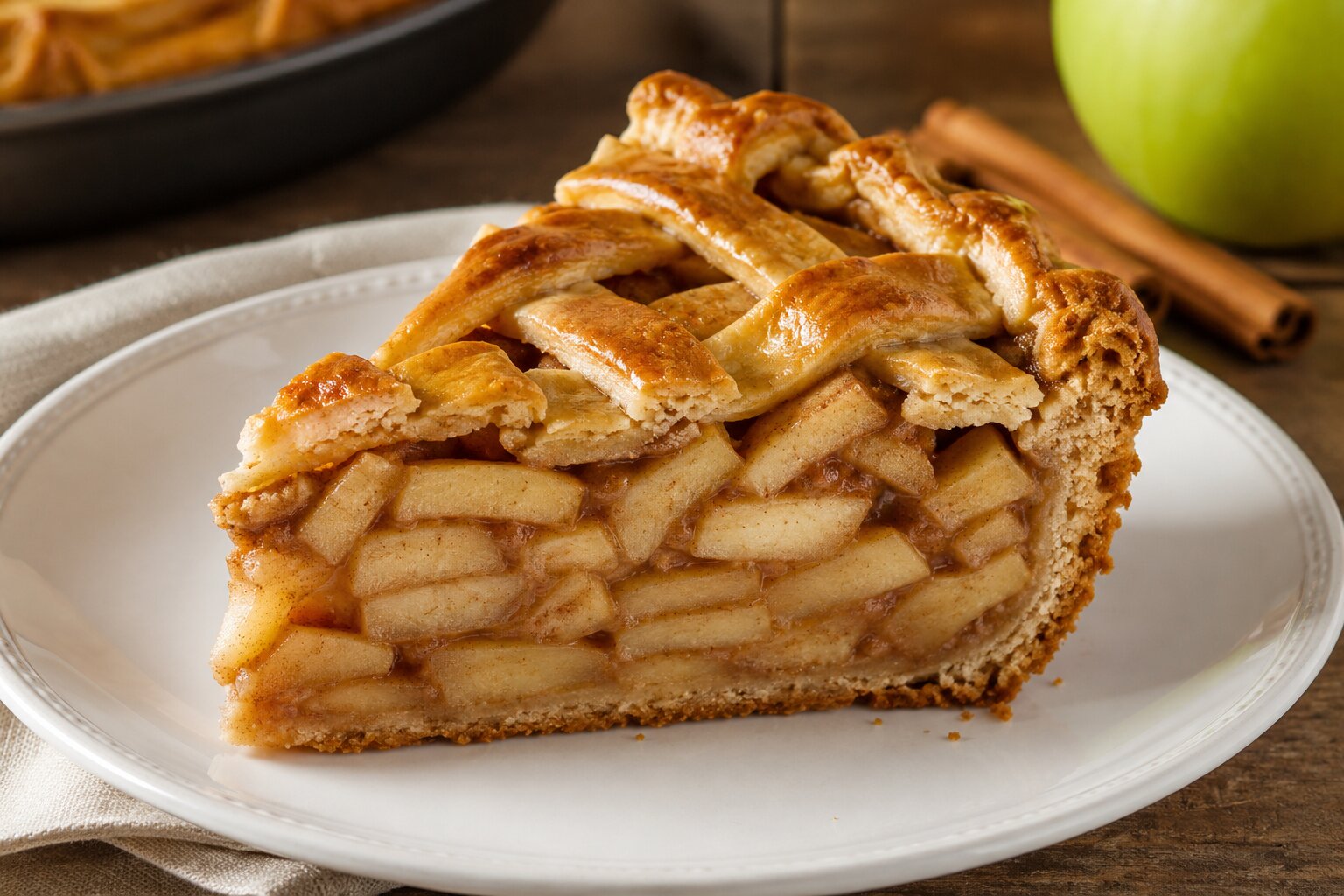 A tall slice of homemade appeltaart showing the crumbly crust, spiced apple filling and lattice top.
Final Thoughts: Bringing Dutch Comfort Food Into Your Kitchen
Easy Dutch recipes succeed because they were never designed to be complicated in the first place. They were designed to feed real families, on real budgets, through real winters—and that practicality is exactly what makes them so approachable for a modern home cook.
Start with a stamppot. Once you’ve got that technique down, the rest of Dutch comfort food—the soups, the snacks, the appeltaart—all build on the same philosophy: simple ingredients, treated with care, and served warm.
For those looking to explore other hearty, approachable European cuisines, the same practical philosophy applies to traditions from neighbouring countries. And if you’re building a diverse recipe collection, the site’s full range of home-style cooking inspiration is worth browsing.
Frequently Asked Questions
Is Dutch food spicy?
No. Traditional Dutch cuisine is intentionally mild, relying on ingredients like potatoes, butter, and smoked meats rather than hot spices for flavour.
What is the most popular comfort food in the Netherlands?
Stamppot, particularly stamppot boerenkool made with kale and potatoes, is widely considered the most iconic Dutch comfort food.
Can I make stamppot without kale?
Yes. Common variations use carrots and onions (hutspot), sauerkraut (zuurkoolstamppot), or endive, so you can adjust based on what’s available.
What’s a good vegetarian Dutch comfort food option?
Groentesoep (vegetable soup) and a meatless version of stamppot, topped with a fried egg instead of sausage, are both easy vegetarian options.
How long does stamppot last in the fridge?
Stamppot keeps well for three to four days when stored in an airtight container and reheats easily on the stovetop or in the microwave.
What is the difference between stamppot and hutspot?
Stamppot is the general category of Dutch mashed potato dishes, while hutspot specifically refers to the carrot, onion, and potato version.
Are bitterballen difficult to make at home?
The filling requires some attention since it’s roux-based, but using an air fryer instead of deep frying makes the overall process much simpler for home cooks.
What spice is most commonly used in Dutch cooking?
Nutmeg is the defining spice in Dutch comfort food, especially in mashed potato dishes like stamppot and hutspot.