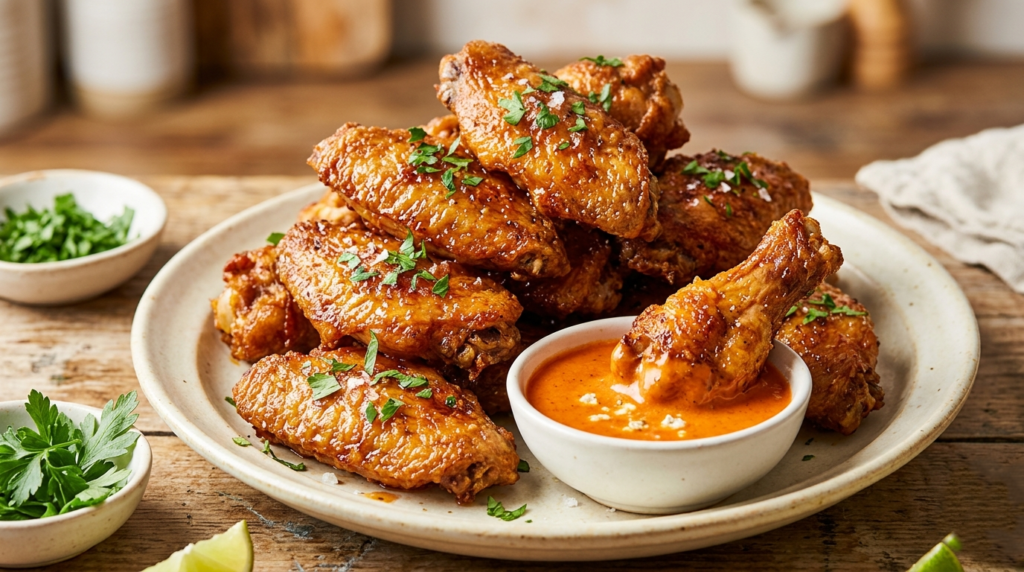
Friday night hits. You're hungry, tired, and that takeout menu starts whispering sweet nothings. Twenty-four dollars later, ten lukewarm wings arrive in a soggy box — somehow both greasy and dry. There's a better life waiting in your kitchen.
Air fryer chicken wings deliver the shatter-crisp skin of deep-fried wings with a fraction of the oil, mess, and cost. After refining batches through every temperature combination and seasoning blend worth trying, the difference between a mediocre wing and one that genuinely beats restaurant quality comes down to a handful of details most recipes skip. You can also read our guide on how to cook bacon in the oven.
This guide covers the science of why air-fried skin outperforms deep-fried, the exact techniques that prevent rubbery results, a tested step-by-step method with precise timing, and sauce strategies that keep your crust intact until the last bite.
Why Air Fryer Wings Outperform Deep-Fried and Takeout
It sounds like a bold claim. The mechanics back it up.
Deep frying submerges wings in oil that drops temperature sharply each time you add cold chicken. Restaurant fryers cycle through temperature swings batch after batch, which is why wings can taste inconsistent even from the same kitchen. Air fryers use rapid circulating hot air at a steady temperature — the heat stays consistent from the first wing to the last.
Here's exactly why air-fried wings win:
Less oil, equal crunch — you use a tablespoon instead of a quart, but the Maillard reaction still happens because the air fryer's convection pushes heat directly against the skin surface.
Rendered fat, not trapped fat — chicken wings carry significant subcutaneous fat. The air fryer basket lets that fat drip away as it renders, which is precisely why the skin crisps rather than turning greasy.
No soggy delivery box — takeout wings steam themselves soft inside a closed container during transit. Your wings go from fryer to plate in about forty seconds.
Side by side, the air fryer version consistently produces a drier, more shatter-crisp bite. That's not coincidence — it's airflow doing precisely what it's designed to do, without the degraded oil quality that builds up in commercial fryers over hundreds of batches.
The Four Fundamental Techniques for Crispy Skin
If you remember nothing else from this article, remember these four things. They are the actual difference-makers between good wings and genuinely takeout-beating wings.
1. Dry the Wings — Aggressively
Skin moisture is the enemy of crispiness. Wet skin steams instead of crisping.
- Pat wings dry with paper towels until they feel tacky to the touch, not damp.
- For next-level results, place them uncovered in the fridge for 1 to 8 hours before cooking.
- This air-drying step pulls surface moisture out — the same trick professional chefs use for crispy roasted turkey skin.
2. Baking Powder Creates the Blister
This is the single biggest upgrade most home cooks miss. A light dusting of baking powder raises the pH of the chicken skin, breaking down proteins and helping the skin brown and blister aggressively.
- Use about 1 teaspoon of baking powder per pound of wings.
- Toss wings in baking powder plus your dry seasoning before they go into the air fryer.
- Skip this step if using a wet marinade, since the powder requires dry skin to work.
3. Never Crowd the Basket
This is where most home cooks go wrong. Air fryers work by circulating hot air around each piece of food. Stack wings on top of each other and you've built a steamer.
- Arrange wings in a single layer with small gaps between each piece.
- Cook in batches if needed — the extra ten minutes is worth the result.
- Shake or flip the basket halfway through to expose all sides to airflow.
4. Preheat Every Time
A cold basket forces wings to come up to temperature slowly, which extends cooking time and lets moisture escape before the skin has a chance to seal. Preheating for 3 minutes at your starting temperature ensures the crisping process begins immediately.
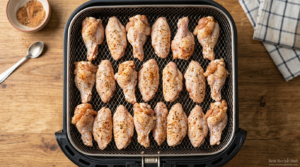 Raw wings spaced with small gaps for proper airflow around each piece
Step-by-Step Method That Works Every Time
Here is the exact process that produces consistently excellent results. These steps account for the variables that home cooks most often overlook.
Ingredients (serves 2–4)
| Ingredient | Amount |
|---|---|
| Chicken wings (flats and drumettes) | 2 lbs, patted dry |
| Baking powder | 1 tbsp |
| Salt | 1 tsp |
| Garlic powder | 1 tsp |
| Smoked paprika | 1 tsp |
| Black pepper | ½ tsp |
| Avocado or olive oil spray | As needed |
Instructions
- Pat wings completely dry, then place uncovered in the fridge for at least 1 hour (overnight is ideal).
- In a large bowl, toss wings with baking powder and all dry seasonings until evenly coated.
- Lightly spray the air fryer basket with oil and arrange wings in a single layer with gaps.
- Air fry at 380°F for 10 minutes.
- Flip wings and increase temperature to 400°F. Cook for another 10 to 12 minutes.
- Check internal temperature — it should read 165°F minimum at the thickest part. For maximum crispness, pull wings at 175 to 180°F; wings have enough connective tissue to stay juicy well past the minimum.
- Let wings rest for 3 minutes before saucing. Saucing immediately traps steam and softens the crust.
A tip worth repeating: use an instant-read thermometer rather than trusting visual cues. The USDA recommends an internal temperature of 165°F for poultry, verified at www.usda.gov for current food safety guidelines.
Sauce Strategy — Toss, Don't Drown
A common takeout-wing mistake is sauce so heavy it turns crispy skin soggy within minutes. Restaurants do this because sauce-coated wings look generous in photos. You don't have that constraint.
Rules for saucing:
- Toss wings in sauce right before serving, not before cooking.
- Use just enough sauce to coat — toss in a bowl, don't pour from a bottle directly onto the basket.
- For maximum crunch, serve sauce on the side and let people dip rather than toss.
Flavor combinations worth trying:
- Classic Buffalo — hot sauce, melted butter, a splash of vinegar
- Garlic Parmesan — melted butter, minced garlic, grated parmesan, fresh parsley
- Honey Sriracha — honey, sriracha, soy sauce, a squeeze of lime
- Dry-rub Lemon Pepper — no sauce at all, just lemon zest, cracked pepper, and melted butter after cooking
These sauces pair well with other crispy dishes like a quick batch of air fryer french fries for a complete meal.
Common Mistake Checklist
Based on what goes wrong most often in home kitchens, here are the pitfalls to avoid.
| Mistake | Why It Hurts Results | Fix |
|---|---|---|
| Using frozen wings without thawing | Frozen wings release excess water as they cook, undermining the dry-skin principle | Thaw fully in the fridge, then pat dry |
| Skipping the flip | Even with good circulation, one side faces more direct airflow | Flip halfway through cooking |
| Oversaucing before cooking | Sugary sauces burn at high heat before the inside is cooked through | Always sauce after cooking |
| Not preheating | Wings start crisping immediately only in a hot basket | Preheat 3 minutes at starting temperature |
| Guessing doneness | Visual cues lie — wings can appear done while undercooked near the bone | Use an instant-read thermometer |
For another quick weeknight option that shares the same air fryer technique, try the method behind air fryer pork chops — the principles of not crowding and flipping halfway apply there too.
Air Fryer Settings by Wing Type
Not all wings cook identically. Use this reference based on cut and quantity, then confirm with a thermometer.
| Wing Type | Temperature | Time | Notes |
|---|---|---|---|
| Fresh, split flats/drumettes | 380°F → 400°F | 20–22 min total | Standard method above |
| Frozen, pre-thawed | 380°F → 400°F | 24–26 min total | Pat extra dry; expect 2–4 more minutes |
| Whole wings (not split) | 375°F → 400°F | 22–25 min total | Thicker joint takes slightly longer |
| Boneless wing bites | 390°F | 12–14 min total | Flip at 7-minute mark |
Air fryer wattage and basket size vary by brand. Treat these as starting points and confirm doneness with a thermometer rather than relying on the clock alone.
Why This Beats Restaurant Wings
It's not just about replicating takeout — it's about controlling variables that commercial kitchens cannot manage.
- You control oil quality. Restaurant fryers reuse oil across hundreds of batches, which degrades flavor and increases unhealthy compounds over time. Your air fryer uses a fresh tablespoon every time.
- You control salt and sugar. Most commercial wing sauces are loaded with added sugar and sodium for shelf stability. At home, you decide exactly how much goes in.
- You control freshness. Zero transit time means zero opportunity for steam to soften that crust you worked for.
This distinction matters more than most recipes acknowledge. The ability to serve wings within seconds of them reaching peak crispness is something no takeout operation can match. It's the kind of difference you only fully appreciate after making wings both ways enough times to taste the contrast side by side.
If you're looking to round out the meal with other options, a creamy dip like a buffalo chicken dip recipe makes a natural companion for game-day platters.
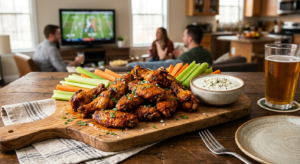 Finished wings with celery and ranch dip — sauce served separately to preserve crunch
Final Thoughts
Great air fryer chicken wings aren't about a fancy gadget or an exotic ingredient. They're about respecting moisture, airflow, and temperature in the right order.
The four fundamentals, one more time:
- Dry the skin thoroughly before seasoning.
- Coat with baking powder for maximum blister and crunch.
- Never crowd the basket.
- Sauce only at the very end.
Get those four things right and you'll produce wings that genuinely outperform anything arriving in a paper bag. The process becomes second nature after two or three batches, and from there it's just a matter of experimenting with rubs and sauces until you find your personal favorite.
For more crowd-pleasing options that work well alongside these wings, the selection of easy chicken dinner recipes offers plenty of inspiration for your weekly rotation.



2 thoughts on “Crispy Air Fryer Chicken Wings That Beat Any Takeout”