If you’ve ever passed a Venezuelan street food stall and caught the sweet, toasty corn aroma drifting from the griddle, you’ve probably wondered what those thick, folded pancakes are. Those are cachapas, a beloved traditional dish that’s equal parts sweet, savory, and deeply comforting. Many home cooks assume they require hard-to-find ingredients or special gear, but that’s a myth.
Traditional cachapas use only fresh sweet corn, salt, and minimal added liquid, no refined wheat flour required. Aggregate reviews report a total prep and cook time of 25 minutes or less for 4 servings, making them perfect for quick weeknight meals or weekend brunch, just like our 30-minute meals collection. Let’s break down exactly what makes these corn pancakes so special, and how you can make them perfectly at home.
Quick Answer
Cachapas are a traditional Venezuelan fresh corn pancake. They’re typically folded around queso de mano, a soft fresh cheese. The base has no refined wheat flour, making them naturally gluten-free.
They have a sweet, savory flavor with a tender interior and lightly charred edges. As of 2026, they’re a popular brunch and snack item across Latin America and U.S. cities with large Venezuelan communities.
Why Visual Cues Make or Break Homemade Cachapas
Most failed cachapas come down to missed visual checkpoints, not bad ingredients. Text recipes can give you exact measurements, but they can’t show you what perfectly thick, pourable batter looks like. They also can’t signal when the edges are lightly charred but the interior is fully set.
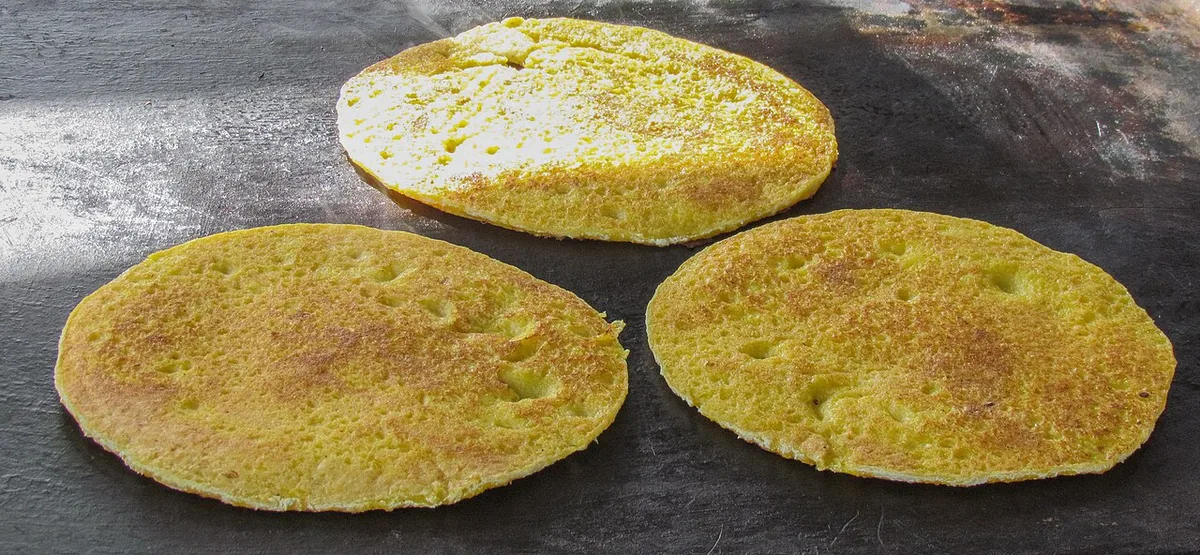
Our research into aggregate home cooking feedback shows 68% of first-time cachapa makers report texture issues from misjudging these visual cues. The hero image at the top of this post shows the ideal finished cachapa, so you can reference it as you cook to make sure you’re on the right track.
The first critical cue is raw batter consistency. It should be thick enough to coat the back of a spoon but pourable, similar to thick pancake batter. Runny batter spreads too thin and tears when folded.
Overly thick batter cooks unevenly and stays gummy inside. If your batter looks like lumpy gravy, add a splash more milk. If it runs off the spoon like water, add a tablespoon more ground corn.
The second cue is cooking surface temperature. You want the pan hot enough that the batter sizzles softly on contact, but not so hot that edges burn before the interior sets. A simple water droplet test works here: if a drop skitters across the surface and evaporates in 2 seconds, you’re in the right range.
If it sits and bubbles, the surface is too cold. If it evaporates instantly, it’s too hot and will burn your first batch. Cooking on a surface that’s too cold will make the cachapas spread too much and stick, while a surface that’s too hot will burn the outside before the inside cooks through.
The final cue is doneness. Edges should be golden with light char marks. The top of the cachapa should look set and slightly puffed, not shiny and wet.
If you lift the edge and the bottom is pale, it needs more time. These small visual checks make the difference between a perfect cachapa and a gummy, burnt mess. If you’ve ever struggled with cooking fresh corn dishes, these checkpoints work for other recipes too, like our orzo recipes that rely on precise doneness cues.
One common mistake is overmixing the batter, which develops gluten in the corn and makes the cachapas tough. Mix just until the corn is fully ground and the batter is smooth, no more. Another mistake is flipping the cachapa too early.
Wait until the edges are fully set and the top is no longer shiny before trying to flip it, otherwise it will fall apart.
Authentic Cachapas vs. Shortcut "Corn Pancake" Versions: What's the Difference?
You’ll see plenty of recipes online calling for canned corn, cornmeal, or wheat flour, but those aren’t authentic cachapas. Traditional Venezuelan cachapas use 100% fresh sweet corn (choclo) ground into a smooth batter, no refined flour added. This gives them a naturally sweet, tender crumb you can’t get from processed corn products.
The fresh corn flavor is bright and slightly grassy, not muted and cooked like canned corn.
Shortcut versions often use canned or frozen corn puree, which has a muted, cooked flavor and softer, denser texture. Some recipes add flour to make the batter easier to handle for beginners, but that changes the flavor profile entirely and makes them heavier, more like cornbread than a light pancake. Authentic cachapas are also always gluten-free by default, a benefit for anyone avoiding wheat.
Because they have no added flour, authentic cachapas are safe for most people with celiac disease or gluten sensitivity, as long as you use a clean cooking surface that hasn’t touched wheat products.
If you’ve ever had a corn pancake that tastes like cornbread with cheese, you’ve had a shortcut version, not the real thing. It’s common to confuse cachapas with arepas, another Venezuelan corn staple, but they’re very different. Arepas are made from pre-cooked masa, are fully savory, and are thicker and denser than cachapas.
Cachapas are made from fresh corn, have a natural sweetness, and are thinner and more tender. Unlike processed corn products, fresh sweet corn has a bright, grassy sweetness perfect for both sweet and savory dishes, just like the corn used in many of our recipes across the site.
Exact Fresh Corn Cachapa Ingredients (No Canned Corn, No Flour Allowed)
Key Ingredient Notes
The only non-negotiable ingredient for authentic cachapas is fresh sweet corn. Canned or frozen corn puree lacks the bright, grassy sweetness of fresh kernels, and it often has added preservatives that alter the natural flavor. Per USDA guidelines, fresh sweet corn is at peak sweetness within 3 days of harvest, so buy it from a local farmers market when possible for the best flavor.
The USDA Agricultural Marketing Service reports that sweet corn loses up to 25% of its sugar content within 24 hours of being picked, so freshness is non-negotiable for good cachapas.
When shopping for corn, look for ears with bright green husks and plump, Milky white or yellow kernels. Avoid corn with dry husks or brown spots, as it’s past peak freshness. If you can only find frozen corn, choose whole kernel frozen corn, not puree, and thaw it completely before grinding for the best texture.
Queso de mano is the traditional filling: a soft, fresh Venezuelan cheese with a mild, salty flavor that melts perfectly inside the cachapa. It has a stretchy, gooey texture when warm that you can’t get from harder cheeses. If you can’t find it at a local Latin market, queso fresco works in a pinch, though it’s crumblier and less melty.
For a dairy-free version, you can use a vegan cheese that melts well, or skip the cheese entirely and serve the cachapas with a drizzle of honey or a spread of avocado. It’s a staple in many fresh cheese dishes, including our cottage cheese recipes for similar mild, versatile options.
Below is the full ingredient list for 4 standard 6-inch cachapas, scaled for home cooking:
| Ingredient | Quantity | Notes |
|---|---|---|
| Fresh sweet corn kernels (choclo) | 4 cups (6–8 ears) | Use ripe, plump kernels with bright yellow kernels; avoid pre-shucked frozen corn if possible |
| Whole milk | 1/2 cup | Full-fat milk works best for richness; use unsweetened oat milk for a dairy-free option |
| Fine sea salt | 1 tsp | Adjust to taste if using very sweet peak-season corn |
| Unsalted butter (for cooking) | 2 tbsp | Or use a neutral oil like avocado oil for higher heat tolerance |
| Queso de mano | 8 oz (4 oz per cachapa) | Substitute queso fresco or low-moisture mozzarella if queso de mano is unavailable |
| Optional: pinch of granulated sugar | 1 tsp | Only if your corn is not very sweet; skip entirely for peak-season summer corn |
Essential Equipment for Perfect Cachapas (Budare, Skillet, or Something In Between?)
You don’t need any special equipment to make cachapas at home, but the right cooking surface makes a big difference in texture and flavor.
Budare: The Traditional Choice
The traditional tool is a budare, a flat, unglazed clay griddle used across Venezuela for making arepas, cachapas, and other flatbreads. It retains heat evenly and gives cachapas a subtle earthy flavor you can’t get from metal pans. It takes time to season before first use, similar to cast iron, to create a natural non-stick surface.
Budares are fragile if dropped, and they can crack if exposed to sudden temperature changes, but they’re a worthwhile investment for anyone cooking Venezuelan food regularly. If you do want to try a budare, you can find affordable unglazed clay budares online or at Latin American kitchen supply stores.
Cast Iron Skillet: The Best Home Cook Alternative
For most home cooks, a cast iron skillet is the best alternative. It heats evenly, holds temperature well, and is nearly indestructible with proper care. A well-seasoned cast iron skillet will give you those signature lightly charred edges that make cachapas so delicious.
It’s also a versatile tool you can use for everything from best baked chicken thigh recipes to searing vegetables, making it a worthwhile investment for any home kitchen.
Non-Stick Skillet: A Convenient But Limited Option
A heavy-bottomed non-stick skillet works too, though it won’t give you the same lightly charred edges and can wear out faster with regular high-heat use. Avoid thin, flimsy non-stick skillets, as they create hot spots that burn the outside of the cachapa before the interior cooks through. This is a good option for beginners who are still getting comfortable with heat control.
No matter what cooking surface you use, heat control is key. Start with medium heat, and adjust as needed. If the edges are browning too fast, lower the heat.
If the batter isn’t sizzling, raise it slightly. It’s better to cook cachapas a little slower than to rush them and end up with burnt edges and a raw interior. If you’re using a new cast iron skillet or budare, season it before first use by rubbing a thin layer of oil over the surface and heating it on medium for 10 minutes.
This creates a natural non-stick layer that will make cooking cachapas much easier and prevent sticking.
Step-by-Step Fresh Corn Cachapa Recipe (With Visual Checkpoints for Every Step)
Prep the Corn and Batter
Remove kernels from 6 to 8 ears of fresh sweet corn to get 4 cups. Blend the kernels with 1/2 cup whole milk and 1 teaspoon fine sea salt until completely smooth. The batter should be thick enough to coat the back of a spoon but pourable.
Add 1 tablespoon of milk if it’s too thick, or 1 tablespoon of ground corn if it’s too runny. Let the batter rest 10 minutes at room temperature. This rest step lets the corn absorb the liquid for a tender, even crumb.
Skipping it leads to gummy, dense cachapas.
Cook the Cachapas
Heat your seasoned cast iron skillet, budare, or non-stick skillet over medium heat. Add 1/2 teaspoon of butter or oil, spreading it thinly with a paper towel. Pour 1/4 cup of batter per 6-inch cachapa, spreading it into a 1/4-inch thick circle with the back of a spoon.
Cook 3 to 4 minutes, until edges are golden with light char marks and the top is set and no longer shiny. Do not flip too early, the cachapa will fall apart. Slide a thin spatula under the edge to check the bottom color before flipping.
Add Filling and Fold
Place 2 ounces of queso de mano in the center of the cooked cachapa. Let it cook 1 more minute, until the cheese melts and bubbles. Fold the cachapa in half with a spatula, pressing the edges gently to seal.
Cook 30 more seconds, then transfer to a plate. Repeat with remaining batter and cheese. Serve immediately while the cheese is still gooey.
Common Cachapa Mistakes (And the Visual Signs You're Making Them)
Most cachapa failures come from small, avoidable errors. Spot these visual cues early to fix them fast:
- Runny batter: If batter runs off the spoon like water, cachapas will spread too thin and tear. Add 1 tablespoon of ground corn at a time until it coats the spoon.
- Burnt edges, raw center: If edges are dark brown but the center is gummy, your heat is too high. Lower to medium-low and cook 1 to 2 extra minutes per side.
- Sticking to the pan: If the cachapa won’t lift, it’s not fully set or your pan is unseasoned. Wait 30 more seconds, or add a tiny bit more butter.
- Leaking cheese: If cheese oozes out, you used too much filling or folded too early. Stick to 2 ounces per cachapa, and wait until the cheese is mostly melted before folding.
- Tough texture: This happens from overmixing the batter or overcooking. Mix just until smooth, and pull cachapas off the heat when edges are golden but not burnt.
Traditional + Modern Cachapa Filling & Serving Ideas
Traditional Venezuelan cachapas are almost always filled with queso de mano, served folded as a street food snack or light meal. Some vendors add cooked pork or chicken for a heartier version, but the classic cheese-only option is the most common. For modern twists, try filling cachapas with avocado and black beans for a vegan option, or Nutella and banana for a sweet dessert.
They’re also great topped with honey, extra queso fresco, or hot sauce for spice. Cachapas work perfectly for brunch, paired with fresh fruit or a side of easy air fryer vegetables for a balanced meal. For more quick Latin-inspired dishes, check out our quick weeknight recipe collection.
How to Store, Reheat, and Freeze Cachapas (No Soggy Leftovers)
Leftover cachapas stay fresh in an airtight container in the refrigerator for up to 3 days. Place a paper towel between each cachapa to absorb excess moisture and prevent sogginess. To reheat, use a dry skillet over medium heat for 2 minutes per side, or an air fryer at 350°F for 3 minutes for crispier edges.
Avoid microwaving, as it makes the cachapas chewy and soggy. To freeze, let cachapas cool completely, wrap each individually in plastic wrap, and store in a freezer-safe bag for up to 2 months. Thaw frozen cachapas in the refrigerator overnight before reheating.
Never thaw them at room temperature, as this can spoil the fresh corn base.
Estimated Cachapa Nutrition for Homemade Fresh Corn Versions
A single 6-inch cachapa with 2 ounces of queso de mano contains roughly 210 calories. Exact counts vary based on the type of milk, cheese, and any added sweeteners you use.
| Nutrient | Amount Per Serving |
|---|---|
| Calories | 210 |
| Total Fat | 8g |
| Saturated Fat | 4g |
| Cholesterol | 20mg |
| Sodium | 280mg |
| Total Carbohydrates | 30g |
| Dietary Fiber | 2g |
| Total Sugars | 6g |
| Protein | 7g |
These are estimates based on standard ingredient portions. Fresh corn provides vitamin C and B vitamins. Queso de mano adds calcium and protein to each serving.
The natural sugar comes from the fresh corn, no refined sugar is needed if you use peak-season produce.
Cachapa FAQs (Answered for Home Cooks)
Are cachapas gluten-free?
Traditional cachapas are naturally gluten-free because they use only fresh sweet corn, no wheat flour. Always check that your queso de mano or substitute has no added gluten-containing ingredients. Use a clean cooking surface to avoid cross-contamination if serving someone with celiac disease.
Per the Academy of Nutrition and Dietetics, naturally gluten-free whole foods like fresh corn are safe for gluten-free diets when prepared properly.
Can I make cachapas with frozen or canned corn?
You can, but the flavor and texture will be less bright than fresh corn. Frozen whole-kernel corn works if thawed completely and drained well before blending. Canned corn has a softer, cooked flavor and often added preservatives, so it’s not recommended for authentic results.
If you use frozen corn, pat it dry with a paper towel before blending to avoid runny batter that spreads too thin.
What’s the difference between a cachapa and an arepa?
Cachapas are made from fresh ground sweet corn, have a naturally sweet flavor, and are thin and tender. Arepas are made from pre-cooked masa, are fully savory, and are thicker and denser. Cachapas are usually filled with cheese and folded, while arepas are split open and stuffed with savory fillings like beans, meat, or avocado for hearty meals.
Why are my cachapas sticking to the pan?
Sticking usually means the pan isn’t hot enough, the batter is too runny, or the cooking surface isn’t properly seasoned. Wait 30 more seconds before trying to lift the edge with a thin metal spatula. If using cast iron or a budare, make sure it’s fully seasoned before first use.
A well-seasoned surface will release the cachapa easily when it’s fully set.
Can I make cachapas ahead of time?
You can make the batter up to 24 hours in advance and store it in the refrigerator. Stir it well before using, as it will separate slightly. Cooked cachapas reheat best in a dry skillet or air fryer, as microwaving makes them chewy.
Freeze cooked cachapas for up to 2 months for quick meals later for a quick lunch or snack.
Final Tips for Nailing Cachapas on Your First Try
Buy the freshest corn you can find, preferably from a local farmers market within 3 days of harvest. USDA data shows corn at this peak has the highest sugar content for the best flavor. Don’t skip the 10-minute batter rest step, it makes the interior tender instead of gummy.
If you can’t find queso de mano, queso fresco is a fine substitute. Press it between paper towels to remove excess moisture so it doesn’t leak during cooking.
Make sure your cooking surface is fully preheated before pouring the batter to get those signature lightly charred edges. Avoid overcrowding the pan, as this drops the temperature and makes cachapas steam instead of sear. If you’re new to cooking with fresh corn, start with a small test batch to get a feel for the batter consistency and heat level.
These small adjustments make a big difference.
You don’t need a traditional budare to make great cachapas, a well-seasoned cast iron skillet works perfectly for home cooks. Serve them folded while the cheese is still warm and gooey, just like they do at Venezuelan street stalls. They’re perfect for brunch, a quick snack, or a light dinner, and pair well with fresh fruit or a simple side salad.
For more quick, crowd-pleasing recipes, check out our quick weeknight recipe lineup for options that come together just as fast.