The alarm goes off, and within minutes someone is asking what's for breakfast. You're still half-asleep, the coffee hasn't finished dripping, and flipping pancakes feels like a marathon. That's exactly when a make-ahead breakfast casserole saves your morning.
This easy breakfast casserole recipe does the real work while you sleep. You assemble it the night before, let it rest in the refrigerator, and bake it straight from the fridge the next morning. Twenty minutes of active prep buys you a hot, hearty breakfast for eight people with almost no morning effort. For more on this, see our guide on easy meatball recipe.
Here's exactly how to build one that turns out creamy, golden, and perfectly set every time.
Why Overnight Breakfast Casseroles Actually Work Better
A breakfast casserole isn't just convenient—it produces a better result than same-morning cooking. The overnight rest transforms the texture in ways that rushing cannot replicate.
- The starch absorbs the custard fully. Bread or potato cubes left to soak for 8–12 hours become tender throughout rather than dry in the center. A casserole baked immediately often has hard, under-hydrated pockets.
- Flavors meld and deepen. The seasonings, cheese, and cooked meat infuse the custard overnight, creating a more cohesive dish.
- One pan feeds a crowd efficiently. A standard 9×13-inch dish comfortably serves 8–10 people without the staggered timing of individual egg orders.
- Morning stress drops to nearly zero. You dirty the mixing bowl and baking dish the night before. In the morning, you preheat, uncover, and bake.
Professional caterers and meal-prep cooks rely on this method for good reason—it scales reliably, holds well, and actually tastes better for having rested. For more on this, see our guide on easy pastina recipe.
The Four Essential Components of Any Great Breakfast Casserole
Every reliable breakfast casserole follows the same basic formula. Learn these four parts, and you can customize confidently without guessing.
1. The Starchy Base
The base provides structure and absorbs the egg custard. Your best options:
- Day-old bread (sourdough, French, or Italian) absorbs liquid without turning to mush. Fresh bread becomes gummy—if that's all you have, cube it and toast at 300°F for 10 minutes first.
- Frozen shredded hash browns create a denser, gluten-free base with a heartier bite. No thawing needed.
- Croissants or brioche add richness but require slightly less liquid to avoid sogginess.
2. The Protein
Cooked breakfast sausage, crumbled bacon, diced ham, or even leftover chicken all work well.
Critical rule: always fully cook your protein before adding it. Raw meat releases grease and moisture overnight, which makes the final casserole watery and greasy. Brown the sausage or bacon, drain the fat, and let it cool slightly before layering.
3. The Egg Custard
This is the binding agent that holds everything together. A reliable ratio:
- 8 large eggs
- 2 cups whole milk or half-and-half
- 1 teaspoon salt
- ½ teaspoon black pepper
- ½ teaspoon garlic powder
- ¼ teaspoon paprika or dry mustard
Whisk until completely uniform. Streaks of unincorporated egg white create rubbery patches after baking.
4. The Cheese
Sharp cheddar, Monterey Jack, Gouda, or a Mexican blend all melt smoothly and add richness.
Shred your own cheese when possible. Pre-shredded bags are coated with anti-clumping starches like cellulose or potato starch, which can slightly affect melting texture and prevent the cheese from fully integrating into the custard.
Easy Breakfast Casserole Recipe (Prep the Night Before)
This is the fully tested version. The method works as written, and the notes explain how to adapt it.
Quick facts:
- Yield: 8–10 servings
- Active prep time: 20 minutes
- Overnight rest: 8–12 hours
- Bake time: 45–55 minutes
Ingredients
- 6 cups cubed day-old bread (or one 32-ounce bag frozen shredded hash browns)
- 1 pound breakfast sausage or bacon, cooked and crumbled
- 8 large eggs
- 2 cups whole milk or half-and-half
- 2 cups shredded sharp cheddar cheese, divided
- 1 cup diced bell peppers (optional)
- ½ cup diced onion (optional)
- 1 teaspoon salt
- ½ teaspoon black pepper
- ½ teaspoon garlic powder
- ¼ teaspoon paprika
Instructions: The Night Before
- Grease a 9×13-inch baking dish thoroughly with butter or nonstick spray. Egg-based bakes stick aggressively, so do not skimp here.
- Spread the bread cubes or hash browns evenly across the bottom.
- Scatter the cooked, crumbled meat over the base, along with the peppers and onion if using.
- Sprinkle 1½ cups of the shredded cheese over the top. Reserve the remaining ½ cup for the morning.
- In a large bowl, whisk the eggs, milk, salt, pepper, garlic powder, and paprika until completely smooth and uniform.
- Pour the egg mixture evenly over the dish. Gently press the bread down with a spatula so every piece is submerged.
- Cover tightly with plastic wrap or foil and refrigerate for at least 8 hours, up to 24 hours.
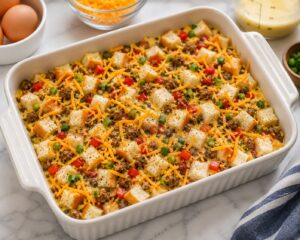 The unbaked casserole assembled and ready for the refrigerator. Notice the even distribution of bread, meat, and cheese.
Instructions: The Morning Of
- Remove the casserole from the refrigerator 30 minutes before baking. This takes the chill off and helps the center cook evenly.
- Preheat your oven to 350°F (175°C).
- Uncover the dish. Sprinkle the remaining ½ cup cheese over the top.
- Bake uncovered for 45–55 minutes. The center should be set with no jiggle. A knife inserted in the middle should come out clean, or an instant-read thermometer should read at least 160°F at the thickest point.
- Let it rest for 10 minutes before slicing. This allows the custard to finish setting so slices hold their shape.
Pro Tips That Make a Real Difference
These adjustments come from trial, error, and a few breakfast disasters. Apply them every time:
- Let it rest on the counter before baking. A cold dish going straight into the oven creates uneven cooking—the edges may brown before the center sets.
- Check at 45 minutes. Oven temperatures vary by up to 25°F from their displayed setting. Judge by texture and temperature, not the clock.
- Cook watery vegetables first. Raw spinach, zucchini, or tomatoes release liquid during baking. Sauté them briefly to evaporate excess moisture before adding them to the dish.
- Use a deep-dish pan if your ingredients are generous. Overflow in the oven is a mess you can avoid with an extra inch of pan height.
- Crisp the top without burning it. If the top needs more color but the center is done, switch to broil for the final 2–3 minutes and watch closely.
Common Mistakes That Ruin a Breakfast Casserole
Most failures trace back to one of these five avoidable issues:
- Using fresh, soft bread. Fresh bread turns gummy when soaked. Stale or lightly toasted bread holds its structure. If your bread is fresh, cube and dry it in a 300°F oven for 10 minutes.
- Skipping the overnight rest. A casserole baked immediately often bakes unevenly, with dry edges and a loose, runny center. The minimum rest is 8 hours.
- Overcrowding the dish. Too many add-ins throws off the egg-to-filling ratio. The custard cannot fully bind an overloaded pan. Stick to roughly 6 cups of base and 1 pound of protein.
- Not greasing the dish thoroughly. Eggs bond to ceramic and glass. A thorough coating of butter or spray prevents torn servings and stuck-on cleanup.
- Pulling it out too early. A glossy or wet-looking center means the custard has not fully set. The internal temperature must reach 160°F for food safety and proper texture. The USDA recommends cooking egg dishes to 160°F, as outlined on their safe handling guidelines page.
Equipment That Makes This Easier
You do not need a specialty kitchen, but a few specific tools help:
- A 9×13-inch glass or ceramic baking dish—glass lets you see browning on the bottom edges, which helps gauge doneness.
- A large mixing bowl—big enough to whisk eight eggs without splashing over the sides.
- Plastic wrap or a tight-fitting lid—essential for the overnight refrigeration step. Uncovered casseroles develop a dry, rubbery surface layer.
- An instant-read thermometer—especially helpful if you are new to baking egg dishes. It takes the guesswork out of doneness.
Easy Variations to Keep It Interesting
This base recipe accepts endless customizations. Try these proven combinations:
- Tex-Mex style: Swap cheddar for a Mexican blend. Add one 4-ounce can diced green chilies. Serve with salsa, sliced avocado, and a dollop of sour cream.
- Veggie-forward: Replace meat with sautéed mushrooms, wilted spinach, and roasted red peppers. Add a handful of crumbled feta or goat cheese alongside the cheddar.
- Hash brown base: Substitute the bread entirely with frozen shredded hash browns for a denser, potato-forward texture. The method stays identical—no thawing needed.
- Sweet twist: Use cinnamon-raisin bread, swap the savory seasonings for 1 teaspoon vanilla and 2 tablespoons maple syrup, and skip the meat and cheese. Serve with a drizzle of warm maple syrup.
 A finished slice with visible layers of egg custard, melted cheese, and crumbled sausage.
Storage, Freezing, and Reheating
A well-made casserole holds up impressively after the initial bake. Store and reheat correctly to maintain texture:
- Refrigerator: Store leftovers in an airtight container for up to 4 days.
- Freezer (baked): Cool completely, then wrap individual slices tightly in plastic wrap followed by foil. Freeze for up to 2 months.
- Freezer (unbaked): Assemble the casserole in a freezer-safe dish, cover tightly, and freeze for up to 2 months. Thaw overnight in the refrigerator before baking as directed.
- Reheating: Microwave individual portions for 60–90 seconds. For better texture, reheat in a 350°F oven for 15 minutes. This restores some crispness to the edges.
A Note on Nutrition and Flexibility
This dish is naturally protein-rich, which helps keep people full longer than a bowl of cereal or toast. For lighter versions without sacrificing the make-ahead convenience:
- Replace half the eggs with egg whites
- Use turkey sausage or turkey breakfast links
- Reduce the cheese to 1 cup total
- Add extra vegetables like sautéed mushrooms or bell peppers for volume
None of these swaps affect the overnight method—the technique works the same way regardless of ingredient choices. For more no-fuss morning ideas, the full collection of breakfast recipes on this site includes a range of options from overnight oats to quick skillets.
Frequently Asked Questions
Can I prep a breakfast casserole the night before and bake it in the morning?
Yes. Assemble the casserole completely, cover tightly, and refrigerate for 8–24 hours. Bake it directly from the fridge the next morning. Add 5–10 extra minutes to the bake time if the dish is very cold. For a lighter morning option, consider pairing this casserole with our overnight oat recipe for an even faster start.
How long can an unbaked breakfast casserole sit in the fridge?
An unbaked casserole can safely sit in the refrigerator for up to 24 hours before baking. Beyond that, the bread or potatoes may become overly soggy, and the eggs begin to lose freshness.
Do I need to cook the sausage or bacon before adding it to the casserole?
Yes. Always fully cook meat before adding it. Raw meat releases grease and moisture overnight, which makes the finished casserole watery and unevenly cooked. Brown the meat first, drain the fat, and let it cool before layering.
Can I use frozen hash browns instead of bread in a breakfast casserole?
Yes. Frozen shredded hash browns work well and do not require thawing. They create a denser, more potato-forward texture compared to bread. The same overnight soak method applies.
Why is my breakfast casserole watery in the middle?
A watery center usually means undercooking, excess raw vegetables, or uncooked meat releasing liquid. Bake until a knife inserted in the center comes out clean and the casserole no longer jiggles. An instant-read thermometer should read 160°F at the thickest point.
Can I freeze a breakfast casserole after baking it?
Yes. Baked and cooled casserole freezes well for up to 2 months. Wrap portions tightly in plastic wrap and foil, then reheat in a 350°F oven until warmed through.
What is the best cheese for a breakfast casserole?
Sharp cheddar, Monterey Jack, Gouda, and Mexican blend cheeses all melt smoothly and add rich flavor. Freshly shredded cheese melts more evenly than pre-shredded bags. For a milder result, use Colby or mozzarella instead.
How many people does a standard breakfast casserole feed?
A 9×13-inch breakfast casserole typically serves 8 to 10 people. It is ideal for family breakfasts, holiday brunches, or meal-prepping breakfast slices for the week. If you are cooking for a smaller household, halving the recipe works well in an 8×8-inch dish.
Conclusion
This easy breakfast casserole recipe is built on a simple method that delivers consistent results: soak the base overnight, bake until set, and rest before serving. The recipe itself is forgiving, the variations are nearly endless, and the morning payoff far outweighs the twenty minutes of evening prep.
Make it once, and you will see why overnight casseroles earn their place in the weekly rotation. Start tonight—grease the dish, cube the bread, and set your coffee timer. Tomorrow morning's breakfast will already be handled.