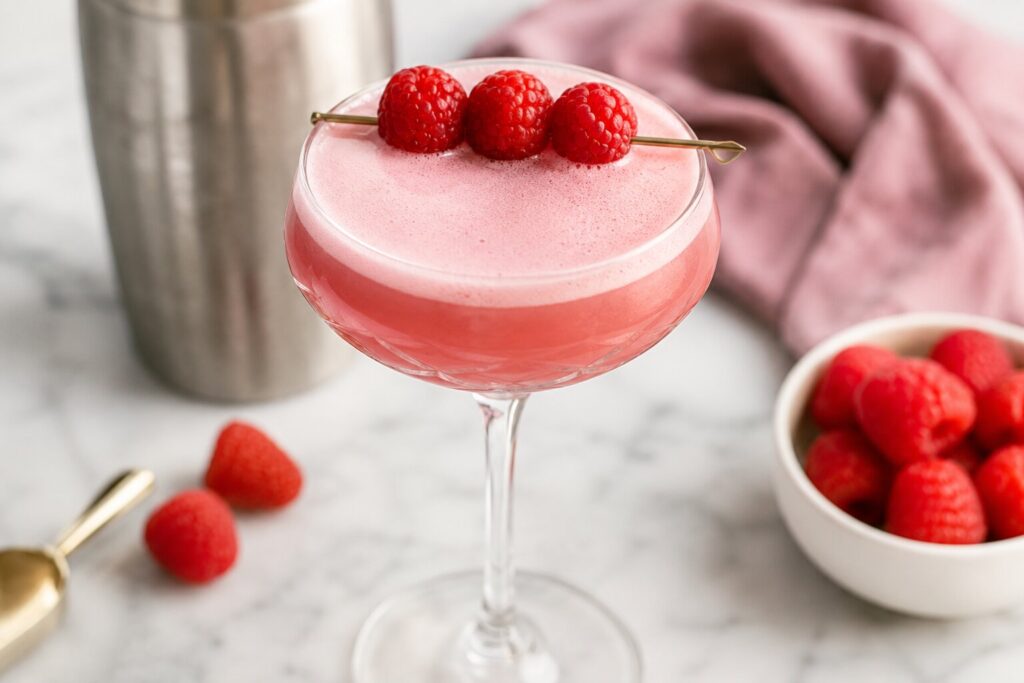
Few cocktails strike the perfect balance between effortless elegance and bold flavor like the French martini. With just three ingredients and a 15-second shake, you can pour a drink that looks like it came straight from a high-end cocktail lounge — a vibrant pink coupe topped with a frothy cap, garnished with fresh raspberries. I’ve shaken this drink hundreds of times, both behind the bar and at home, and the version below is the one I keep coming back to. It’s precise enough for a home bartender yet forgiving enough for a first attempt.
What Is a French Martini?
Despite the name, the French martini is neither French nor a true martini. It’s a modern vodka cocktail built on three ingredients:
- Vodka — the clean, neutral base
- Chambord — a black raspberry liqueur made in France’s Loire Valley
- Pineapple juice — the ingredient that gives the drink its signature silky foam
The “French” label comes entirely from Chambord. That single bottle of raspberry liqueur is what separates this cocktail from every other vodka-fruit combination on a menu. It belongs to the same family as the espresso martini and pornstar martini — drinks that borrow the martini glass but not the gin-and-vermouth formula. You can also read our guide on fig jam recipe.
Key traits:
- Shaken, not stirred — the technique is closer to a daiquiri than a classic martini
- Naturally gluten-free and dairy-free
- Served in a chilled coupe or martini glass
The Origin Story
The French martini was created in 1986 at the Odeon restaurant in New York City by owner Keith McNally. It arrived during the 1980s boom of flavored vodka cocktails, when bartenders were moving away from gin and vermouth toward sweeter, fruit-forward drinks. Chambord had just launched in the U.S. market, and the combination of vodka, that liqueur, and pineapple juice quickly became a signature of downtown Manhattan nightlife.
The drink’s name stuck because Chambord is the only French ingredient — and it’s the one that defines the entire flavor profile. Without it, you’re just mixing vodka and pineapple juice. With it, you have a drink that earned its own name worldwide. You can also read our guide on easy air fryer recipes.
Why This Recipe Works
I’ve tested this cocktail with different juice ratios, shake times, and liqueur brands. These four details consistently make the difference between a show-stopping French martini and a flat, pink disappointment:
- Fresh pineapple juice creates a noticeably thicker foam than juice from concentrate.
- A hard, 15-second shake is non-negotiable — it builds the frothy cap that makes this drink visually striking.
- Chilling the glass beforehand keeps the drink cold longer without extra dilution.
- Accurate measuring with a jigger prevents the Chambord from overpowering the balance.
French Martini Ingredients
For one cocktail, you’ll need:
| Ingredient | Amount |
|---|---|
| Vodka | 1.5 oz (45 ml) |
| Chambord (raspberry liqueur) | 0.5 oz (15 ml) |
| Pineapple juice | 1.5 oz (45 ml) |
| Ice | for shaking |
| Fresh raspberries | for garnish (optional) |
Bar Tools
- Cocktail shaker (Boston or cobbler style)
- Hawthorne strainer (plus a fine-mesh strainer for extra polish)
- Chilled coupe or martini glass
- Jigger
Ingredient Deep Dive
Vodka — You don’t need top-shelf vodka. A clean, mid-range bottle works perfectly because the flavor is driven by Chambord and pineapple. Avoid heavily flavored or botanical vodkas; they can clash with the fruit.
Chambord — Made from raspberries, blackberries, Madagascar vanilla, Moroccan citrus peel, and honey. It’s the backbone of the drink and the source of that signature pink hue and vanilla note. Chambord is the original and most balanced choice — substitutes will change the flavor noticeably.
Pineapple juice — Does structural work, not just flavor work. Its natural sugars and proteins aerate when shaken hard against ice, creating the foam cap. Fresh-pressed or high-quality bottled juice (not from concentrate) produces noticeably better results. If your juice tastes flat, add a small squeeze of fresh lime juice to brighten it.
How to Make a French Martini (Step-by-Step)
Chill your glass. Place your coupe or martini glass in the freezer for 10–15 minutes. A cold glass keeps the drink at the right temperature longer and looks more polished.
Add ingredients to the shaker. Fill your cocktail shaker about two-thirds full with ice. Pour in 1.5 oz vodka, 0.5 oz Chambord, and 1.5 oz pineapple juice.
Shake hard. Seal the shaker and shake vigorously for a full 15 seconds. You should feel the shaker get painfully cold in your hands, and you’ll hear the ice loosen as it breaks down slightly.
Double-strain into the glass. Remove your chilled glass from the freezer. Using a Hawthorne strainer (and a fine-mesh strainer if you have one), strain the cocktail into the glass to remove small ice shards.
Garnish and serve immediately. Drop 2–3 fresh raspberries into the glass or balance them on the rim. Serve while the foam is at its peak.
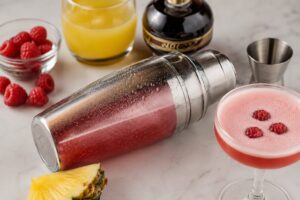 The shake is the most important step — aim for 15 seconds of vigorous agitation to build the foam.
Why the Shake Matters More Than You Think
Most vodka cocktails can get away with a gentle shake or even a stir, but the French martini depends on agitation. Pineapple juice contains natural proteins that aerate when shaken hard against ice. Vigorous shaking creates tiny air bubbles that rise to the surface as foam. A full 15-second shake is the sweet spot — long enough to build foam and chill the drink, but not so long that it over-dilutes with melted ice. If you’re used to shaking cocktails for only 8–10 seconds, push further than feels necessary.
Common Mistakes to Avoid
- Using canned pineapple juice with added sugar — it throws off the balance and tastes syrupy. Look for 100% pineapple juice.
- Skipping the hard shake — a gentle stir or soft shake won’t build the foam.
- Overpouring the Chambord — it’s potent and sweet. More than 0.5 oz turns the drink cloying.
- Serving it warm — because there’s no ice in the finished glass, the drink warms up fast if the glass and ingredients aren’t chilled ahead.
- Letting the drink sit — the foam and chill fade within a minute or two. Shake right before serving.
French Martini Variations Worth Trying
Once you’ve mastered the classic, these twists keep things interesting:
- French Kiss Martini — Swap half the pineapple juice for cranberry juice. Creates a tarter, more vibrant pink drink that’s popular around the holidays.
- Sparkling French Martini — Top the finished cocktail with a splash of Champagne or Prosecco for a lighter, bubblier version.
- French Martini Mocktail — Combine non-alcoholic pineapple juice, a splash of raspberry syrup, and a few drops of vanilla extract. Shake with ice and strain the same way.
- Frozen French Martini — Blend the ingredients with ice instead of shaking for a slushy summer take.
- French Martini with Gin — Swap vodka for gin to add a subtle botanical layer beneath the raspberry and pineapple. This version leans slightly drier.
If you enjoy experimenting with shaken cocktails, you might also like our pisco sour recipe — another classic that relies on a hard shake for its signature texture.
What Does a French Martini Taste Like?
- First sip: Bright and fruity, led by raspberry and pineapple
- Finish: Smooth and slightly sweet, with a vanilla-like note from the Chambord
- Sweetness level: Sweeter than a classic martini, but not as sugary as a full dessert cocktail
- Alcohol presence: The vodka stays mostly in the background, giving structure without overwhelming the fruit
It’s often described as tasting like raspberry sorbet in liquid form — which is exactly why it’s such a popular choice for people who don’t usually enjoy strong, boozy cocktails.
Best Occasions to Serve a French Martini
- Bridal showers and bachelorette parties — the pink color photographs beautifully
- Date nights — an easy way to make a home bar feel like a cocktail lounge
- Holiday gatherings — pairs well with festive appetizers
- Girls’ night in — simple enough to batch for a group
Food Pairings for a French Martini
Because this cocktail is fruity and slightly sweet, it pairs best with foods that offer a savory or salty contrast:
- Soft cheeses like brie or goat cheese balance the sweetness
- Smoked salmon canapés complement the raspberry notes
- Salty snacks such as spiced nuts or prosciutto-wrapped bites cut through the sugar
- Light desserts like shortbread or vanilla macarons echo the vanilla notes from the Chambord
For a complete party spread, browse our easy Greek recipes at home for mezze-style appetizers that work beautifully alongside this drink. If you’re planning a dessert course, our no-bake desserts are quick to prepare and won’t compete with the cocktail’s sweetness.
Avoid pairing with anything overly acidic or citrus-heavy — it can compete with the pineapple juice already in the glass.
Make-Ahead and Storage Tips
While a French martini is best made fresh, you can prep parts of it in advance:
- Pre-batch the liquid ingredients (vodka, Chambord, pineapple juice) in a sealed pitcher and refrigerate for up to 24 hours. Shake individual servings with ice right before serving.
- Chill your glasses ahead of time and keep them in the freezer until guests arrive.
- Avoid freezing the finished cocktail — the texture and foam won’t survive freezing and thawing.
- Store leftover Chambord at room temperature, away from direct light, for up to a year after opening.
How to Batch a French Martini for a Party
If you’re serving a crowd, scale using this ratio:
| Servings | Vodka | Chambord | Pineapple Juice |
|---|---|---|---|
| 1 | 1.5 oz | 0.5 oz | 1.5 oz |
| 4 | 6 oz | 2 oz | 6 oz |
| 8 | 12 oz | 4 oz | 12 oz |
Batching tip: Mix the vodka, Chambord, and pineapple juice together ahead of time in a pitcher, then shake individual portions with ice right before serving. This keeps the foam fresh for every guest instead of one big batch losing its texture.
 Left to right: classic French martini, sparkling version, and French Kiss with cranberry juice.
If you’re hosting a larger party, our slow cooker pot roast and baked chicken thigh recipes are hands-off mains that pair well with a batch of French martinis as a pre-dinner cocktail.
Nutrition and Calorie Information
A standard French martini contains approximately:
- Calories: 180–200 per serving
- Sugar: Moderate, primarily from the Chambord and pineapple juice
- Alcohol content: Roughly 15–18% ABV in the finished drink
This makes it lighter than many cream-based cocktails, though still sweeter than a simple vodka soda.
Expert Bartender Tips for a Better French Martini
- Taste your pineapple juice first — brands vary significantly in sweetness and acidity. If yours tastes flat, add a small squeeze of fresh lime juice.
- Use fresh ice for every shake — partially melted ice won’t chill the drink as effectively or produce as much foam.
- Don’t over-measure the Chambord — going beyond 0.5 oz quickly tips the balance toward overly sweet.
- Rinse your shaker between rounds — residual sugar from a previous shake can affect the next batch’s foam.
- Serve immediately — this is not a cocktail to make ahead and let sit. The visual appeal and texture are part of the experience.
For more cocktail inspiration, check out our skinny margarita recipe — a lighter take on another classic shaken drink.
Frequently Asked Questions
What is in a French martini?
A French martini contains vodka, Chambord (raspberry liqueur), and pineapple juice, shaken with ice and strained into a chilled glass. It’s typically garnished with fresh raspberries. The standard ratio is 1.5 oz vodka, 0.5 oz Chambord, and 1.5 oz pineapple juice.
Is a French martini actually French?
No, the cocktail was created in 1986 in New York City at the restaurant Odeon. It’s called “French” because its key ingredient, Chambord, is a raspberry liqueur produced in France’s Loire Valley. Chambord’s official website describes the liqueur’s French heritage and production methods in detail.
What does a French martini taste like?
It tastes fruity and slightly sweet, dominated by raspberry and pineapple flavors with a smooth vanilla note from the Chambord. The vodka adds structure without a strong alcohol bite, making it approachable for people who don’t usually enjoy stronger cocktails.
Can I make a French martini without Chambord?
Chambord is the defining ingredient, so substitutes will change the flavor. In a pinch, another raspberry liqueur or raspberry syrup can work, though the result won’t be as complex or balanced. Chambord also contributes vanilla and citrus notes that are hard to replicate.
What glass is used for a French martini?
A chilled coupe or martini glass is traditional. The wide, shallow bowl showcases the drink’s pink color and frothy top, and chilling it beforehand keeps the cocktail colder for longer once poured.
How many calories are in a French martini?
A standard French martini has approximately 180–200 calories per serving, depending on the exact pour and juice used. This is lighter than most cream-based or dessert-style cocktails.
Why is my French martini not frothy?
The foam comes from shaking hard enough and long enough — aim for a full 15 seconds of vigorous shaking. Using fresh pineapple juice instead of juice from concentrate also improves the foam quality, since fresh juice has more natural proteins that aerate well.
What’s a good non-alcoholic substitute for a French martini?
Combine non-alcoholic pineapple juice with a splash of raspberry syrup and a few drops of vanilla extract, then shake with ice for a mocktail version that mimics the classic flavor profile. It won’t have the exact depth of real Chambord, but it captures the same fruity, festive character.
Final Thoughts
The French martini proves that a great cocktail doesn’t need a long ingredient list or complicated technique — it needs balance. Vodka provides structure, Chambord provides character, and pineapple juice provides both flavor and that unmistakable frothy texture.
Whether you’re making one for a quiet night in or batching a pitcher for a party, the fundamentals stay the same:
- Measure carefully
- Shake hard
- Serve cold
Master those three things, and you’ll have a drink that rivals what you’d get at any cocktail bar. For more easy recipes that deliver big results, explore our full collection of recipes — from hearty mains to sweet treats, there’s something for every occasion.