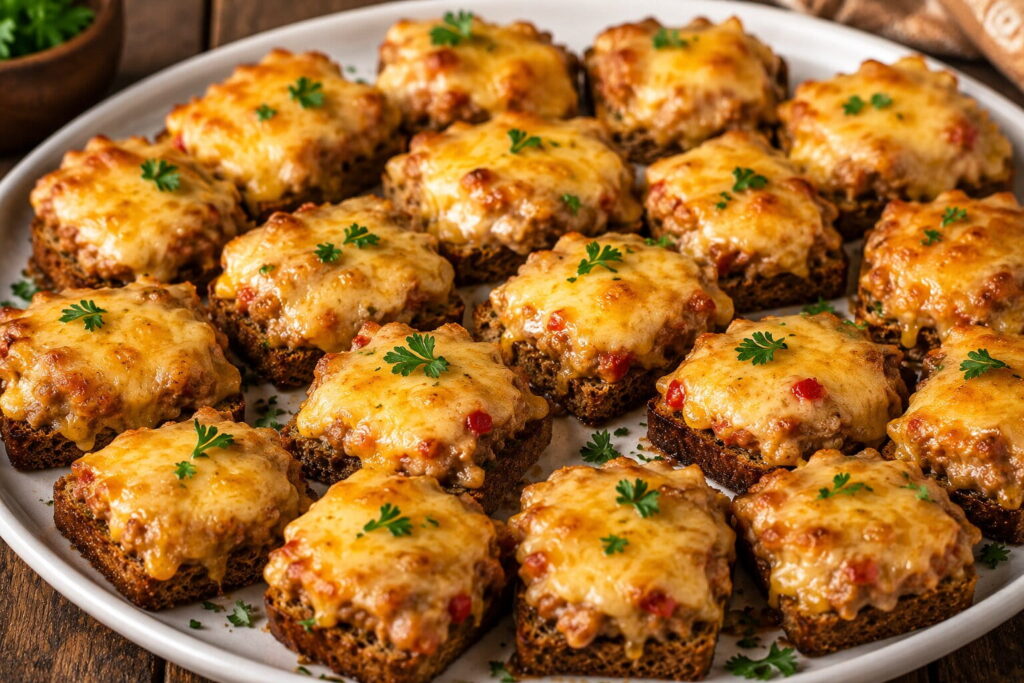
If you've ever stood at a potluck table watching a tray of small rye toasts disappear in under five minutes, you've witnessed the quiet power of Hanky Panky. This isn't a trendy appetizer with a dozen fussy garnishes. It's a Midwest-born classic that has been solving the same hosting problem for over half a century: how to feed a hungry crowd something hot, savory, and satisfying without spending the whole party in the kitchen.
By the end of this guide, you'll know exactly how to make authentic Hanky Panky, why each ingredient matters, how to avoid the common pitfalls that turn a great batch soggy, and what variations work best for different gatherings. For more on this, see our guide on mm cookie recipe.
What Is Hanky Panky?
Hanky Panky is a hot, cheesy meat spread served on small squares of party rye bread. The traditional version combines ground beef, ground sausage, and melted processed cheese—almost always Velveeta—baked until bubbly and the bread turns lightly toasted around the edges.
The name is playful, but the dish is dead serious about delivering flavor with minimal effort. A typical batch requires just five core ingredients and comes together in under 30 minutes, including bake time.
Some families know it by other names:
- Polish Mistakes or Polish Disasters
- Hanky Panks
- Nancy's Canapés (a regional nickname in parts of Ohio)
Whatever you call it, the formula stays remarkably consistent: meat, cheese, rye, heat.
The Midwest Origins of the Hanky Panky Recipe
Hanky Panky is widely considered a Cincinnati, Ohio original, though its exact birthplace isn't pinned to any single newspaper clipping or cookbook credit. It took root sometime in the 1960s, gained real popularity through the 1970s and into the 1980s, and spread through the most reliable distribution network of its era: church potlucks, home-interior parties, and handwritten recipe cards passed from one generation to the next.
The dish's regional roots run deep. Just across the Ohio River in Kentucky, local meat producers have long made a German-style breakfast sausage that home cooks consider a natural fit for the recipe. This detail shows how tightly the appetizer is woven into the food culture of the Ohio Valley.
What's notable is how consistent the recipe has stayed over decades. Families in the region will tell you their grandmother made nearly the same version for forty or fifty years. Some swap in caraway seeds instead of oregano. Others use only sausage instead of a beef-and-sausage blend. But the core formula always stays intact.
That kind of staying power is rare for a recipe with no official author and no cookbook of record. Hanky Panky survived because it was shared, not published.
A Recipe Built for a Different Era of Hosting
In the 1960s and 1970s, home-interior parties, potlucks, and neighborhood get-togethers were a regular fixture of American social life. Hosts needed food that could feed a crowd without demanding hours of attention. Hanky Panky fit that need perfectly: a big batch of filling made in one skillet, portioned onto bread in minutes.
That practical, no-fuss design is exactly why it still makes sense on a modern party table, even though the way we entertain has changed dramatically since then.
Why This Recipe Still Works Today
There's a reason Hanky Panky hasn't faded the way so many retro appetizers have. It solves a combination of problems that most party foods don't:
- It's genuinely fast. Most versions come together in well under 30 minutes, including bake time.
- It's budget-friendly. Ground meat, sausage, and processed cheese are inexpensive staples, making this an easy dish to scale for a large crowd.
- It travels and holds well. The mixture stays warm in a slow cooker for hours, making it ideal for potlucks and long game-day gatherings.
- It freezes beautifully. You can prep, assemble, and freeze a full batch weeks ahead of a party.
In practice, that combination of speed, cost, and reliability is rare. Most appetizers ask you to trade one of those for another. Hanky Panky doesn't.
There's also a nostalgia factor that shouldn't be underestimated. Serving it at a modern gathering often sparks a specific memory in older guests. Someone almost always remembers a grandmother, aunt, or mother-in-law making these for decades. Few appetizers manage to be both a practical crowd-feeder and an emotional trigger for shared family history.
Ingredients You'll Need
The classic version relies on a short, no-nonsense ingredient list. Every item serves a specific purpose:
| Ingredient | Amount | Purpose |
|---|---|---|
| Ground beef | 1 lb (80/20 fat ratio) | Rich savory base; higher fat gives more flavor |
| Ground sausage | 1 lb (hot Italian or breakfast) | Adds spice, moisture, and depth |
| Velveeta cheese | 1 lb, cubed | Creates silky, cling-to-the-bread texture |
| Small onion | 1, finely diced | Savory backbone (optional but recommended) |
| Worcestershire sauce | 1 tsp | Umami boost |
| Garlic powder | ½ tsp | Aromatic depth |
| Dried oregano | ½ tsp | Herbal note, traditional in Midwest versions |
| Salt and pepper | To taste | Adjust carefully—cheese and sausage are already salty |
| Cocktail rye bread | 1–2 loaves | Small dense slices that hold up under the warm topping |
A Note on the Cheese
Velveeta is the traditional choice because it melts into a silky, stable texture that clings to the bread without separating. Sharp cheddar can't fully replicate that texture on its own. If you do swap in cheddar, add a splash of milk while melting to prevent a grainy, separated finish.
The processed cheese's ability to maintain a smooth emulsion even when reheated is one of the reasons this recipe survives so well in a slow cooker or freezer.
How to Make Hanky Panky: Step-by-Step Instructions
This method produces the classic baked version—the one most people picture when they hear the name.
Step 1: Brown the Meat
In a large skillet over medium-high heat, cook the ground beef and sausage together, breaking it into small crumbles. Cook until no pink remains, about 7 to 9 minutes.
Step 2: Drain Thoroughly
Tilt the meat into a colander or blot with paper towels. This step matters more than people expect. Leftover grease is the number one reason Hanky Panky turns soggy on the bread within minutes of coming out of the oven.
Step 3: Add Aromatics and Seasoning
Reduce the heat to low. Return the drained meat to the skillet and stir in the onion (if using), garlic powder, oregano, salt, pepper, and Worcestershire sauce. Cook for 2 to 3 minutes until fragrant.
Step 4: Melt in the Cheese
Add the cubed Velveeta directly to the skillet. Stir frequently over low heat until the cheese is fully melted and the mixture looks smooth and cohesive, roughly 5 minutes.
 The mixture should be thick, uniform, and glossy when fully melted.
Step 5: Preheat the Oven
Set it to 350°F while you prep the bread.
Step 6: Assemble
Arrange the cocktail rye slices in a single layer on a baking sheet. Spoon a generous dollop of the meat-and-cheese mixture onto each slice, spreading it to the edges so the bread doesn't burn.
Step 7: Bake
Bake for 10 to 12 minutes, until the bread is lightly toasted and the topping is bubbling at the edges.
Step 8: Broil for a Finish (Optional but Recommended)
For a golden, slightly crisped top, switch the oven to broil for the final 60 to 90 seconds. Watch closely; this step moves fast.
Step 9: Serve Immediately
These are best hot, while the cheese is still pulling and the bread retains a slight crunch at the base.
Slow Cooker Method for Large Gatherings
If you're serving a crowd over several hours, skip the individual assembly:
- Cook the meat and melt the cheese as described above.
- Transfer the finished mixture to a slow cooker set on low.
- Let guests spoon it onto toasted rye or crackers themselves.
This approach is especially useful for tailgates or open-house parties where guests arrive at different times.
Expert Tips for the Best Hanky Panky
After making this appetizer for more parties than I can count, a few small details consistently separate an average batch from a great one:
- Cube the cheese before adding it. Small cubes melt faster and more evenly than a single block, which means less time stirring over heat and less risk of scorching.
- Don't skip the drain step. Excess grease is the single biggest cause of soggy, falling-apart bread.
- Spread the mixture all the way to the edges. Any exposed rye will burn before the topping finishes bubbling.
- Use a light hand with the topping. A thinner, even layer bakes more consistently and holds together better when picked up.
- Broil at the very end. Those extra 60 to 90 seconds under the broiler create a bubbly, slightly browned top that looks far more polished than the effort required.
Popular Variations on the Classic Recipe
Part of why Hanky Panky has survived so many decades is how easily it adapts. Here are the most reliable variations, tested across different kitchens:
- Spice it up: Swap in hot Italian sausage or stir in a pinch of cayenne for a bolder finish.
- Add texture: Fold in finely chopped green olives or sautéed mushrooms. Some families have used these additions for generations.
- Cheese blends: Mix a few ounces of cream cheese alongside the Velveeta for a smoother, richer finish.
- Bread swaps: Try mini pretzel slider buns, toasted baguette rounds, or even tortilla chips for a nacho-style approach.
- Turn it into a dip: Skip the bread and serve the warm mixture in a slow cooker with sturdy crackers or tortilla chips.
- Make it a sandwich filling: Leftover mixture reheats well tucked into a soft roll for a quick weeknight meal.
Common Mistakes to Avoid
Even a simple recipe like this one has a few pitfalls that trip up first-time cooks. A common mistake is skipping the grease drain—leftover fat pools under the topping, seeps into the bread, and turns a crisp bite into a soggy one within minutes.
Other frequent errors include:
- Overloading the bread. A thick mound of topping prevents the center from heating through evenly and makes each piece harder to eat in one bite.
- Using a whole block of cheese instead of cubes. A single block takes much longer to melt evenly, increasing the risk of scorching the bottom of the pan.
- Baking at too high a temperature. A hotter oven browns the bread before the topping bubbles properly. Stick to 350°F for the most even results.
- Forgetting to taste before assembling. Velveeta and sausage both bring their own saltiness. Taste the meat mixture before spreading it on the bread, and adjust salt only if needed.
Make-Ahead and Freezer Instructions
One of the most practical features of this recipe is how well it holds up to advance prep, which makes it a genuine stress-reliever for anyone hosting a busy holiday or game-day event. For other dishes that reward similar overnight preparation, you might find the approach used in this easy breakfast casserole equally useful.
To Make Ahead
- Cook the meat and cheese mixture up to 2 days in advance and store it in an airtight container in the refrigerator.
- When ready to serve, reheat gently on the stovetop or in the microwave, then spread and bake as directed.
To Freeze Before Baking
- Assemble the topped rye slices on a parchment-lined baking sheet.
- Freeze uncovered for at least 2 hours, until solid.
- Transfer the frozen pieces to a freezer bag, pressing out as much air as possible to prevent freezer burn.
- Store in the freezer for up to 3 months.
- Bake directly from frozen at 350°F for about 20 minutes, or broil from frozen for 2 to 3 minutes, watching closely.
This flexibility is a major reason Hanky Panky remains a favorite for hosts juggling multiple dishes at once.
Serving Suggestions
Hanky Panky earns its place as a centerpiece appetizer, but it also plays well with others. For a full spread that covers multiple tastes, pair it with some of the other reliable crowd-pleasers found in our broader collection of party ideas.
 A balanced party table pairs rich appetizers with pickled and fresh sides.
Complement the richness with:
- A crisp, acidic side like a simple pickle tray or vinegar-based slaw to cut through the fat.
- A classic cocktail such as an Old Fashioned or Manhattan, which stands up well to the savory, salty flavor.
- Other retro party staples including sausage balls, mini smokies, or deviled eggs for a full nostalgic spread.
Scaling the Recipe for a Crowd
A single batch of 1 pound each of beef, sausage, and cheese comfortably tops one to two loaves of party rye, yielding roughly 24 to 30 pieces.
For a larger gathering:
- Double or triple the meat and cheese using the same ratio. Brown the meat in batches if your skillet isn't large enough.
- Use a slow cooker for the finished mixture so it stays warm without tying up oven space.
- Assemble in waves rather than all at once. Baking smaller trays throughout the party keeps the appetizer arriving hot instead of sitting out and cooling.
This approach is especially useful for large events like graduation parties, tailgates, or holiday open houses.
Storage and Reheating
Leftover baked Hanky Panky keeps well in an airtight container in the refrigerator for up to 3 days.
For the best texture when reheating:
- Oven method: Place pieces on a baking sheet and warm at 350°F for 8 to 10 minutes.
- Broiler method: For a quick refresh, place under the broiler for about 2 minutes, watching carefully so the bread doesn't burn.
- Toaster oven: Ideal for small portions; warm at 350°F for 5 to 8 minutes.
Avoid microwaving if possible. It tends to make the rye bread soft and chewy instead of crisp.
Frequently Asked Questions
What is Hanky Panky made of?
Hanky Panky is made from a mixture of browned ground beef and sausage combined with melted Velveeta cheese, then spread on cocktail rye bread and baked until bubbly and lightly toasted.
Why is it called Hanky Panky?
The exact reason isn't officially documented, but it's believed to reflect the dish's playful, indulgent character. In some Midwest families, it's also known as Polish Mistakes or Polish Disasters.
Where did the Hanky Panky recipe originate?
The recipe is widely traced back to Cincinnati, Ohio, where it became especially popular at potlucks and parties during the 1960s and 1970s before spreading to other regions.
Can I make Hanky Panky ahead of time?
Yes, and it's actually one of the best make-ahead appetizers for busy hosts. The meat and cheese mixture can be prepared up to 2 days in advance and refrigerated, or the fully assembled appetizers can be frozen for up to 3 months before baking.
What can I use instead of Velveeta cheese?
Cheddar cheese can be substituted, though it won't melt as smoothly. Adding a splash of milk while melting helps prevent a grainy or separated texture. For a completely different approach, some recipes use cream cheese blended with a sharper cheese for a richer finish.
Can I freeze Hanky Panky?
Yes. Assemble the appetizers on a baking sheet, freeze until solid, then transfer to a freezer bag. Bake directly from frozen at 350°F for about 20 minutes.
What bread is traditionally used for Hanky Panky?
Cocktail rye bread, also called party rye, is the traditional base. It's a small, dense slice that holds up well under a warm, heavy topping. It's typically found near the deli counter or in the specialty bread section of most grocery stores.
Is Hanky Panky the same as Polish Mistakes?
In many Midwest households, yes. Polish Mistakes and Polish Disasters are regional nicknames for the same ground beef, sausage, and cheese appetizer served on rye bread.
The United States Department of Agriculture provides detailed guidance on safe minimum cooking temperatures for ground meat, which is a useful reference when preparing this or any meat-based appetizer.
Conclusion
Hanky Panky has earned its place on party tables for more than fifty years because it solves a simple problem reliably: it feeds a crowd, tastes indulgent, and demands almost nothing from the host beyond a skillet and an oven. The recipe's long survival isn't about trends or clever marketing—it's about something that works.
Whether you're making it for a Super Bowl spread, a holiday open house, or a casual potluck, the classic formula delivers. The meat and cheese mixture can be prepped days ahead or frozen for months. The ingredients are inexpensive and easy to find. And the final result—a tray of hot, bubbly, savory bites on crisp rye—will likely vanish faster than anything else on the table.
Your next step is simple: pick up a pound each of ground beef, sausage, and Velveeta, grab a loaf of cocktail rye, and make a batch before your next gathering. You'll understand why this appetizer has lasted so long.