There is something almost magical about walking through your front door after a long day and being greeted by the aroma of a slow-cooked Sunday dinner. That is exactly what a great slow cooker pot roast delivers—and it does so with remarkably little effort on your part.
But here is the truth most recipes gloss over: not all slow cooker pot roasts are created equal. Some come out dry, stringy, and bland. Others turn out tender on the outside but inexplicably tough in the center. After extensive testing and countless adjustments, the formula for a melt-in-your-mouth result every single time comes down to a handful of non-negotiable steps that most home cooks overlook.
This guide walks you through every decision—from selecting the right cut to building deep flavor layers—so your pot roast becomes the dish everyone requests.
Why the Slow Cooker Is Perfect for Pot Roast
The science is straightforward. Tough, collagen-rich cuts of beef need low, sustained heat to break down connective tissue into gelatin. That gelatin creates the silky, pull-apart texture that defines a great pot roast.
A slow cooker holds a steady 190°F–210°F on the LOW setting—the ideal range for collagen conversion without drying the meat out. Compared to an oven braise, the slow cooker uses less energy, doesn't heat your kitchen, and requires no monitoring.
Key benefits of slow cooker pot roast:
- Hands-off cooking—season, sear, set it, and walk away
- Consistent, even heat that prevents overcooking
- Self-basting environment—the sealed lid recirculates steam continuously
- Deep, concentrated flavor that develops over 8–10 unattended hours
- Budget-friendly—the toughest, cheapest cuts produce the best results
- Meal-prep ready—one batch covers multiple meals across the week
For even more effortless dinner ideas, browse our collection of easy weeknight dinners that pair perfectly with slow-cooked techniques.
Choosing the Best Cut of Beef
This is the single most important decision you will make. Do not use a lean cut. Lean beef dries out no matter how good your technique is. The fat and connective tissue inside a well-marbled roast are what transform into silky, fork-tender meat during hours of gentle cooking.
The Best Cuts Ranked
Chuck Roast — Best Overall
- Heavy marbling and thick collagen ribbons that melt into gelatin
- Ideal weight: 3–4 lbs, bone-in or boneless
- Most widely available and most affordable option
- Consistently produces fork-tender results within 8–10 hours on LOW
Bottom Round Roast — Best Budget Pick
- Slightly leaner but still produces good results with proper technique
- Requires a full 10 hours on LOW for adequate tenderness
- Trim any large hard fat caps before cooking to prevent greasiness
Brisket — Best for Deep Flavor
- Choose the point cut (fattier) over the flat cut (leaner)
- Takes up to 12 hours but delivers extraordinary richness
- Best reserved for weekend cooking when you have flexibility
Bone-In Short Ribs — Best for Special Occasions
- Produces a restaurant-level, luxurious pot roast experience
- The bone adds significant depth to the cooking liquid
- More expensive, but the results justify the cost for a celebration dinner
Cuts to Always Avoid
- Sirloin or tenderloin — too lean, will dry out entirely
- Eye of round — minimal marbling, becomes rubbery under long heat
- Tri-tip — better suited for grilling, not braising
Pro Tip: Look for visible white marbling streaked throughout the meat. That fat is flavor and moisture—it bastes the meat from the inside as it renders during cooking. A well-marbled chuck roast costs less per pound than lean cuts and delivers far superior results.
The Complete Ingredient List
Serves 6 | Based on a 3.5–4 lb chuck roast
For Seasoning the Roast
| Ingredient | Amount | Notes |
|---|---|---|
| Chuck roast | 3.5–4 lbs | Bone-in adds more flavor |
| Kosher salt | 1½ tsp | Use kosher, not table salt |
| Black pepper | 1 tsp | Freshly cracked preferred |
| Garlic powder | 1 tsp | Not garlic salt |
| Onion powder | 1 tsp | Adds background sweetness |
| Neutral oil | 2 tbsp | Avocado or canola work best |
For the Braising Liquid
| Ingredient | Amount | Notes |
|---|---|---|
| Low-sodium beef broth | 1 cup | High-quality broth matters |
| Dry red wine | ½ cup | Cabernet, Merlot, or substitute extra broth |
| Worcestershire sauce | 2 tbsp | Adds fermented umami depth |
| Tomato paste | 2 tbsp | Concentrated glutamates boost savoriness |
| Garlic cloves | 4 | Smashed, not minced |
Vegetables and Aromatics
| Ingredient | Amount | Notes |
|---|---|---|
| Yellow onion | 1 large | Roughly chopped |
| Carrots | 3 large | Cut into 2-inch chunks |
| Baby potatoes | 1 lb | Halved or leave whole if small |
| Fresh thyme | 4 sprigs | Dried = 1 tsp, add later |
| Fresh rosemary | 2 sprigs | Dried = ½ tsp |
| Bay leaf | 1 | Remove before serving |
Step-by-Step Instructions for the Best Slow Cooker Pot Roast
Step 1: Season and Sear the Roast
Searing is non-negotiable for deep flavor. The Maillard reaction during browning creates hundreds of flavor compounds that slow cooking alone cannot replicate. Skipping it produces a noticeably blander roast—side-by-side comparisons confirm this every time.
The exact process:
- Remove the roast from the fridge 30 minutes before cooking to take the chill off
- Pat all surfaces completely dry with paper towels—moisture is the enemy of browning
- Combine salt, pepper, garlic powder, and onion powder—rub the entire roast generously
- Heat oil in a cast iron skillet over HIGH heat until it shimmers and almost smokes
- Place the roast in the pan—do not move it for 3–4 minutes per side
- You want a deep, dark mahogany crust—not gray, not light tan
- Sear all sides, including the narrow edges, for full coverage
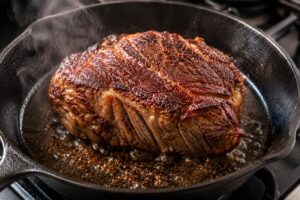 A properly seared crust should be dark brown, nearly black in spots—not pale or gray.
Step 2: Build the Flavor Base
Use the same pan—do not wipe it out. The browned bits stuck to the bottom are pure flavor.
- Sauté the chopped onion in the drippings for 2 minutes until softened
- Add the smashed garlic and cook 30 seconds until fragrant
- Pour in the red wine or broth to deglaze—scrape every browned bit from the bottom with a wooden spoon
- Whisk in tomato paste and Worcestershire sauce until fully combined
- Transfer the entire mixture into the slow cooker
Why these two ingredients are essential:
- Tomato paste — concentrated glutamates that dramatically boost savory depth
- Worcestershire sauce — fermented, anchovy-based umami that amplifies beefy flavor
Together they create a braising base that makes guests ask what your secret is. For more protein-packed meal inspiration, take a look at our high protein meal prep ideas that keep well throughout the week.
Step 3: Layer the Slow Cooker
Order and placement directly affect the outcome. Proper layering ensures even cooking and protects your vegetables.
- Bottom layer — spread carrots and potatoes across the base. They act as a natural rack, elevating the roast above the direct heat
- Middle — place the seared roast on top of the vegetables
- Liquid — pour the braising liquid around (never over) the roast, covering the bottom third to half
- Top — lay thyme sprigs, rosemary, and bay leaf directly on the roast
Step 4: Cook Low and Slow
| Setting | Time | Result |
|---|---|---|
| LOW | 8–10 hours | Melt-in-your-mouth, full collagen breakdown |
| HIGH | 4–5 hours | Cooked through but noticeably less tender |
| LOW overnight | 10–12 hours | Fall-apart, deeply concentrated flavor |
Always choose LOW if you have the time—the difference is significant. HIGH setting tightens muscle fibers before collagen has fully broken down, resulting in drier, slightly tougher meat.
Critical doneness check: Target an internal temperature of 200–205°F for full gelatin conversion. Use a meat thermometer inserted into the thickest part—it is the only reliable way to confirm true doneness. The roast should pull apart effortlessly with two forks when ready.
Never lift the lid during cooking. Each peek loses 15–20 minutes of heat and extends your total cooking time. Trust the process—leave it closed.
Step 5: Rest, Pull, and Make Gravy
- Lift the roast onto a cutting board and rest for 10–15 minutes. This allows juices to redistribute rather than running out when you cut
- Pull apart with two forks or slice against the grain for the most tender bites
- Skim visible fat from the surface of the remaining cooking liquid with a spoon
To make a quick, thick gravy:
- Strain 2 cups of cooking liquid into a small saucepan
- Bring to a gentle simmer over medium heat
- Whisk 2 tbsp cornstarch + 2 tbsp cold water into a smooth slurry
- Slowly whisk the slurry into the simmering liquid
- Stir constantly for 3–5 minutes until thickened to your preferred consistency
- Season with salt and pepper—serve immediately over shredded meat
Common Mistakes to Avoid
| Mistake | Why It Hurts | The Fix |
|---|---|---|
| Not drying the meat | Moisture prevents browning | Pat completely dry before searing |
| Lifting the lid | Each peek loses 15–20 min of heat | Trust the process—leave it closed |
| Cooking on HIGH | Fibers tighten before collagen dissolves | Choose LOW whenever possible |
| Too much liquid | Dilutes flavor and weakens gravy | Keep liquid to bottom third of the roast |
| Skipping the sear | Flat, one-dimensional flavor | Always sear first |
| Using a lean cut | No technique rescues sirloin | Choose chuck roast every time |
| Not resting the meat | Juices run out when you cut immediately | Rest 10–15 minutes without exception |
One mistake home cooks make regularly is adding all vegetables at once. Root vegetables can go in from the start—they actually benefit from the long cook time. But delicate vegetables like peas, zucchini, or spinach should only be added in the last 30–60 minutes to prevent mushy results.
If your pot roast is still tough after 8 hours, it typically means one of two things: the wrong cut was used (lean cuts will not tenderize regardless of time), or the roast simply needs more time. Add 1–2 more hours on LOW and test again. Collagen breakdown requires sustained, consistent heat—it cannot be rushed.
Storage, Reheating, and Leftovers
Slow cooker pot roast tastes better the next day. The flavors meld and intensify as the meat rests in its braising liquid overnight. Many experienced cooks intentionally make a larger batch for this reason.
Storage Guidelines
- Refrigerator: Store shredded beef submerged in cooking liquid in an airtight container for up to 4 days
- Freezer: Portion with liquid in freezer-safe containers for up to 3 months—label with the date
- Reheating: Warm low and slow on the stovetop with a splash of broth. The microwave dries the meat unevenly and toughens the texture
Five Creative Ways to Use Leftovers
- Pot roast tacos — shredded beef with salsa, pickled onions, and fresh cilantro on warm corn tortillas
- Beef and potato hash — pan-fried with diced onions, topped with a fried egg for breakfast or brunch
- Open-faced sandwiches — piled on toasted sourdough with melted provolone and a generous ladle of gravy
- Beef pot pie — mix shredded beef with peas and carrots, top with a buttery pastry crust, and bake until golden
- Beef ramen — shred the beef into a rich broth with noodles, soft-boiled egg, and sliced green onions
For other comforting one-pot meals that reheat well, try our cheeseburger soup recipe or this tater tot casserole recipe for busy weeknights.
Best Side Dishes to Serve With Pot Roast
A great slow cooker pot roast deserves sides that complement its richness without competing with it.
- Creamy mashed potatoes — the ultimate vehicle for braising liquid gravy. Use Yukon Gold potatoes for the creamiest texture without excessive butter
- Buttered egg noodles — a classic pairing that soaks up every drop of sauce. Toss with fresh parsley before serving
- Crusty sourdough bread — for mopping the bowl completely clean. A crusty loaf with good chew works best
- Roasted green beans or broccolini — brightness and slight char balance the richness of the beef
- Simple arugula salad with lemon vinaigrette — the acidity cuts through the fat beautifully and cleanses the palate between bites
 A complete pot roast dinner with classic accompaniments—the gravy should coat everything generously.
For lighter accompaniments, browse our collection of easy Greek recipes at home for fresh side dishes that brighten any hearty meal.
Frequently Asked Questions
Q1: What is the best cut of meat for slow cooker pot roast?
Chuck roast is the best choice. It has the ideal ratio of fat, marbling, and connective tissue that fully breaks down into rich gelatin during long, slow cooking. A 3–4 lb chuck roast consistently produces fork-tender, deeply flavorful results and is the most widely available option at grocery stores.
Q2: How long should I cook pot roast in the slow cooker?
Cook on LOW for 8–10 hours or HIGH for 4–5 hours. LOW is always preferred. Extended gentle heat fully converts collagen into gelatin, producing the melt-in-your-mouth texture that defines a great pot roast. High heat cooks the roast but produces noticeably less tender results.
Q3: Do I have to sear the meat before slow cooking?
Searing is not required for food safety but is strongly recommended for flavor. The Maillard reaction creates hundreds of complex flavor compounds that slow cooking alone cannot replicate. Skipping this step produces a pot roast that is significantly blander—the difference is immediately noticeable side by side.
Q4: How much liquid should I add to the slow cooker?
Add enough to cover the bottom third to halfway up the sides of the roast—approximately 1 to 1.5 cups total. The beef releases significant additional moisture during cooking. Too much liquid dilutes the braising liquid flavor and weakens the final gravy.
Q5: Can I put frozen beef directly in the slow cooker?
No. Never cook frozen beef in a slow cooker. The meat spends too long in the bacterial danger zone (40°F–140°F) as it slowly thaws, creating a serious food safety risk. Always fully thaw your roast in the refrigerator for 24 hours before placing it in the slow cooker.
Q6: Why is my pot roast still tough after 8 hours?
Toughness after long slow cooking typically means one of two things: the wrong cut was used (lean cuts will not tenderize regardless of time), or the roast simply needs more time. Add 1–2 more hours on LOW and test again. Collagen breakdown requires sustained, consistent heat—it cannot be rushed.
Q7: When should I add vegetables to the slow cooker?
Root vegetables—carrots, potatoes, and celery—can go in at the very beginning. Placing them on the bottom of the slow cooker actually protects them while creating a natural rack for the roast. Delicate vegetables like peas, zucchini, or spinach should only be added in the last 30–60 minutes to prevent mushiness.
Q8: How do I make a thick gravy from the slow cooker liquid?
Strain 2 cups of cooking liquid into a saucepan and bring to a simmer. Whisk 2 tablespoons cornstarch with 2 tablespoons cold water to form a slurry, then whisk it into the simmering liquid. Stir constantly for 3–5 minutes until thickened to your preferred consistency. Season with salt and pepper before serving.
Conclusion
A slow cooker pot roast is more than just a meal—it is the kind of cooking that fills a home with warmth and brings people together without stress. The key difference between an average pot roast and one that melts in your mouth comes down to three non-negotiable steps: choose a well-marbled chuck roast, sear it thoroughly before it goes into the slow cooker, and always cook on LOW for 8–10 hours.
Master this recipe once, and it earns a permanent place in your weekly rotation. The leftovers alone make it worth the effort—tacos, pot pie, and hearty sandwiches that stretch a single roast into multiple satisfying meals.
Your next step: Try this recipe this weekend. Pick up a 3½–4 lb chuck roast, follow the layering and searing steps exactly, and see how deeply satisfying a properly executed slow cooker pot roast can be. You will wonder why you ever made it any other way.
For more hearty, comforting meals that fill your kitchen with incredible aromas, explore our full collection of recipes and discover family favorites that deliver every time.