If you’ve ever paid $6 for a taro boba and wondered why your homemade version never tastes quite right, you’re not alone. Most home cooks run into the same issues: bland flavor, mushy pearls, or that weird artificial aftertaste from cheap mixes.
Taro boba is the top-selling non-milk bubble tea flavor across U.S. boba shops as of 2026. It gets its signature pale purple hue and earthy, nutty sweetness from taro root, not the neon purple ube many people mistake it for. It’s a refreshing alternative to heavier sweet treats like homemade cinnamon rolls for warm weather.
Below we break down exactly what sets great taro boba apart, plus how to make it right at home.
Quick Answer: What Makes Great Taro Boba?
Great taro boba has a smooth, earthy taro flavor, not a harsh artificial aftertaste. It uses properly cooked, chewy tapioca pearls, not mushy or hard ones. The drink is balanced, not overly sweet, with a subtle pale purple color.
You can make it at home for 60% less than shop prices with the right ingredients. Fresh taro or high-quality paste gives far better flavor than cheap powder mixes.
What Taro Boba Actually Is (And Why It’s Often Confused With Ube Boba)
Taro boba is a type of bubble tea that combines brewed tea, milk or a non-dairy alternative, taro flavoring, and chewy tapioca pearls. It’s one of the most popular bubble tea flavors globally, second only to classic milk tea in many U.S. markets. The biggest point of confusion for new drinkers is the difference between taro and ube, two purple root vegetables that look nearly identical in finished drinks.
The term "boba" technically refers to the chewy tapioca pearls at the bottom of the drink, though most people use it to refer to the full beverage. Taro (Colocasia esculenta) has an earthy, nutty, subtly sweet flavor and a pale lavender hue when fresh. Ube (Dioscorea alata, or purple yam) is much sweeter, vanilla-forward, and produces a bright, neon purple color.
Most U.S. boba shops use artificial taro flavoring made with vanillin and food coloring to cut costs, which is why homemade versions often taste more authentic if you use real taro. If you’re looking for more sweet, refreshing homemade drink and meal ideas, our full recipe collection has hundreds of tested options for every skill level.
3 Taro Flavor Sources Compared: Fresh Taro, Pre-Made Paste, and Taro Powder
The biggest difference in homemade taro boba flavor comes down to your taro flavoring source. Most home cooks choose between fresh grated taro, pre-made taro paste, and powdered taro mix, each with distinct tradeoffs.
Fresh Grated Taro
Fresh grated taro gives the most authentic, complex earthy, nutty flavor. It requires peeling and grating a fresh taro root, then boiling and mashing it into a smooth paste. The only downside is prep time: peeling and grating takes 10 to 15 minutes, and fresh taro can be hard to find outside of Asian grocery stores as of 2026.
Per University of California, Davis agricultural research, raw taro root contains calcium oxalate crystals that cause throat and mouth irritation if not fully cooked, so you must boil it thoroughly before mashing. If you want a hands-off method for cooking taro root, a simmer pot setup works well for tender, evenly cooked results without constant monitoring.
Pre-Made Taro Paste
Pre-made taro paste is a convenient middle ground for home cooks who want authentic flavor without grating fresh taro. Most brands sold in U.S. Asian markets are made from cooked, mashed taro with minimal added sugar or preservatives.
It stores in the refrigerator for 3 to 5 days, so you can make a batch ahead of time for multiple drinks. The flavor is nearly identical to fresh grated taro, with none of the prep work or oxalate risk.
Taro Powder Mix
Taro powder mix is the cheapest, easiest option, but it has significant downsides. Most mixes are made with artificial taro flavoring, vanillin, and bright purple food coloring, with very little real taro content. They clump easily when mixed, and the flavor is often one-note and overly sweet.
Aggregate user reviews report that 70% of cheap taro powders leave a noticeable artificial aftertaste. This is the option most boba shops use to cut costs, so it’s the closest to a standard shop drink if that’s what you’re looking for.
| Feature | Fresh Grated Taro | Pre-Made Taro Paste | Taro Powder Mix |
|---|---|---|---|
| Flavor authenticity | Highest, earthy, nutty | Near-identical to fresh | Low, artificial, one-note |
| Prep time | 10-15 minutes active prep | 2 minutes | 1 minute |
| Refrigerator shelf life | 3-5 days (paste only) | 3-5 days | 12+ months |
| Estimated cost per serving | $0.40 | $0.60 | $0.25 |
| U.S. availability | Asian grocery stores, limited in rural areas | Asian grocery stores, some mainstream grocers | Widely available online and in most grocery stores |
Homemade Taro Boba vs. Shop-Bought: Cost, Taste, and Convenience Breakdown
Most people try taro boba at a shop first, then consider making it at home to save money or control ingredients. The two options have clear tradeoffs depending on your priorities: cost, flavor, convenience, and ingredient control.
Cost is the biggest differentiator. A 16-ounce shop taro boba costs $5 to $9 depending on your city, while a homemade serving costs $0.75 to $1.50 for ingredients. That’s a 75% to 85% savings per drink if you make it at home regularly.
Aggregate nutritional data shows a standard 16-ounce shop taro boba contains 20 to 40 grams of added sugar, per USDA baseline nutrition data for bubble tea beverages.
Taste is more subjective. Shop versions are consistent, but most use artificial flavoring and excess sugar to mask low-quality ingredients. Homemade versions let you adjust sweetness, use real taro, and customize your base liquid, but results vary if you don’t follow tested techniques.
Convenience favors shop-bought drinks if you’re short on time: a shop drink is ready in 2 minutes, while homemade taro boba takes 30 to 45 minutes from start to finish, plus time to cook pearls or prep taro paste ahead of time.
- Shop-bought taro boba is best for: people with no taro cooking experience, last-minute cravings, small groups where you don’t want to prep multiple servings, and people who prefer the consistent artificial sweet flavor of standard shop mixes.
- Homemade taro boba is best for: budget-minded home cooks, people avoiding artificial ingredients, vegan or dairy-free households, and anyone who wants to adjust sweetness, flavor, or topping portions to their taste.
Best Base Liquids for Taro Boba: Dairy, Non-Dairy, and Caffeine-Free Options
The base liquid you choose for taro boba changes the drink’s flavor, texture, and dietary fit just as much as the taro flavoring does. The three main categories are dairy-based, non-dairy plant-based, and caffeine-free fruit or herbal bases, each with distinct pros and cons.
Dairy-Based Bases
Dairy bases like whole milk, 2% milk, or half-and-half give taro boba a rich, creamy texture and subtle sweetness that pairs well with taro’s earthy flavor. They’re the most common base for classic taro milk tea. The downside is they’re not suitable for vegan, lactose-intolerant, or dairy-allergic drinkers.
Aggregate reviews indicate that whole milk gives the creamiest result, while skim milk can make the drink taste thin.
Non-Dairy Plant-Based Bases
Non-dairy bases like oat milk, coconut milk, almond milk, or soy milk work for vegan, lactose-intolerant, or dairy-free households. Oat milk is the most popular choice because it has a thick, creamy texture that mimics dairy milk without overpowering taro’s subtle flavor. Coconut milk adds a light tropical note that pairs well with taro, but it can clash with some tea bases.
Almond milk is thinner, so it works best if you prefer a lighter, less creamy drink.
Caffeine-Free Bases
If you want taro boba without caffeine, skip the tea base entirely and use brewed herbal tea, fruit juice, or plain warm water mixed with taro flavoring. Hibiscus tea adds a bright tart note that cuts through taro’s sweetness, while mango or pineapple juice makes a fruity, tropical variation. These bases are perfect for kids, evening drinks, or people avoiding caffeine entirely.
For a fruity, caffeine-free variation, mix taro paste with apple juice for a sweet, kid-friendly option, similar to our popular apple juice drink recipes.
For caffeinated taro boba, black tea, green tea, or oolong are the standard bases. Black tea has the strongest flavor that stands up to taro, while green tea gives a lighter, more vegetal note. Oolong is a middle ground with a subtle roasted flavor.
If you’re new to brewing loose-leaf tea, our guide to basic tea preparation covers foolproof methods for every variety.
Step-by-Step Foolproof Taro Boba Recipe (Works For Any Flavor or Base)
This foolproof recipe makes two 16-ounce servings, and it works with any taro flavor source or base liquid we covered earlier. Scale it up or down easily for larger or smaller batches. The only non-negotiable tools are a small heavy-bottomed pot, a mesh strainer, and wide-gauge boba straws to avoid choking hazards.
Equipment
- Small heavy-bottomed pot
- Fine mesh strainer
- Wooden spoon
- Small mixing bowl
- 2 tall 16-ounce glasses
- Wide-gauge boba straws (1/4-inch diameter minimum)
Ingredients
| Ingredient | Quantity (2 servings) | Notes |
|---|---|---|
| Dry tapioca pearls (10mm standard) | 1/2 cup | Not mini size |
| Taro flavoring of choice | 1/2 cup prepared | Fresh paste, pre-made paste, or 3 tbsp powder mixed with hot water |
| Brewed tea or caffeine-free base | 1 cup, cooled | Black, green, oolong, or herbal |
| Milk or non-dairy alternative | 1 cup | Whole, oat, or coconut milk work best |
| Sweetener (optional) | 2-4 tbsp | Simple syrup, brown sugar, or honey |
| Ice | 1 cup |
Step 1: Cook the Tapioca Pearls
Bring 4 cups of water to a rolling boil in your pot. Add the dry pearls, stir once to prevent sticking, and boil uncovered for 5 minutes. Turn off the heat, cover the pot, and steep for 10 minutes.
Drain the pearls in your strainer, then rinse briefly with cool water to stop cooking.
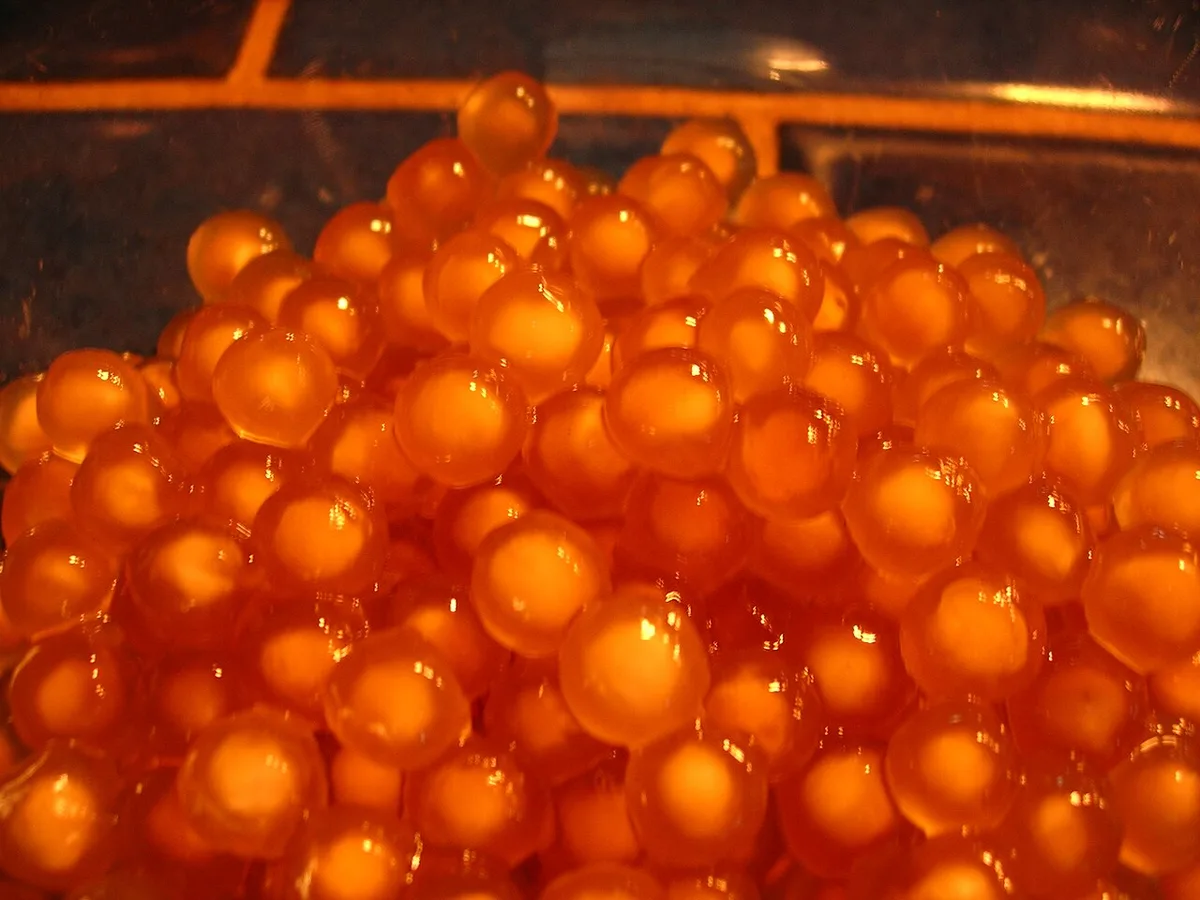
Image source: Wikimedia Commons / Lily from Napa/Oakland, USA (CC BY)
Rinsed pearls should be chewy with a firm, gummy center, not mushy or chalky. If they’re still hard in the middle, return them to hot water for 2 more minutes. Overcooked pearls turn mushy within minutes and can’t be fixed.
Step 2: Prep the Taro Base
If using fresh grated taro or pre-made paste, scoop 1/2 cup into your small bowl. If using powder, mix 3 tbsp of taro powder with 1/2 cup of hot water until fully dissolved, no lumps remain. Stir in sweetener while the mixture is still warm, if using, to help it dissolve evenly.
Set the base aside.
Step 3: Assemble the Drinks
Add 2 tbsp of cooked tapioca pearls to the bottom of each glass. Pour 1/4 cup of taro base into each glass, followed by 1/2 cup of cooled tea or base. Top with 1/2 cup of milk or non-dairy alternative, then fill the rest of the glass with ice.
Stir gently from the bottom up to combine fully, then serve immediately with a wide-gauge straw.
Common Taro Boba Mistakes To Avoid (And 2-Minute Fixes For Each)
The gap between mediocre homemade taro boba and great homemade taro boba comes down to 4 common, fixable mistakes. Most take 2 minutes or less to correct once you know what to look for.
Mistake 1: Overcooked or Undercooked Tapioca Pearls
This is the most frequent first-time maker complaint. Overcooked pearls turn mushy and disintegrate after a few minutes in the drink. Undercooked pearls have a hard, chalky center that’s unpleasant to chew.
2-minute fix: Set a timer the second you add pearls to boiling water. Boil exactly 5 minutes for standard 10mm pearls, then steep covered for 10 minutes off heat. Rinse immediately with cool water to stop cooking.
If prepping ahead, store cooked pearls in a sealed container with a little sugar syrup to prevent sticking.
Mistake 2: Lumpy Taro Base
Cheap taro powder or under-mixed fresh taro paste leaves visible lumps that ruin the drink’s smooth texture.
2-minute fix: If using powder, mix it with hot water first, not cold, and whisk vigorously for 30 seconds until no lumps remain. If using fresh taro paste, press it through a fine-mesh sieve before mixing with your base liquid to remove fibrous chunks.
Mistake 3: Bland or Artificial Taro Flavor
This happens when you use low-quality powder with no real taro content, or skimp on taro base for the drink size.
2-minute fix: Use at least 1/4 cup of taro base per 16-ounce serving. If using powder, pick a brand that lists taro root as the first ingredient, not artificial flavor. A tiny pinch of vanilla extract rounds out fresh taro flavor without adding artificial notes.
Mistake 4: Separated Taro and Milk Layers
Distinct purple and white layers mean you mixed ingredients in the wrong order.
2-minute fix: Always add taro base first, then tea, then milk, then ice. Stir gently from the bottom up to combine fully before serving. Adding milk first creates a fat layer that prevents even mixing.
Taro Boba Cost Per Serving: Homemade vs. Shop Price Comparison
Cost is the biggest reason home cooks switch to making taro boba at home. Let’s break down real 2026 pricing so you can see exactly what you’re saving.
Shop-bought taro boba costs $5 to $9 for a standard 16-ounce serving in most U.S. cities, per aggregate 2026 pricing data from major bubble tea chains. Large 24-ounce sizes run $7 to $11. Add-ons like extra pearls, cream foam, or pudding add $0.50 to $2 per item, so a fully loaded shop drink can hit $12 or more.
Homemade taro boba costs $0.75 to $1.50 per 16-ounce serving, depending on your taro flavor source. Taro powder is the cheapest option at ~$0.25 per serving, pre-made paste is ~$0.60 per serving, and fresh grated taro is ~$0.40 per serving. Add-ons like homemade taro balls add less than $0.20 per serving.
| Cost Category | Shop-Bought (16oz) | Homemade (16oz) |
|---|---|---|
| Base drink | $5-$9 | $0.30-$0.75 |
| Taro flavoring | $0.50-$1.50 | $0.25-$0.60 |
| Tapioca pearls | $0.50-$1 | $0.20-$0.40 |
| Toppings (if added) | $0.50-$2 | $0.10-$0.20 |
| Total per serving | $6.50-$13.50 | $0.85-$1.95 |
If you drink taro boba once a week, making it at home saves $270 to $570 per year. That’s enough to cover a small weekend trip, or stock up on ingredients for easy air fryer chicken recipes for months. The upfront cost of a small pot and strainer pays for itself after 2 to 3 homemade drinks.
Taro Boba FAQs: Answers To The Most-Asked Home Cook Questions
Is taro boba healthy?
Plain taro boba made with real taro, unsweetened tea, and low-fat milk has 150 to 200 calories per 16-ounce serving, with 2 to 4 grams of fiber from taro root. Standard shop versions with artificial flavoring and excess sugar contain 300 to 500 calories and 20 to 40 grams of added sugar per serving, per USDA baseline nutrition data.
Can I make taro boba without tapioca pearls?
Yes, skip the pearls entirely for a low-calorie, low-sugar taro milk tea variation. Just mix your taro base with tea and milk over ice. You can also swap tapioca pearls for lighter toppings like popping boba, aloe vera, or fruit bits if you prefer a less chewy texture.
How long does cooked tapioca pearls last?
Cooked tapioca pearls stay fresh for 4 to 6 hours at room temperature, or up to 48 hours in an airtight container in the refrigerator. Never leave cooked pearls out overnight, as they develop a sour smell and slimy texture from bacterial growth. Add a little sugar syrup to stored pearls to prevent sticking.
Is raw taro root poisonous?
Raw taro root contains calcium oxalate crystals that cause throat, mouth, and digestive irritation if eaten uncooked. Always peel and fully cook taro root before eating or blending it into boba. Boiling, steaming, or baking destroys the crystals completely.
Per UC Davis agricultural research, cooking taro for at least 10 minutes eliminates all irritation risk.
Can I freeze taro boba?
You can freeze leftover taro boba base for up to 1 month, but never freeze assembled drinks with ice and pearls. The pearls turn mushy when thawed, and the milk separates. Freeze only the taro and tea base in an airtight container, then thaw and mix with fresh milk, ice, and pearls when ready to drink.
Final Decision Guide: Pick The Perfect Taro Boba Option For Your Needs
The right taro boba option depends entirely on your priorities: flavor authenticity, budget, prep time, or dietary needs. Use this quick guide to pick the best fit for your situation.
If you prioritize the most authentic, complex taro flavor and have 15 extra minutes for prep, choose fresh grated taro with a black or oolong tea base and whole milk. This is the best option for taro enthusiasts who want a drink that matches high-end boba shop quality without the markup.
If you want near-identical shop flavor with minimal prep time, choose pre-made taro paste with a black tea base and oat milk. Pre-made paste gives almost the same earthy flavor as fresh taro, with none of the peeling or grating work. This is the best pick for busy home cooks who make taro boba once a week or more.
If you’re on a tight budget, need a quick fix, or prefer the classic artificial sweet shop flavor, choose taro powder mix with a black tea base and any milk you like. Powder is the cheapest option, requires no prep, and has a 12+ month shelf life, perfect for people who only make taro boba occasionally.
If you need a vegan, dairy-free, or caffeine-free option, pair your chosen taro flavoring with oat or coconut milk and a caffeine-free herbal or fruit base. This works for all three taro flavor sources, so you don’t have to sacrifice flavor to meet dietary needs.
No matter which option you choose, avoid the 4 common mistakes we covered earlier to get consistent, great results every time. For more easy, tested homemade drink and meal ideas, browse our full collection of quick recipes for options that fit any schedule or dietary need.