

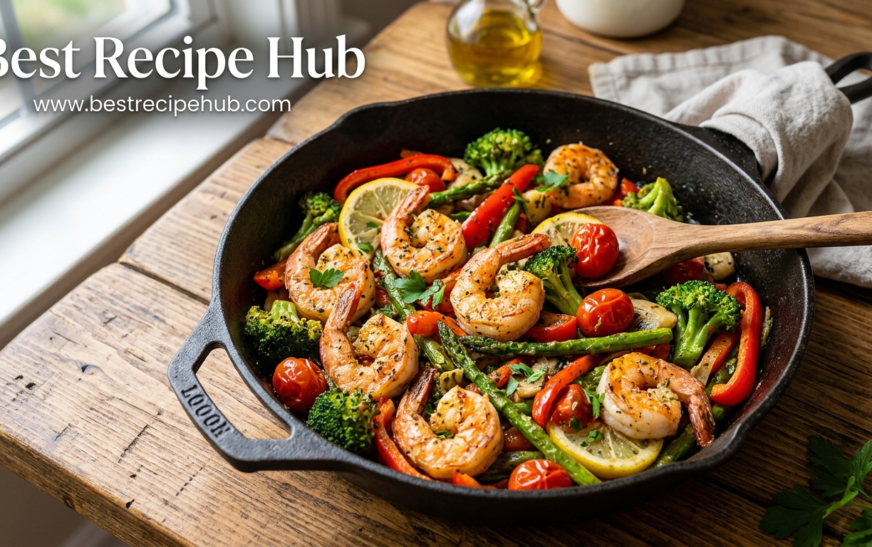
You just got home. You’re tired. The last thing you want is a sink full of dishes and a recipe that reads like a chemistry textbook. Sound familiar?
30 minute meals aren’t just a trendy promise – they’re a legitimate cooking strategy used by busy professionals, parents, and health-conscious individuals who refuse to sacrifice nutrition for convenience. And when you add a one-pan approach to the mix? You’ve unlocked the holy grail of weeknight cooking.
This guide goes beyond throwing pasta in a pot. You’ll get:
- Science-backed nutrition tips that hold up in the real world
- 5 real recipes tested in actual kitchens under actual time pressure
- A pantry stocking system that makes fast meals possible on any weeknight
- Pro techniques that cut your active cooking time in half
Why One-Pan, 30-Minute Meals Actually Work (And Stick)
Most people abandon meal prep because the effort-to-payoff ratio feels off. A complicated recipe means long prep, multiple pans, and a kitchen that looks like a disaster zone. That friction is the enemy of consistency.
One-pan cooking removes friction entirely. Here’s exactly why the method works so reliably:
- Fewer decisions – One surface, one cooking environment, one cleanup cycle
- Flavor concentration – Ingredients cook together, sharing fats, aromatics, and natural juices in a way that multi-pan cooking misses entirely
- Faster active cooking time – You prep, you toss, you step back. The pan does the heavy lifting
- Natural portion control – One pan limits quantity, which helps manage caloric intake without counting a single calorie
- Lower barrier to entry – Less equipment means less intimidation, especially for beginner cooks
The takeaway: Cooking at home matters far more than how elaborate the meal is.
The Non-Negotiable Principles of Healthy 30-Minute Meals
Speed and nutrition don’t have to conflict. But without a framework, most people default to either fast-but-unhealthy or healthy-but-slow. Here’s the three-part system that solves that.
1. Build Around a Protein Anchor
Every satisfying quick weeknight dinner starts with a protein decision. Protein:
- Regulates hunger hormones (specifically ghrelin and leptin)
- Preserves lean muscle mass during calorie deficits
- Keeps you full 2–3 hours longer than carb-dominant meals
- Provides the structural “anchor” every one-pan meal needs
Best fast-cooking proteins for 30 minute meals:
| Protein | Cook Time | Why It Works |
| Shrimp | 3–5 min | Fastest protein you can cook |
| Chicken thighs | 20–22 min | Forgiving, stay moist, full of flavor |
| Eggs | 5–8 min | Cheap, versatile, nutrient-dense |
| Canned lentils | 0 min prep | Pre-cooked, high fiber, zero wait |
| Firm tofu | 8–10 min | Crisps beautifully, absorbs any sauce |
| Ground beef/turkey | 8 min | Browns fast, pairs with everything |
2. Use Pre-Prepped or Smart-Prep Vegetables
You don’t need to chop everything from scratch every single night. Smarter vegetable sourcing is often the difference between 30 minutes and 50.
Smart vegetable choices for fast meals:
- Frozen vegetables (peas, spinach, edamame, stir-fry blends) – flash-frozen at peak ripeness, nutritionally equivalent to fresh
- Pre-washed baby greens – zero prep, go straight from bag to pan
- Cherry tomatoes – no cutting required, blister beautifully in a hot pan
- Canned chickpeas – already cooked, drain and they’re ready immediately
- Pre-shredded cabbage or coleslaw mix – instant stir-fry base
- Jarred roasted red peppers – pre-cooked, adds sweetness and color instantly
3. Master the “Flavor Triangle”
Healthy food tastes bland when it lacks a deliberate flavor system. Professional cooks follow a three-point formula that you can apply to any meal in any cuisine:
- Fat – Olive oil, sesame oil, coconut oil, or a small knob of grass-fed butter. Fat carries flavor compounds to your taste receptors.
- Acid – Fresh lemon juice, lime, apple cider vinegar, or a splash of balsamic. Acid brightens everything and cuts through richness.
- Salt + Umami – Sea salt combined with soy sauce, miso paste, fish sauce, or nutritional yeast. Umami adds depth that makes food taste “complete.”
Rule of thumb: If a dish tastes flat, it’s almost always missing acid. Add a squeeze of lemon before reaching for more salt.
5 Healthy One-Pan 30-Minute Meals You Should Make This Week
These aren’t hypothetical recipes assembled for SEO purposes. They’re real meals, tested repeatedly, with honest macro data and realistic time estimates.
Meal 1: Garlic Lemon Shrimp with Zucchini Noodles
Why it works: Shrimp cooks in under 5 minutes. Zucchini noodles take 3. Cold pan to plated dinner: approximately 12–15 minutes total.
Nutrition per serving:
- 320 calories
- 34g protein
- 12g fat
- 8g carbs
How to make it – step by step:
- Heat 2 tbsp olive oil in a large skillet over medium-high heat
- Sauté 3 minced garlic cloves for 60 seconds until fragrant
- Add 300g shrimp and a pinch of chili flakes; cook 2 minutes per side
- Toss in zucchini noodles; cook 2–3 minutes until just tender
- Finish with a generous squeeze of lemon and fresh parsley
Meal 2: Sheet Pan Chicken Thighs with Roasted Chickpeas and Broccoli
Why it works: 5 minutes of prep, then 25 minutes of completely passive cooking while you shower, decompress, or help kids with homework.
Nutrition per serving:
- 480 calories
- 42g protein
- 18g fat
- 28g carbs
How to make it – step by step:
- Preheat oven to 425°F (220°C)
- Drain and pat dry one can of chickpeas
- Toss chicken thighs, chickpeas, and broccoli florets with olive oil
- Season generously with smoked paprika, cumin, garlic powder, salt, and pepper
- Spread on a sheet pan – don’t overcrowd
- Roast 25–28 minutes; chicken skin should be golden and crispy
Meal 3: One-Pan Spiced Lentil and Spinach Dal
Why it works: A plant-based powerhouse that’s high in fiber, iron, and folate. Canned lentils make it genuinely fast with zero soaking or long cooking.
Nutrition per serving:
- 390 calories
- 22g protein
- 9g fat
- 52g carbs
How to make it – step by step:
- Sauté 1 diced onion, 3 garlic cloves, and 1 tsp grated ginger in oil for 3 minutes
- Add 1 tsp cumin and 1 tsp turmeric; stir and toast the spices for 30 seconds
- Pour in one can of crushed tomatoes and one can of drained green lentils
- Add half a can of coconut milk; stir and simmer 8 minutes
- Wilt in 2 large handfuls of fresh spinach
- Serve with warm whole grain flatbread or brown rice
Meal 4: Sesame Ginger Beef Stir-Fry
Why it works: Ground beef browns in 8 minutes flat. The pre-made sauce base (batch it Sunday, use it all week) means this meal is essentially an assembly job.
Quick sauce formula:
- 3 tbsp soy sauce
- 1 tbsp sesame oil
- 1 tbsp rice vinegar
- 1 tsp honey
- 1 tsp cornstarch
Nutrition per serving:
- 450 calories
- 38g protein
- 20g fat
- 24g carbs
How to make it – step by step:
- Brown lean ground beef in a hot wok or skillet, breaking it apart
- Add minced garlic and grated ginger; cook 1 minute
- Add frozen stir-fry vegetables straight from the freezer – no thawing
- Pour in sauce; toss and cook 3 minutes until glossy and thickened
- Serve over a microwaved pouch of brown rice or cauliflower rice
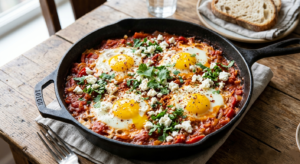
Meal 5: Mediterranean Baked Eggs (Shakshuka-Style)
Why it works: The ultimate lazy cook’s weapon. One skillet. Minimal chopping. Maximum visual impact and flavor depth.
Nutrition per serving:
- 340 calories
- 18g protein
- 16g fat
- 28g carbs
How to make it – step by step:
- Sauté 1 diced onion, 2 garlic cloves, and 1 sliced bell pepper for 4 minutes
- Add 1 tsp harissa paste, 1 tsp cumin, and 1 tsp smoked paprika; stir 30 seconds
- Pour in one can of crushed tomatoes; simmer 8 minutes, stirring occasionally
- Use a spoon to create 4 wells in the sauce
- Crack one egg into each well; cover the skillet with a lid
- Cook 5–6 minutes – whites should be set, yolks still slightly runny
- Top with crumbled feta, fresh herbs, and a drizzle of olive oil
The Lazy Cook’s Pantry: What to Always Have Stocked
The secret to consistent easy healthy meals isn’t motivation – it’s inventory management. A well-stocked pantry turns a 30-minute meal from a planning exercise into a daily automatic.
Shelf-Stable Staples:
- Canned chickpeas, lentils, and black beans
- Canned crushed tomatoes and full-fat coconut milk
- Microwave rice pouches (brown rice, quinoa, or mixed grain)
- Soy sauce, fish sauce, and harissa paste
- Olive oil and toasted sesame oil
- Spice essentials: smoked paprika, cumin, turmeric, chili flakes, garlic powder
Freezer Essentials:
- Frozen shrimp (defrosts in 15 minutes under cold running water)
- Frozen stir-fry vegetable blends
- Frozen edamame, peas, and spinach
- Individually portioned chicken thighs or fish fillets
Fridge Non-Negotiables:
- Eggs – always, without exception
- Pre-washed baby spinach or arugula
- Lemons and limes for finishing
- Garlic and ginger (pre-minced jars are completely fine – zero shame)
- Feta cheese and Greek yogurt for finishing and topping
Time-Saving Techniques That Professional Cooks Use
Cooking faster isn’t about rushing – it’s about systematically removing unnecessary steps before you even turn on the stove.
- Mise en place in two minutes, not twenty – Rough chops roast just as well as precision cuts. Save knife perfectionism for when it genuinely matters (e.g., raw salads, sushi).
- Sequential pan cooking – Sear protein first → set aside → cook vegetables in the same pan with the leftover fond (those browned bits = pure flavor) → return protein at the end. One pan. Full flavor development. Zero waste.
- Leverage residual heat – Turn the heat off 2 minutes before food is done. The pan stays hot enough to finish cooking without overcooking. This is especially critical for eggs, shrimp, and fish, which go from perfect to rubbery in under a minute.
- Batch your flavor bases on Sunday – Spend 10 minutes making a double batch of your stir-fry sauce or spiced tomato base. Store in a labeled jar in the fridge. That single step turns any weeknight meal into a 15-minute assembly.
- Use the “two-ingredient rule” – For each meal, identify the two ingredients that take longest to cook. Start those first. Everything else fits around them.
The Health Case: Why 30-Minute Home Cooking Beats Meal Kits and Takeout
Still on the fence about whether this is worth it? Consider these comparisons side by side:
| Factor | Home 30-Min Meal | Meal Kit | Takeout |
| Cost per serving | $3–6 | $10–14 | $15–20 |
| Sodium control | Full control | Moderate | Minimal |
| Calorie transparency | Full control | Partial | None |
| Prep time | 5–10 min | 15–25 min | 0 min |
| Nutritional quality | High | Moderate–High | Variable |
Three evidence-based reasons to make this a habit:
- Nutrition: Home cooking gives you complete control over oil quantity, sodium levels, sugar content, and portion size – four variables that meal kits and restaurants routinely mismanage.
- Cost: Cooking at home just five nights per week can save a household of two over $3,000 per year compared to regular takeout.
- Mental health: A 2020 study in Health Psychology Open found that people who cooked dinner at home more than five times per week reported significantly higher life satisfaction scores and lower rates of anxiety – independent of diet quality.
30 minute meals aren’t a compromise. Done with intention, they’re one of the most impactful daily habits you can build for your health, budget, and wellbeing.
Frequently Asked Questions
Q1: Can 30-minute meals actually be healthy?
Yes. Nutritional quality is determined by ingredient selection, not cooking time. Meals built around lean proteins, vegetables, legumes, and whole grains can be fully prepared in 30 minutes or less without sacrificing any nutritional value.
Q2: What are the easiest 30-minute meals for beginners?
The easiest options are shakshuka (baked eggs in tomato sauce), shrimp stir-fry, and sheet pan chicken with vegetables. These require minimal knife skills, use forgiving ingredients, and have short active cooking times.
Q3: How do I meal prep to make 30-minute meals even faster?
Focus on prepping components, not complete meals: cook a batch of grains, portion proteins, and wash vegetables on Sunday. This turns a 30-minute meal into a 15-minute assembly on weeknights.
Q4: Are frozen vegetables as nutritious as fresh for quick meals?
Yes – often more so. Frozen vegetables are flash-frozen within hours of harvesting, locking in vitamins and minerals at peak concentration. They’re nutritionally comparable to fresh and often superior to produce stored in a fridge for several days.
Q5: What’s the best pan for one-pan meals?
A 12-inch cast iron skillet or a high-sided stainless steel sauté pan is ideal. Cast iron retains heat exceptionally well for searing; stainless is easier to deglaze for pan sauces. Both are oven-safe, making them versatile for stovetop-to-oven recipes.
Q6: Can I make 30-minute meals on a tight budget?
Absolutely. Eggs, canned legumes, frozen vegetables, and ground meat are among the most affordable nutrient-dense ingredients available. A well-planned 30-minute meal can come in under $3 per serving without compromising nutritional quality.
Q7: How do I keep 30-minute meals from getting repetitive?
Rotate your protein–grain–vegetable combinations weekly and swap your flavor profile with each rotation (Mediterranean, Asian, Mexican, Middle Eastern). With 5 proteins, 4 grains, and 6 vegetable options, you have over 100 unique meal combinations without learning a single new technique.
Q8: What’s the best way to add more flavor to quick meals without extra cooking time?
The most effective trick is finishing flavor – a squeeze of fresh lemon, a drizzle of quality olive oil, a handful of fresh herbs, or a dollop of Greek yogurt added after cooking. These take zero additional cooking time and dramatically elevate the final result.




4 Comments
[…] active cooking time to under 12 minutes in most […]
[…] cooked and safe to eat in just 15 […]
[…] chicken rest for 5 minutes after cooking. This single step prevents the juices from spilling out the second you cut into […]
[…] the onion and carrot first. Cook for 5–6 minutes until softened and lightly […]